
Joined: Apr 03, 2010
Posts: 2024
Location: Portugal Zone 9 Mediterranean Climate
22
posted
3
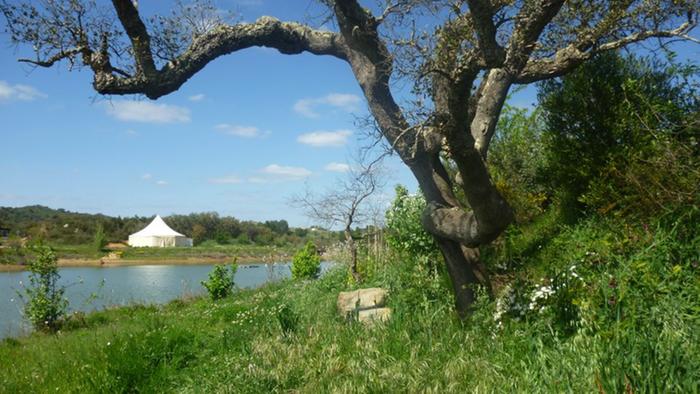
I spent last week in Tamera in Portugal, attending the Second International Water Symposium, where the theme was “Water Retention Landscapes as an Answer to Desertification and Globalization”
It was my first visit to the 331 acre site which is home to around 200 people who share a vision of becoming a model community living in peace and harmony with nature. During the last hundred years, the area has suffered greatly from soil erosion as landowners were encouraged to plough up any vaguely suitable land to grow wheat, and to grow monocultures of cork oaks on any land considered unsuitable for cultivation. As a result, the topsoil has been steadily removed from the slopes and washed down into the valleys, reducing the land's ability to retain water. The stream that used to flow year round along the bottom of the valley in Tamera started to dry up, eventually only flowing during rainy periods. The cork oaks began to suffer from fungal infections as they became stressed from lack of water during the hot, dry summer months, and the whole of Portugal began turning into desert.
During the winter months, heavy rains, which can no longer be absorbed by the hard, sterile soil on the slopes, wash down the valleys and cause flash flooding. Around twenty years ago a village downstream of Tamera suffered heavy flooding and thirty people drowned.
The community in Tamera called in Sepp Holzer to help them design and build a water landscape to help heal their land. This video explains some of the philosophy and practical aspects of the project.
I wanted to see for myself how successful the project had been, and also see how their permaculture experiments were going.
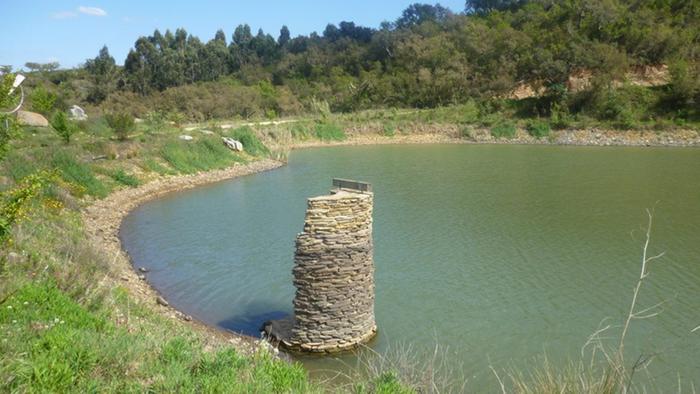
I've taken loads of photos, which I'll start to share with you all in the morning, but what really impressed me was that within a year of building the dam, enough water had permeated the landscape that a spring welled up just beyond the dam and the stream started to flow year round again.
To be continued!
Tyler Ludens
Joined: Jun 25, 2010
Posts: 5313
Location: Central Texas USA Latitude 30 Zone 8
19
posted
0
Burra Maluca wrote: The stream that used to flow year round along the bottom of the valley in Tamera started to dry up, eventually only flowing during rainy periods. The cork oaks began to suffer from fungal infections as they became stressed from lack of water during the hot, dry summer months, and the whole of Portugal began turning into desert.
Joined: Jun 25, 2010
Posts: 5313
Location: Central Texas USA Latitude 30 Zone 8
19
posted
1
Devon Olsen wrote:^looks like you got a nice guide for waht to do with your area
All it takes is a few tens of thousands of dollars!
Mark Harris
Joined: Jul 03, 2011
Posts: 57
Location: Portugal
posted
0
Monocultures of cork oaks ? I have never seen corks growing without many plants inbetween. Commercially corks only have one main purpose and that is the cork bark which can only be harvested every 9 years or so. It would make very little sense not to grow something else underneath the trees.
Burra Maluca
steward
Joined: Apr 03, 2010
Posts: 2024
Location: Portugal Zone 9 Mediterranean Climate
22
posted
0
I agree it makes very little sense, but apparently that is what happened down there. Every other kind of tree was cut down and, I believe, goats and sheep would then overgraze anything that was left.
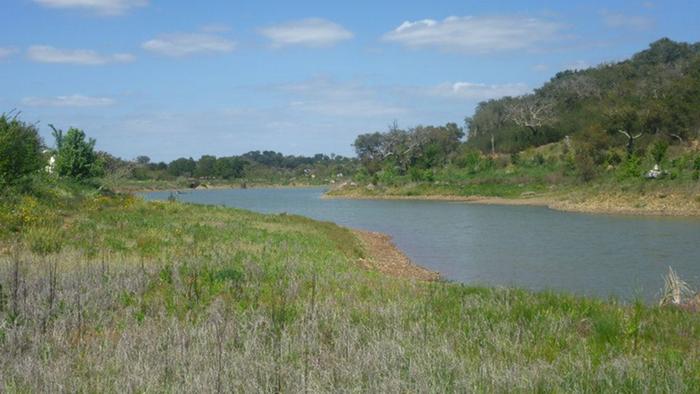
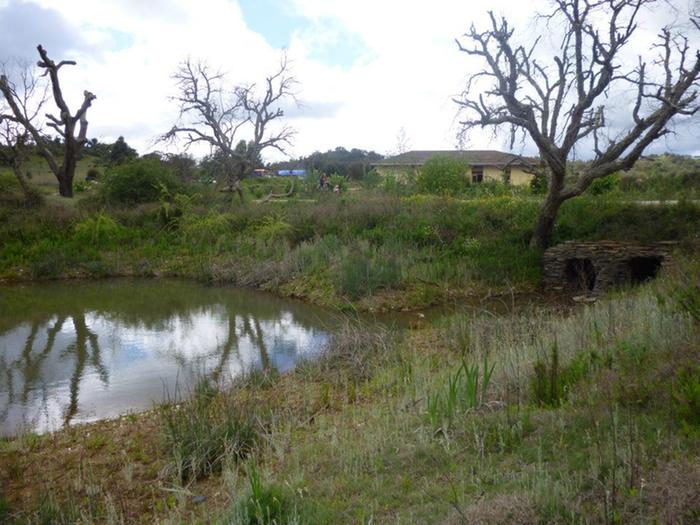
I didn't take any photos specifically to illustrate it, but I think this one shows roughly what I mean - the hill above the lake is the remains of a cork-oak monoculture, and a lot of what is left is looking pretty unhealthy.
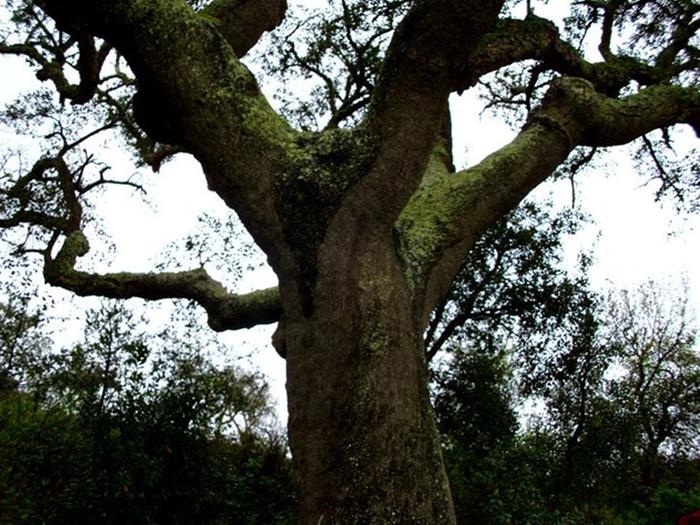
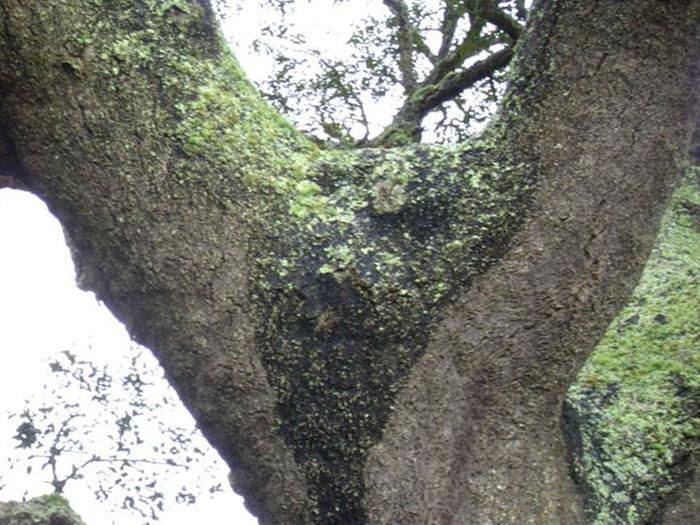
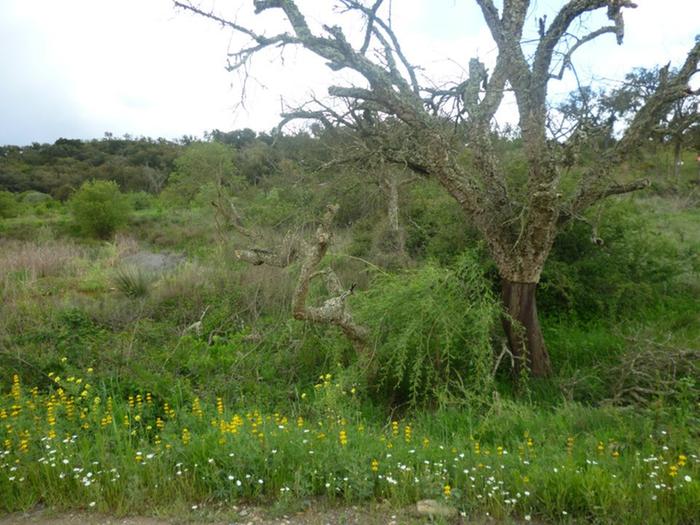
When they get stressed through lack of water, they become susceptible to fungal infections, which as far as I could make out is what the black stuff is on this tree.
And a not-very-well-focused close-up
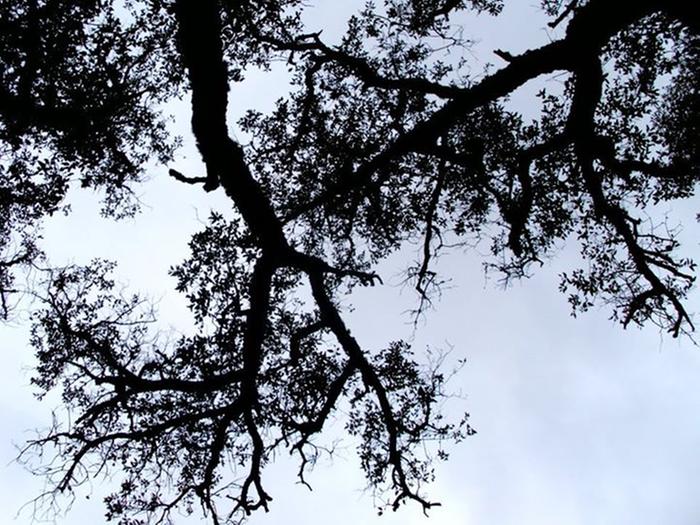
The fungus further weakens the tree and it becomes, in my husband's words, 'too tired' to grow leaves all the way along the branches. I don't know exactly what happens - maybe the tree dies from the tips, or maybe it just doesn't have the energy to get nutrients and water all the way along the branches, but the result is that no leaves grow at the extremities and the tree begins to die.
Sepp told us that when he visited the Extremadura in Western Spain, all the cork oaks were vaccinated against the fungus. Which I think is a fairly typical response - the trees are water stressed so let's treat them with something that boosts the economy rather than sort out the root cause of the problem, ie the lack of water in the soil.
More later - my critters are wet and hungry!
Burra Maluca
steward
Joined: Apr 03, 2010
Posts: 2024
Location: Portugal Zone 9 Mediterranean Climate
22
posted
0
OK, this post is going to be mostly about cork oaks and the Portuguese obsession with 'cleaning' the land.
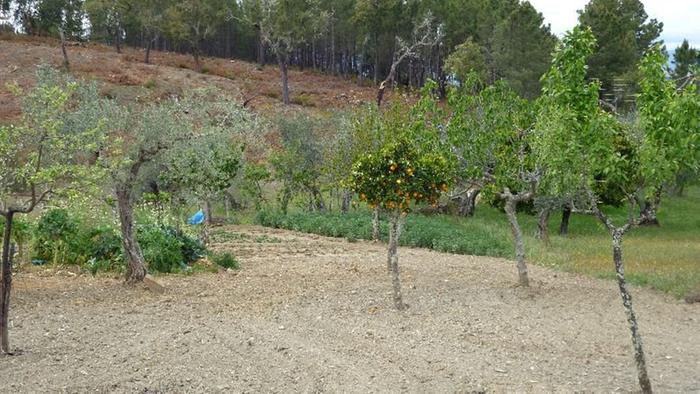
This photo shows what properly cleaned land looks like.
It's basically ploughed up and surface vegetation either buried or removed completely. The surface is reduced to a fine tilth which dries out and turns to powder, ready to be either blown away in the wind or washed away by rain. It's done as a fire prevention measure.
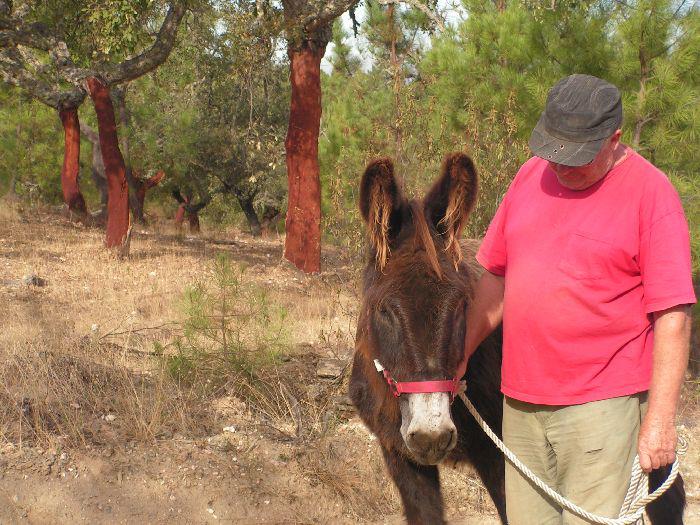
And this is a photo of my other half posing in front of some recently harvested cork oaks (taken last autumn).
The bark is stripped off the trunks every 10 years or so, leaving the trunks unprotected and glowing red in the sunlight. Notice that the land has been 'cleaned', though not too thoroughly, around the trees. In Tamera they told me that one of the stresses to the cork oaks there was that they were attempting to harvest cork too frequently, though I'm not sure how many years apart that meant.
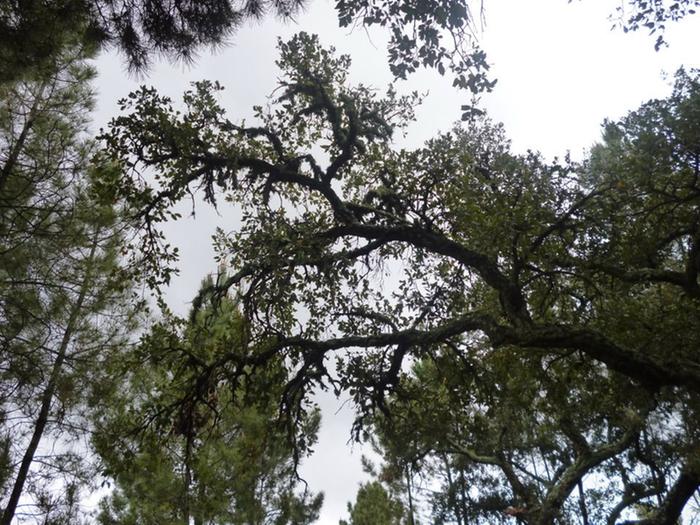
The next photo is of the canopy of one of our own cork oaks, on a north-facing slope on land which hasn't been 'cleaned' for many years. Taken this morning, in the rain, just for you guys
Notice that, unlike the previous photo of the cork oak in Tamera, the leaves are growing right to the tips of the branches.
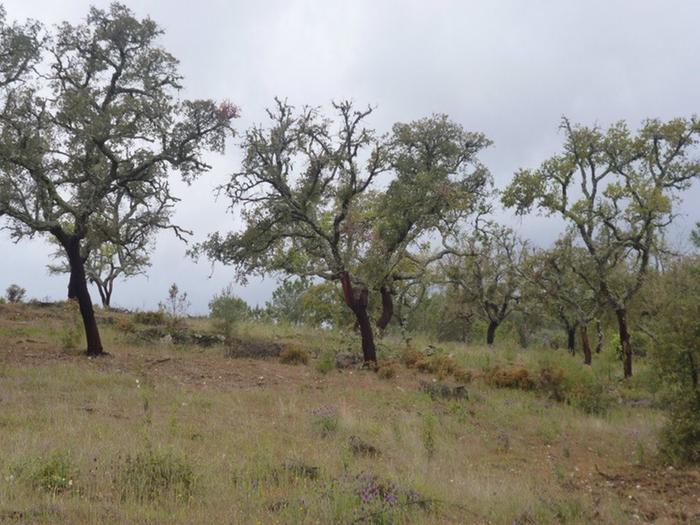
These next ones, which are only a few hundred metres away, are on a neighbour's land which is 'cleaned' every year.
The next photo was taken a few days ago in Tamera and shows dead cork oaks around one of the water retention areas, built far too late to save them.
Now that water is being retained in the landscape and allowed to penetrate the soil, a willow is able to grow up to replace the dead cork oak.
Here's a few links for anyone interested in learning more.
From the Cork Oak to Cork - same author as the previous book, but shorter, lighter and with more illustration.
R Scott
Joined: Apr 13, 2012
Posts: 716
Location: Kansas Zone 6a
6
posted
0
Mark Harris wrote:Monocultures of cork oaks ? I have never seen corks growing without many plants inbetween. Commercially corks only have one main purpose and that is the cork bark which can only be harvested every 9 years or so. It would make very little sense not to grow something else underneath the trees.
This is what the "experts" tell you to do. The thinking is to remove ALL competing plants so the cash crop can get all the water and nutrients.
"First they ignore you, then they laugh at you, then they fight you, then you win." --Mahatma Gandhi
"Preach the Gospel always, and if necessary, use words." --Francis of Assisi
Tyler Ludens
Joined: Jun 25, 2010
Posts: 5313
Location: Central Texas USA Latitude 30 Zone 8
19
posted
0
Those oaks look almost exactly like the oaks dying of Oak Wilt here in Central Texas. Here it is very overgrazed also with a lowered water table due to erosion and lack of groundcover. People will buy a piece of property, take out everything but the oaks, and run goats. When the oaks die there's nothing. Fortunately if they remove the goats or don't have too many, lots of interesting shrubs grow up, some kinds of native fruits. So I think there's hope, especially if somehow examples like Tamera could be shared with folks here.
Mark Harris
Joined: Jul 03, 2011
Posts: 57
Location: Portugal
posted
0
R wannabe wrote:
Mark Harris wrote:Monocultures of cork oaks ? I have never seen corks growing without many plants inbetween. Commercially corks only have one main purpose and that is the cork bark which can only be harvested every 9 years or so. It would make very little sense not to grow something else underneath the trees.
This is what the "experts" tell you to do. The thinking is to remove ALL competing plants so the cash crop can get all the water and nutrients.
Yes but no one is stupid enough to plant monocultures of cork oaks like you might imagine. Yes there is overgrazing and stupid summer ploughing of land. But for the rest of the year the land will be used for sheep/cattle/goat grazing.
Mark Harris
Joined: Jul 03, 2011
Posts: 57
Location: Portugal
posted
0
The idea that the fungus problem and die back is caused by lack of water is pure speculation. If you do some research you will find many scientists with differing views on what is causing this. Taking the bark off a tree is not a natural process and will leave the tree more vulnerable to fungal attacks. As you have suggested Burra it is quite likely that cropping too frequently will make matters worse, and may in fact be the cause of the problem not drought.
That hillside photo is very unclear. I showed my wife the picture without explaining the context and she said those trees mostly didn't look like corks to her either. The rest of you across the world reading this thread have to remember that cork is a native tree, and is exceptionally drought tolerant. Cork oaks on our land grow very well at the top of dry hillsides.
That photo showing 'water retention areas built too late to save the oaks' is interesting because it is possible in fact the water has finished them off. In my experience corks hate growing near water like that. If it is suitable for willows, it is NOT suitable for corks. You never see cork oaks naturally growing near water like that.
What I would definately agree with is that land here is often overgrazed with sheep/goats, so that all summer growth apart from a few nasty tasting drought tolerant native shrubs disapears. Generally the farmers then cultivate the land as Burra describes. The dry roots that hold the soil are then lost. Often in the summer you can see the top soil blowing away. For a long while I wondered why so often farmers would plough the land in the spring once the sheep have killed everything else off, to sow maize that then often hardly grew. I couldn't believe it could be worth the tractor time/fuel cost for what is usually a very poor growth of maize. Then I found out that farmers get a subsidy for growing maize ! I believe this maize is for the subsidy, not for the sheep ! The maize is of course GM.
What I think is quite likely is that the ploughing also damages the roots growing near the surface of the cork oaks.
I watched that Sepp video a couple of times. I can see why building a damm would green that site. To me it seems like a form of large scale terracing, a good thing. But there is also the possibility that there is now a lake downhill that is now dry.
What I would love to know Burra is if you found out how much of the food the 'Tamarans' grew themselves ? Where does the money come from to buy food they don't grow themselves ? There must be other costs like fuel to go into town to buy extra food and other goods ?
I have alot of respect for these people from what I know of them. I would be interested to know how they survive, and how much permaculture is part of that.
Burra Maluca
steward
Joined: Apr 03, 2010
Posts: 2024
Location: Portugal Zone 9 Mediterranean Climate
22
posted
0
Mark Harris wrote:The idea that the fungus problem and die back is caused by lack of water is pure speculation. If you do some research you will find many scientists with differing views on what is causing this. Taking the bark off a tree is not a natural process and will leave the tree more vulnerable to fungal attacks. As you have suggested Burra it is quite likely that cropping too frequently will make matters worse, and may in fact be the cause of the problem not drought.
I think it's very likely that any stress, from any cause, is going to make any species more susceptible to infection of any kind. If you damage the roots and spread pathogens by ploughing, and crop too frequently, and damage the soil so that there is water stress and reduced activity of mycorrhizal fungi and other supporting species, then I should think that the tree is much more susceptible to all kinds of pathogens. Much like with the colony collapse disorder in bees, the answer probably lies in reducing stresses of all kinds.
Mark Harris wrote:I watched that Sepp video a couple of times. I can see why building a damm would green that site. To me it seems like a form of large scale terracing, a good thing. But there is also the possibility that there is now a lake downhill that is now dry.
I don't know for sure whether or not there were any lakes below Tamera's lowest dam, but I suspect not. I do know that the stream below the dam that for many years only flowed during rainy weather now flows year round. That suggests to me very strongly that Tamera has not robbed any water from downhill of them. Also, there is more than one lake at Tamera. Mostly the overflow from one will feed the next. None of the water retention spaces are sealed - the water is free to seep into the surrounding soil and recharge springs.
Mark Harris wrote:What I would love to know Burra is if you found out how much of the food the 'Tamerans' grew themselves ? Where does the money come from to buy food they don't grow themselves ? There must be other costs like fuel to go into town to buy extra food and other goods ?
I have a lot of respect for these people from what I know of them. I would be interested to know how they survive, and how much permaculture is part of that.
The community of Tamera is meant to be an experimental model of a society that lives in peace, and the emphasis is on healing and education, not self-sustainability. As far as I could make out they produce around 25% of their own food, including food for all the people on all the projects such as the solar village, visitors, the students of the global campus - many of these would not be involved in food production. They do charge for visitors and students, but I have no real idea of where all the money originally came from. I did see a van delivering groceries to the kitchen, much like the mobile shops that frequent my own village, and they also regularly collect and deliver visitors to the station in Funcheira, which they charge for, so I guess they could probably do most of their shopping there after dropping visitors off.
They seem pretty fond of the bicycle as a means of transport...
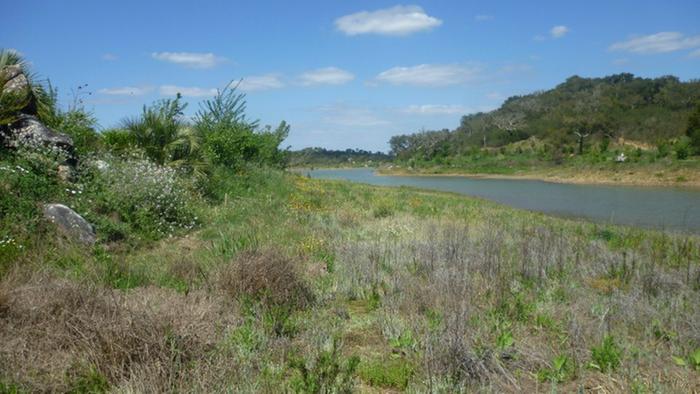
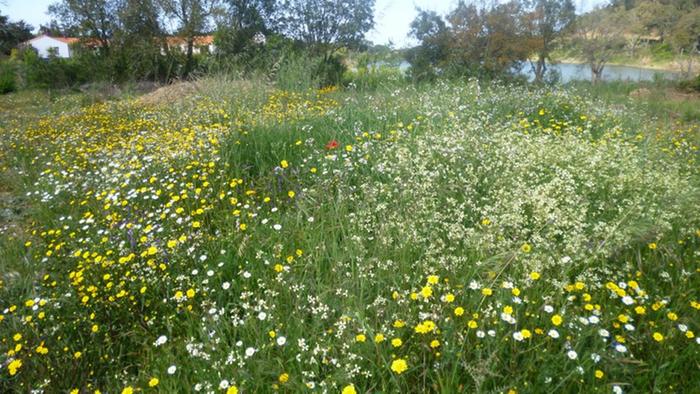
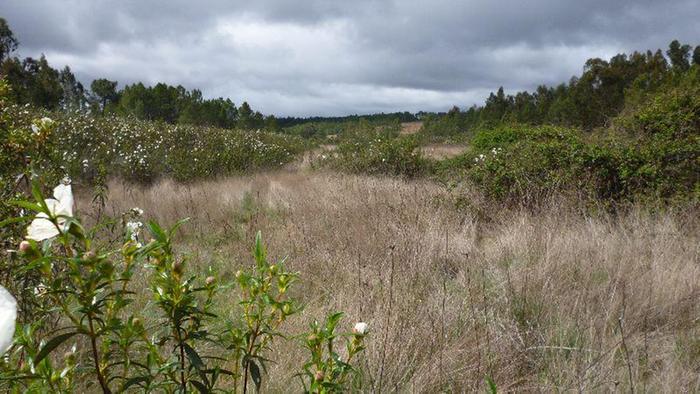
Before I start showing photos of the permaculture type stuff in Tamera, I want to put up a couple of photos of my own bit of Portugal, taken a couple of days before I left for Tamera, so people can compare. This time of year Portugal is generally pretty green, not the barren desert you tend to see in August, so I wanted people to be able to make appropriate comparisons.
This piece of land is part of a strip that I purchased a few years ago and haven't done anything with yet. It was abandoned for many years, not 'cleaned' or planted with pine or eucalyptus. So it's a pretty good illustration of the natural level of green-ness for this time of year in Portugal.
And below is a photo of part of my future forest garden.
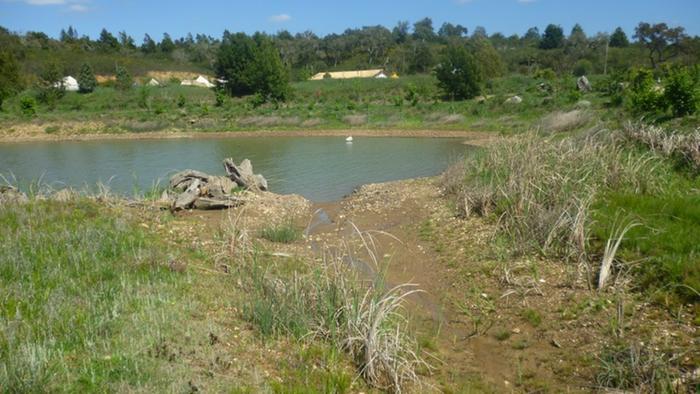
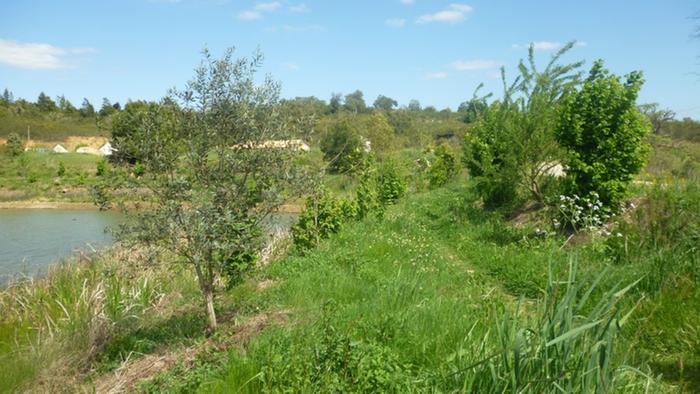
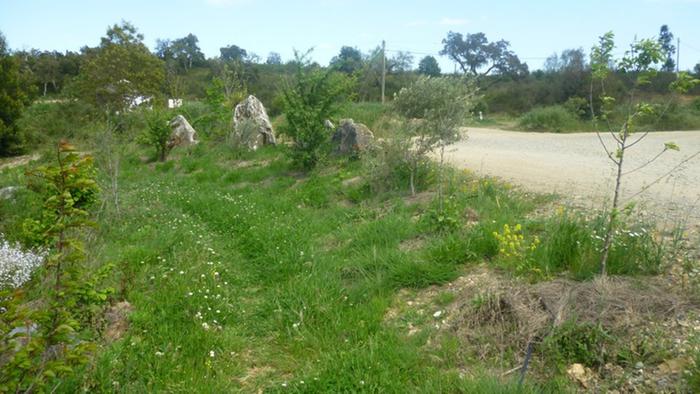
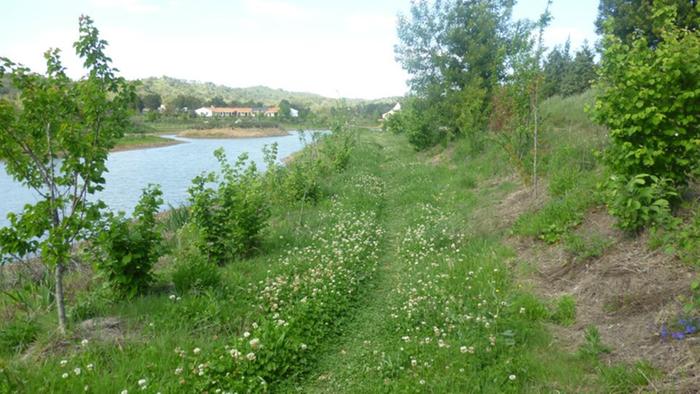
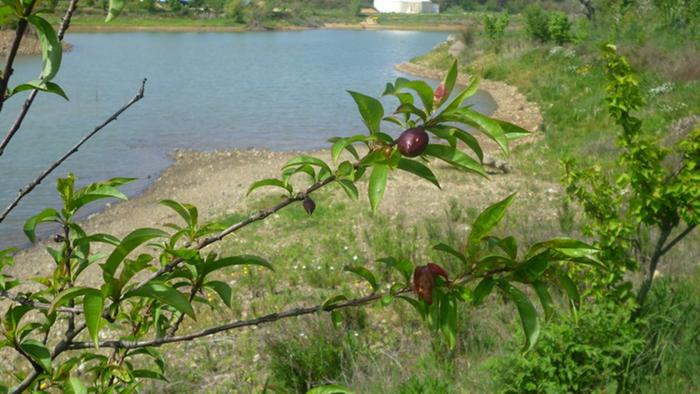
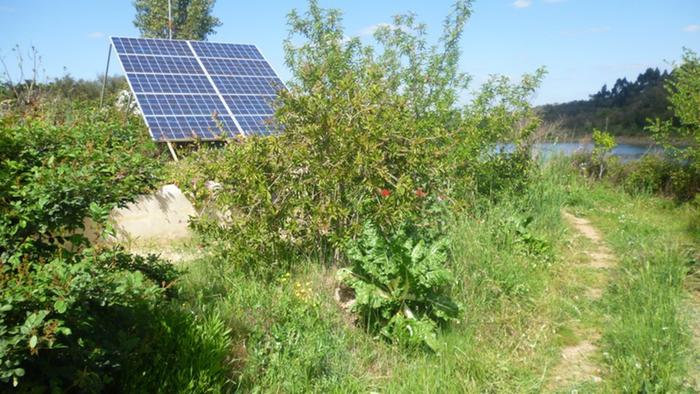
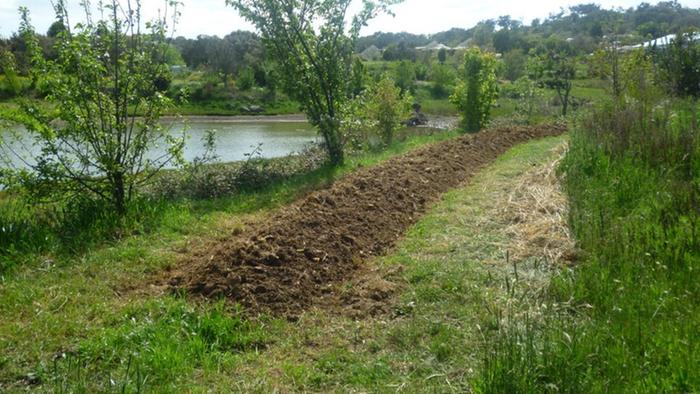
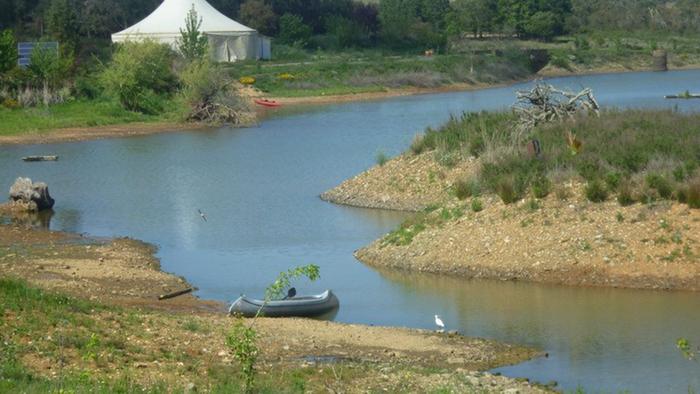
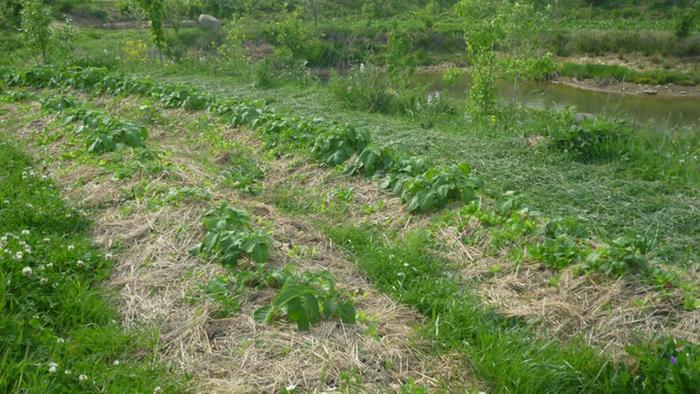
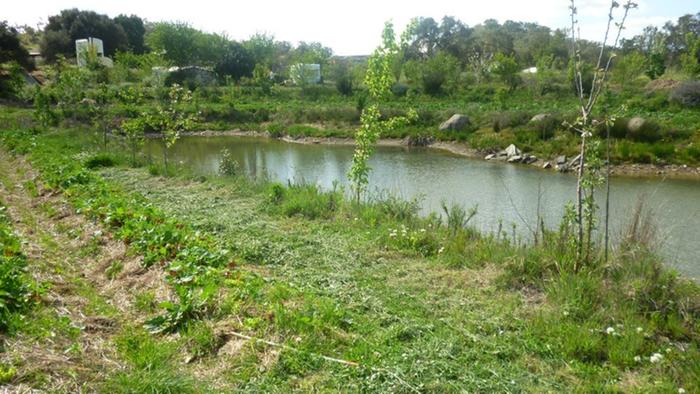
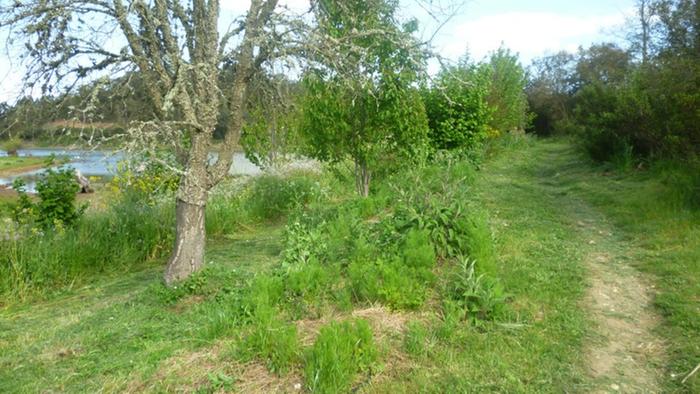
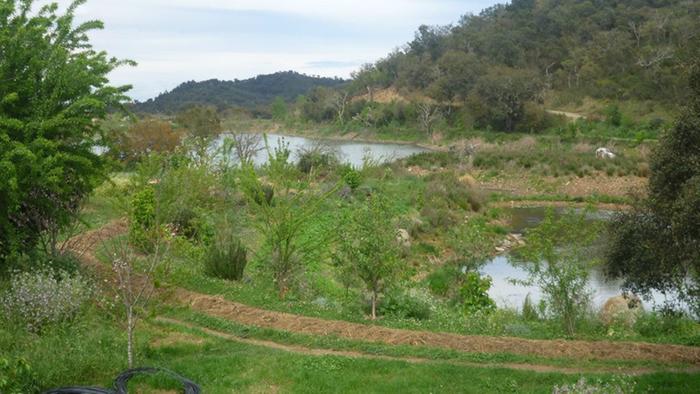
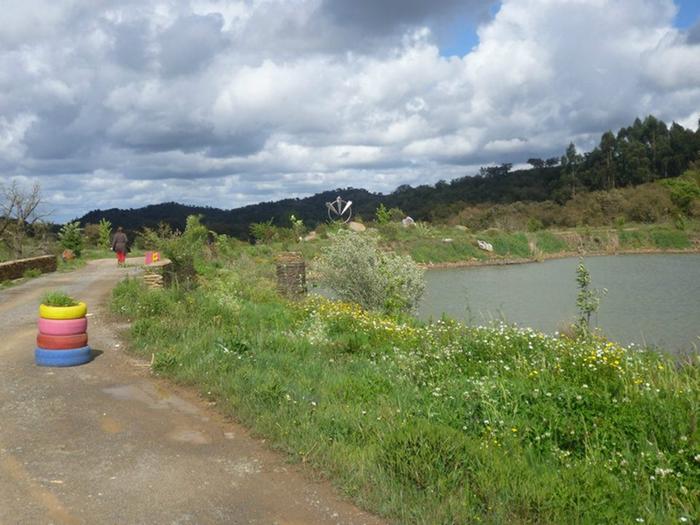
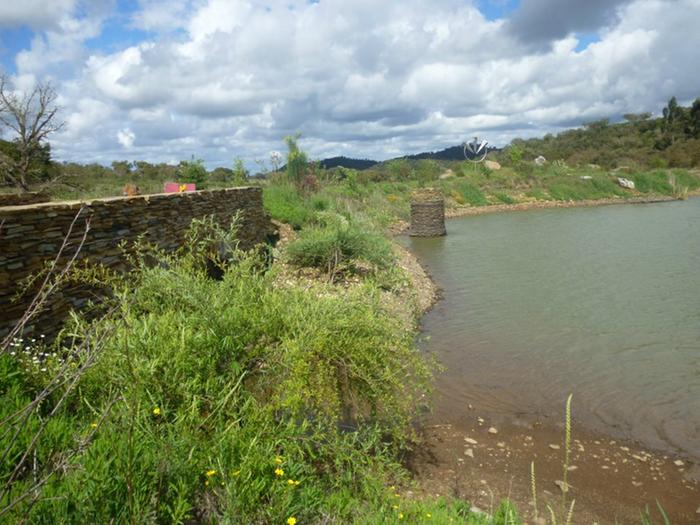
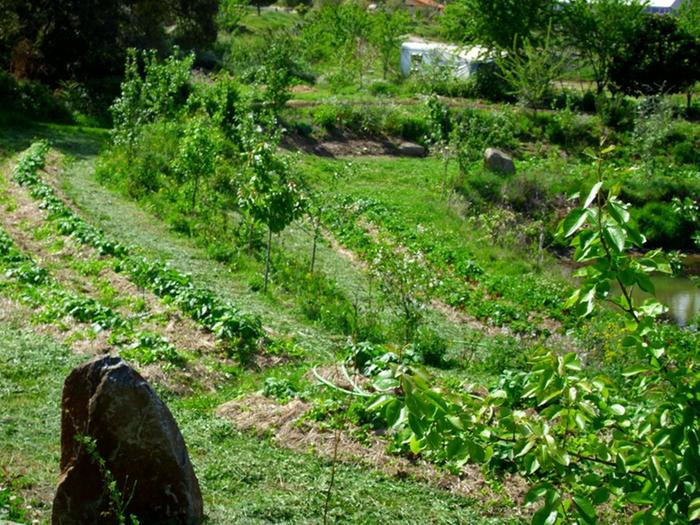
The photos below show what is going on around some of the water retention spaces in Tamera.
The do use drip irrigation, though only when necessary, and where possible this is gravity fed from a higher water retention area. They are not 'purists' though and will do what they have to to get things growing. The soil is fairly rich and clayey, and much thicker than our own, as it has been gradually accumulating off the higher slopes. Those long raised bed things with potatoes growing in are, I believe, made from top-soil removed during construction of the latest dam-building project. I heard, unofficially, that they had problems with flash floods washing them away during heavy rains.
More later - family and critters need attention!
Tyler Ludens
Joined: Jun 25, 2010
Posts: 5313
Location: Central Texas USA Latitude 30 Zone 8
19
posted
0
Dramatically green at Tamera! Thank you so much for all these details.
Isaac Hill
volunteer
Joined: Feb 28, 2011
Posts: 332
Location: Beaver County, Pennsylvania (~ zone 6)
posted
0
Wow, this is some fantastic info! I'm glad you were able to go and bring us back some photos!
"To oppose something is to maintain it" -- Ursula LeGuin
Mark Harris
Joined: Jul 03, 2011
Posts: 57
Location: Portugal
posted
0
Tyler Ludens wrote:Dramatically green at Tamera! Thank you so much for all these details.
You mean eco friendly green or colour green ? I would expect it to look that green at this time of year. We have just had a couple of weeks of cool rainy weather. It it look like that in August that would be impressive.
Burra Maluca
steward
Joined: Apr 03, 2010
Posts: 2024
Location: Portugal Zone 9 Mediterranean Climate
22
posted
0
Mark Harris wrote: I would expect it to look that green at this time of year. We have just had a couple of weeks of cool rainy weather. It it look like that in August that would be impressive.
Well it looks a whole lot greener and more productive than my own land, as in the top two photos in that post!
I'm actually thinking of going back to Tamera around the end of August to do another set of comparison photos.
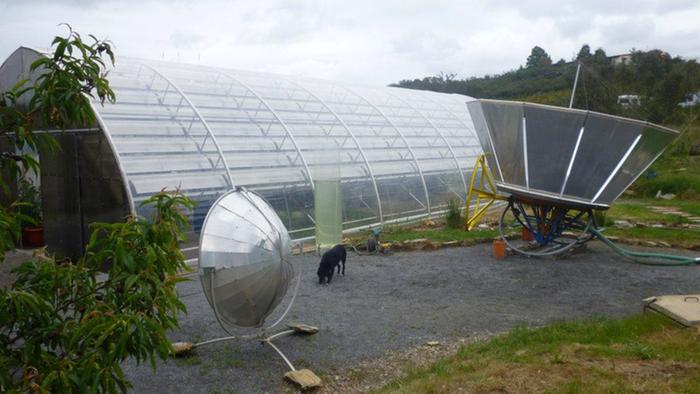
Speaking of photos, what shall I post up next? Hugelkulture? Shots of the dam and the monk? Stuff about the solar village? General shots from around the place, including the mega-frying-pan?
Devon Olsen
Joined: Nov 28, 2011
Posts: 930
Location: SE Wyoming -zone 4
3
posted
0
^all of the above
Tyler Ludens
Joined: Jun 25, 2010
Posts: 5313
Location: Central Texas USA Latitude 30 Zone 8
19
posted
0
Burra Maluca wrote:
Well it looks a whole lot greener and more productive than my own land, as in the top two photos in that post!
Yes, that is what I meant by "dramatically green."
Burra Maluca
steward
Joined: Apr 03, 2010
Posts: 2024
Location: Portugal Zone 9 Mediterranean Climate
22
posted
0
Devon Olsen wrote:^all of the above
Haha - well that narrows it down a bit!
In that case I'll start with hugelkulture, as it was the first one on the list...
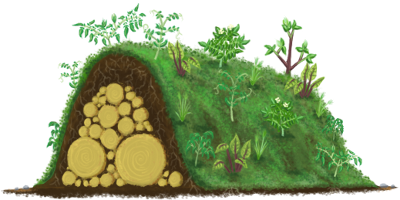
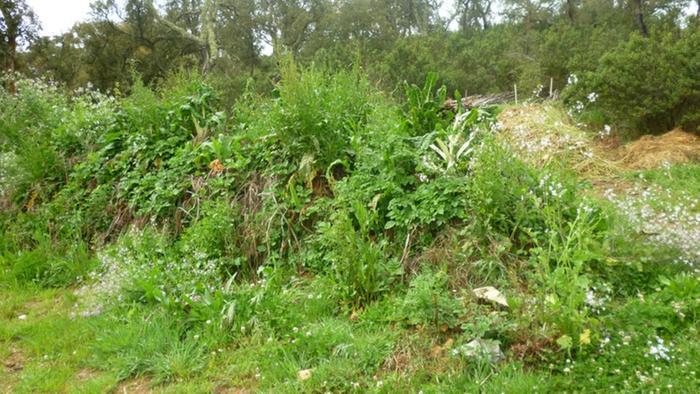
Hugelkulture is basically a raised bed made with a core of wood, which acts as a water-storage-crystal and a long-term nutrient supply.
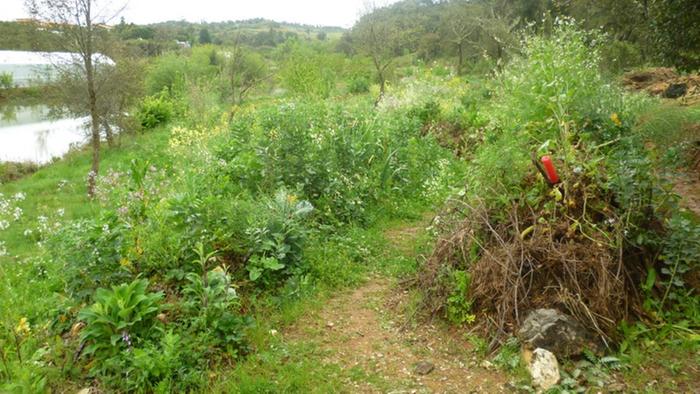
These are some of Tamera's 'hill-beds'.
They have a core of wood, or in some cases old clothes, and are covered with soil from the dam-building projects, manure from the horse project, and a straw mulch.
As Portugal has such a hot, dry summer climate, irrigation *is* used when necessary over the summer months. Mostly this is using drip irrigation, but they are also experimenting with burying perforated drainage pipe and filling it directly with water. The photo below shows some red perforated pipe sticking up out of the hill-bed, ready for accepting water.
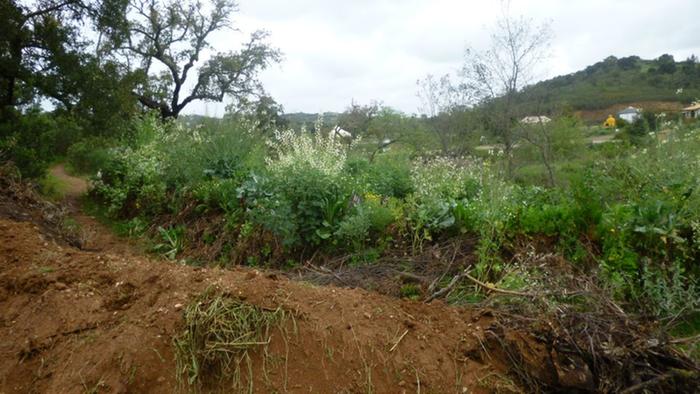
The bed in the foreground is still under construction.
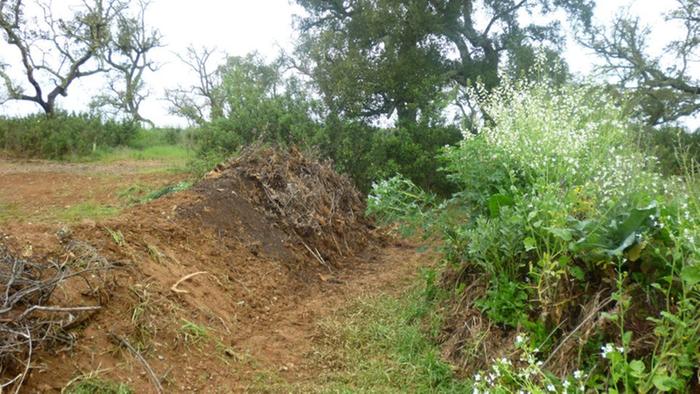
Small branches trimmed from the olive trees are used to help stabilise the beds against heavy winter rains. One benefit of hill-beds is that heavy rains don't get so waterlogged, though there is always the risk they will collapse or even wash away in flash floods.
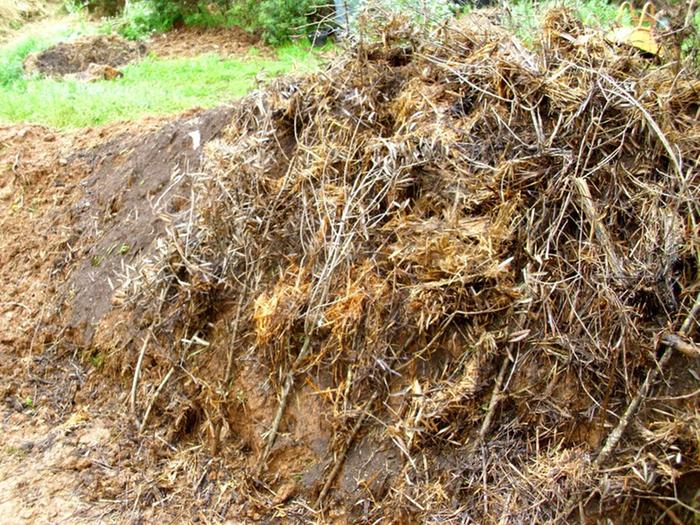
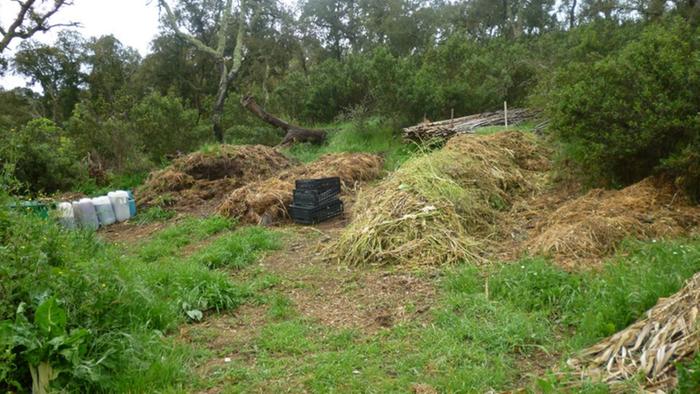
I wasn't entirely sure if these are hill-beds or compost heaps, so I took a photo just in case. I had no idea what was in those big white plastic containers, until after I'd been to the solar village.
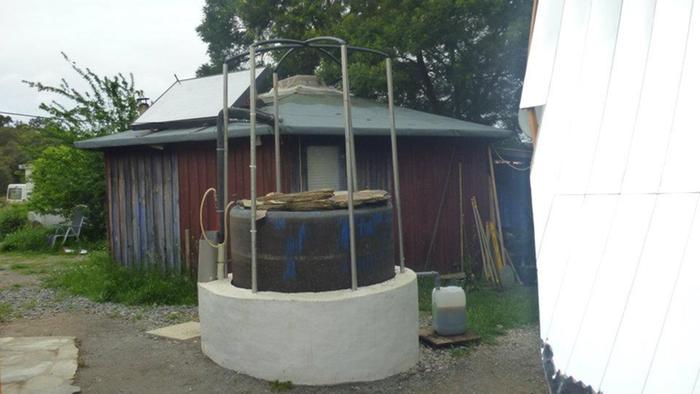
This is the biogas generator (is that the right word?) in the solar village in Tamera. Food scraps from the communal kitchen are fed into it and the gas produced is used for cooking. Liquid waste is collected and used as fertiliser. Presumably that's what's in the white plastic containers in the photos above and below.
I love the 'closed loop' of the food production here. Food is grown, prepared in the kitchen, the waste is fed to the biogas generator, which is used to cook the food, and produces fertiliser which is returned to the soil to help grow more food.
Tyler Ludens
Joined: Jun 25, 2010
Posts: 5313
Location: Central Texas USA Latitude 30 Zone 8
19
posted
0
I wonder if they built the hugelkultur larger/taller if they would still need irrigation.......
Burra Maluca
steward
Joined: Apr 03, 2010
Posts: 2024
Location: Portugal Zone 9 Mediterranean Climate
22
posted
0
I'm not sure - they were already pretty tall. I've just realised that I should have taken one with a person in it to give a better idea of the size, but we were asked not to photograph anyone without their permission so I mostly took photos when no-one was around rather than when we all out on a guided tour. The first photo of Tamera's hugel-beds, with the cabbage and the ruby chard going to seed, was taken at head height, so I guess they are around 4 ft high already.
I'm in the process of building one now, but I don't have access to so much soil for building them so high, or a higher water retention area for easy drip irrigation, and I've had such problems with previous raised beds drying out totally, that I'm going to dig down to bury the wood, then build much lower beds as I get the feeling that so much height is going to make it harder to keep them irrigated over our serious hot, dry summers. Ideally I'd like to try a few different designs to compare them. I'm still not convinced that just because Sepp and Paul manage without irrigation that I'll be able to.
What is your experience Tyler? Our climates seen to be pretty similar even though we are so far apart.
Tyler Ludens
Joined: Jun 25, 2010
Posts: 5313
Location: Central Texas USA Latitude 30 Zone 8
19
posted
0
I haven't tried real hugelkultur yet, I'm only doing buried wood beds which seem to be holding water better than unimproved areas but I'm still irrigating.
Willy Kerlang
Joined: Apr 29, 2011
Posts: 106
posted
0
I'm not able to see these pictures! Is it just me?
Burra Maluca
steward
Joined: Apr 03, 2010
Posts: 2024
Location: Portugal Zone 9 Mediterranean Climate
22
posted
0
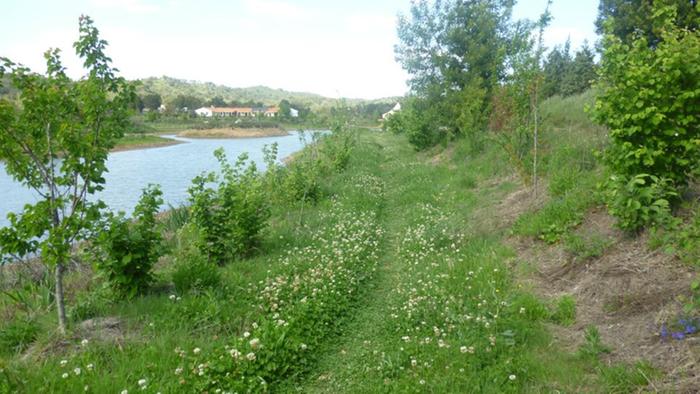
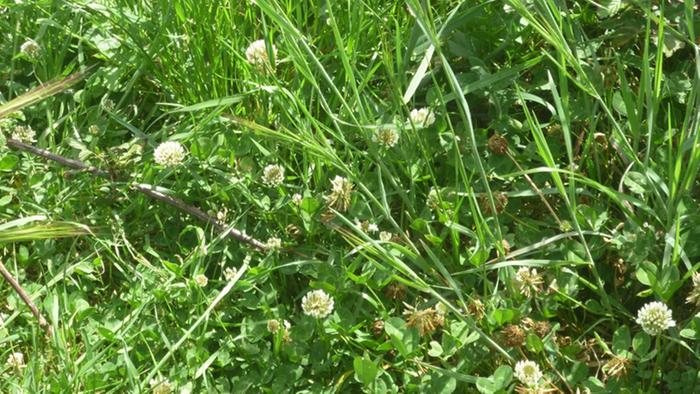
White clover being used as a nitrogen-fixing living mulch along the paths.
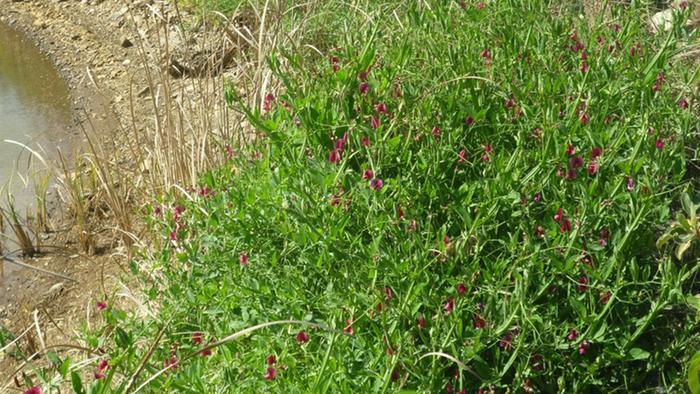
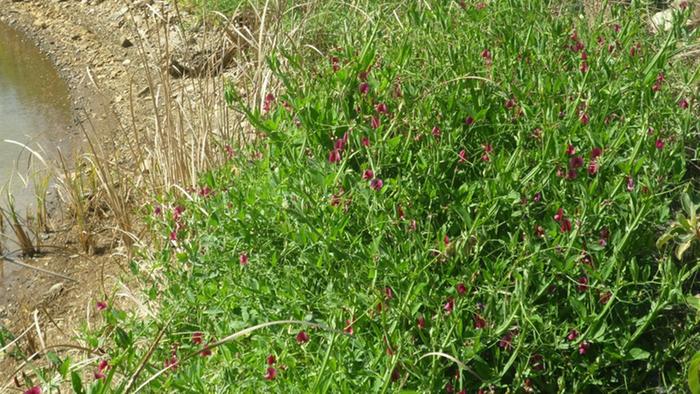
There were lots of patches of this plant - looks like mange-tout peas, but I'm not sure.
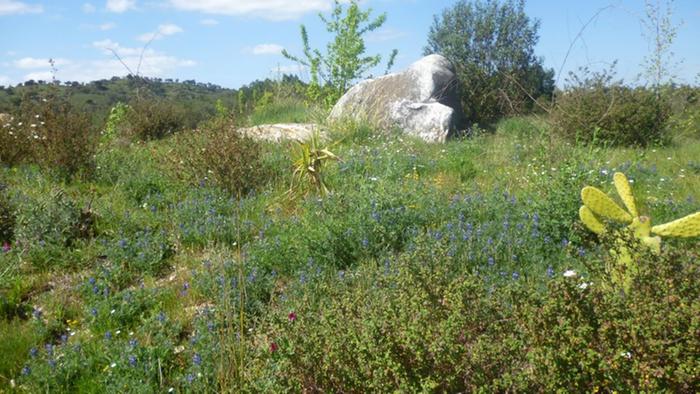
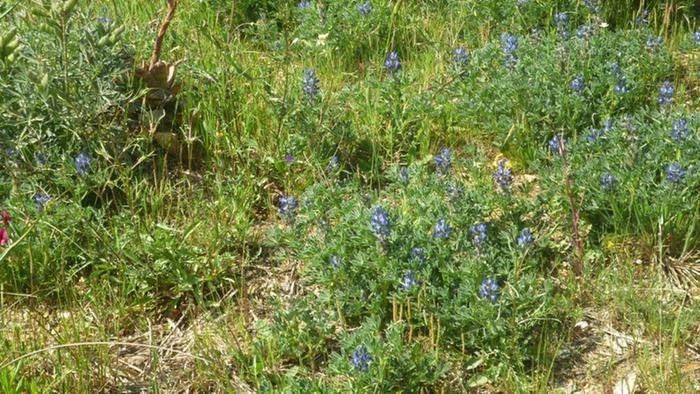
Blue lupin - another nitrogen fixing living mulch.
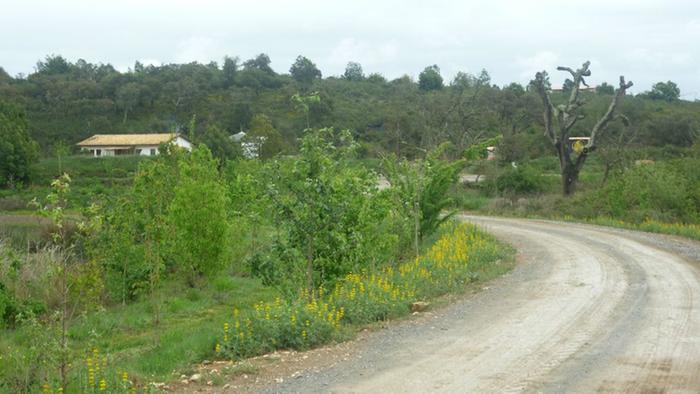
Yellow lupin growing along the edges of the access road.
More white clover mulch.
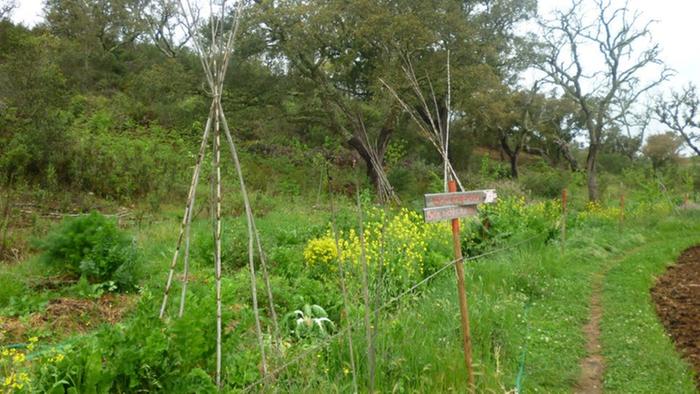
The seed garden.
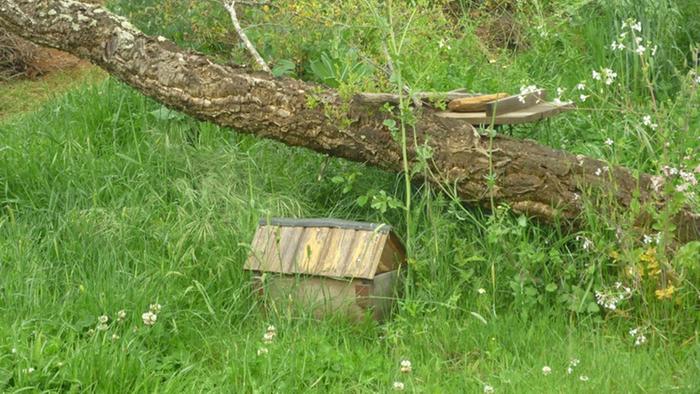
I kept finding these fascinating little wooden 'houses'. They turned out to be to protect and mark junctions in the pipework for the drip irrigation.
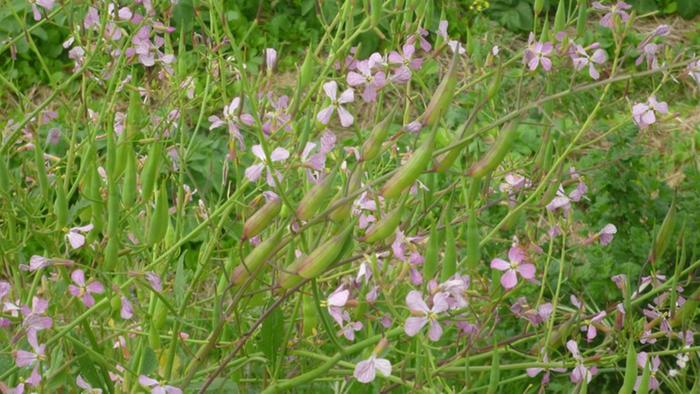
The salads served in Tamera occasionally had these wonderfully crunchy, peppery seed pods in them. I think they are some kind of radish, and found something similarfor sale on ebay, so I just ordered myself some.
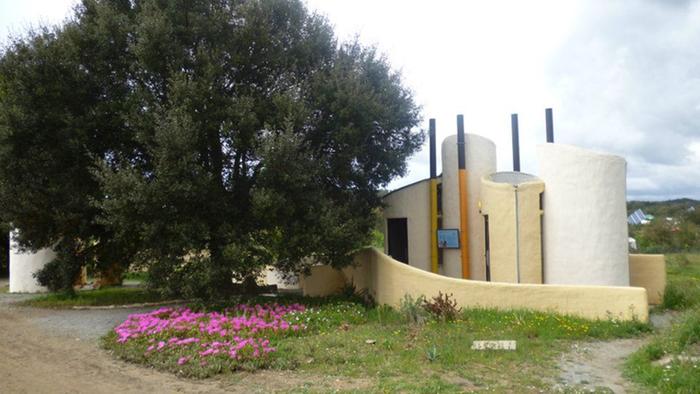
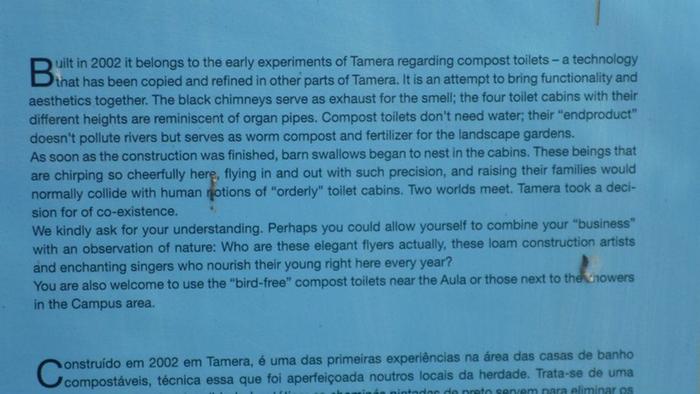
Some of the compost toilets - this one is called the Compost Organ.
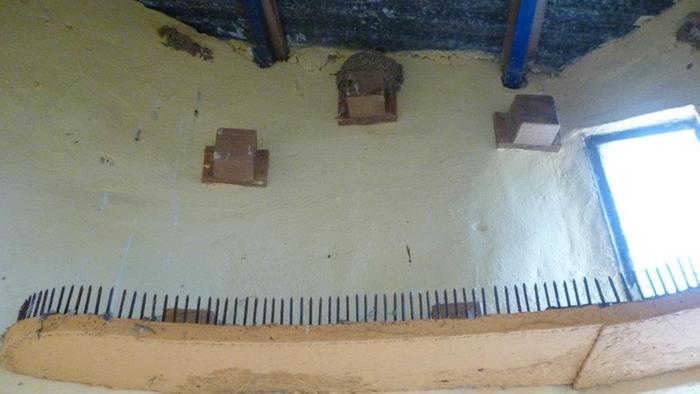
The 'other residents' of the compost organ toilets. The ledge has been fitted with nails to discourage them from perching on it and pooping on the visitors.
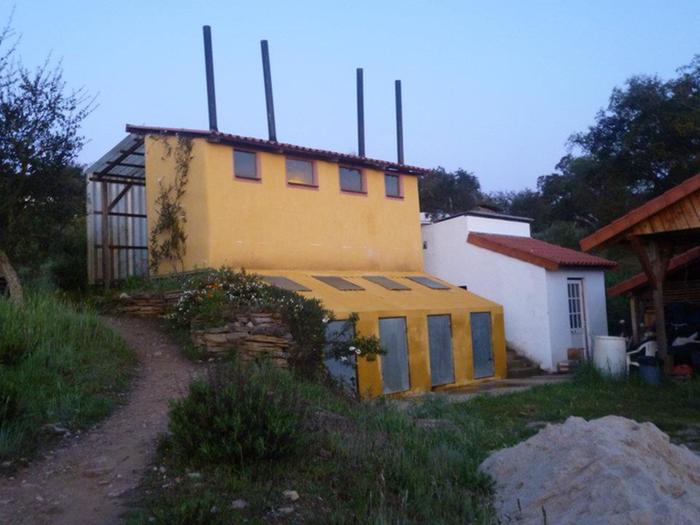
These are the compost toilets near the shower block. The upper level contains the four cubicles, and the poop can be collected from the doors on the lower level.
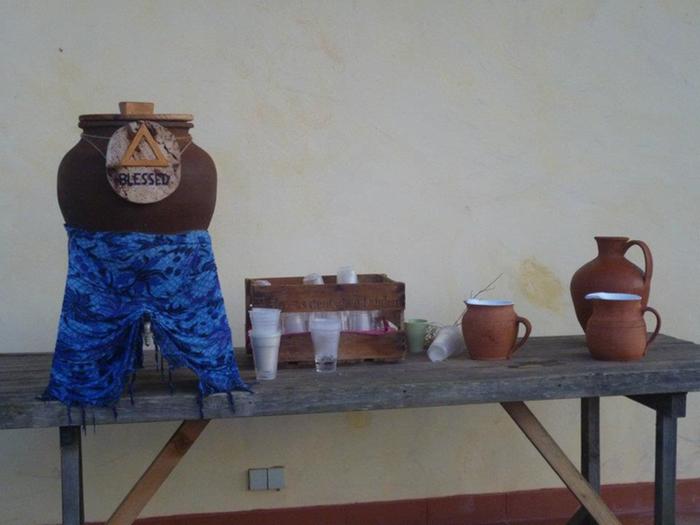
I really should know the Portuguese word for this water dispenser, but I don't. The pottery is unglazed, allowing water to pass through and evaporate, keeping the water inside cool.
subject: Tamera and their Water Retention Landscape