.png)
|

|

|

|

|

|
|
|
|
|
|
|
|
|
|

|

|

|

|
 1
1


Buy Our Book! Food Web: Concept - Raising Food the Right Way. Learn make more food with less inputs
Off Grid Homesteading - latest updates and projects from our off grid homestead
"the qualities of these bacteria, like the heat of the sun, electricity, or the qualities of metals, are part of the storehouse of knowledge of all men. They are manifestations of the laws of nature, free to all men and reserved exclusively to none." SCOTUS, Funk Bros. Seed Co. v. Kale Inoculant Co.
Buy Our Book! Food Web: Concept - Raising Food the Right Way. Learn make more food with less inputs
Off Grid Homesteading - latest updates and projects from our off grid homestead
1
paul wheaton wrote:
Check out the video on this page:
http://milkwood.net/2011/07/11/allan-savory-in-the-outback/
Joel Hollingsworth wrote:
I really liked the discussion of plans. This sort of thinking is anathema to, for example, objectivism.
hügel wrote:
For an equally good follow-up, I'll link to this one again as well:
www.thehappypermaculturalist.wordpress.com
www.thehappypermaculturalist.wordpress.com
paul wheaton wrote:
hügel wrote:
For an equally good follow-up, I'll link to this one again as well:
Wow. That was amazing.

Agricultural Insights Daily Podcast/Blog about Sustainable Agriculture with a focus on livestock and grazing.
The Grazing Book
Diversified Food forest maker . Fill every niche and you'll have less weeds (the weeds are the crop too). Fruit, greens, wild harvest, and nuts as staple. Food processing and preservation are key to self self-sufficiency. Never eat a plant without posetive identification and/or consulting an expert.
1
Jeffrey Hodgins wrote:I feel the need to add that young trees must be protected from grazing in order to perpetuate savannah like the one in the photos. It Is well documented that cattle will choose acacia over grass eating the vast majority of new acacia trees. I wonder how long savannah could last if new trees were not planted due to poverty and lack of interest in preservation. I wonder how many acacia saplings are eaten in savannah world wide on a daily basis. I'm not trying to discredit just clarify.
Agricultural Insights Daily Podcast/Blog about Sustainable Agriculture with a focus on livestock and grazing.
The Grazing Book
www.thehappypermaculturalist.wordpress.com
1
4
1
1
Buy Our Book! Food Web: Concept - Raising Food the Right Way. Learn make more food with less inputs
Off Grid Homesteading - latest updates and projects from our off grid homestead
1
I like this sort of thing.
1
"You must be the change you want to see in the world." "First they ignore you, then they laugh at you, then they fight you, then you win." --Mahatma Gandhi
"Preach the Gospel always, and if necessary, use words." --Francis of Assisi.
"Family farms work when the whole family works the farm." -- Adam Klaus
I like this sort of thing.
Moderator, Treatment Free Beekeepers group on Facebook.
https://www.facebook.com/groups/treatmentfreebeekeepers/


Hans Albert Quistorff, LMT projects on permies Hans Massage Qberry Farm magnet therapy gmail hquistorff
1
Enrique Garcia wrote:There’s no such thing as a beef-eating environmentalist.
1
Enrique Garcia wrote:Couldn't i just do the same with cow manure myself ? Why isn't that being done ? I believe it's bcuz it doesn't work ... what is the water source ? You have a shortage of food & water but the cow which requires both is gonna turn the desert lush again ?
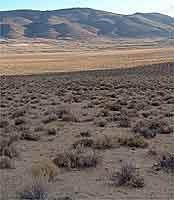


Subtropical desert (Köppen: BWh)
Elevation: 1090 ft Annual rainfall: 7"
3
Never - No, wait. That's Always... check your references.
https://www.facebook.com/laine.mactague

|
No thanks. We have all the government we need. This tiny ad would like you to leave now:
Come Visit Wheaton Labs!
https://permies.com/wiki/367505/Visit-Wheaton-Labs
|