Inge Leonora-den Ouden

pollinator
+ Follow
since May 28, 2015
Merit badge: bb list bbv list
Biography
Accompanying the gardens (front and back yard) of my rented ground-floor appartment in the transformation to a miniature-food-forest, following permaculture principles (nature's laws) in different aspects of life
For More
Meppel (Drenthe, the Netherlands)
Apples and Likes
Apples
Total received
In last 30 days
12
Forums and Threads

Recent posts by Inge Leonora-den Ouden

I read this thread because I just started reading a new book on the permaculture principles. Of course I need to write a review for Permies. I want to know what I have to keep in mind while I am reading, so my review will be useful.
Good tips here. Thank you.
1 day ago
I prefer cloth hankies. I got some 'real' cotton handkerchiefs a friend 'inherited' from her uncle. I don't know why she gave them away, but anyway I am happy with them. Until then I used square 'rags' cut from old T-shirts.

If I really get the flu, then I prefer soft paper tissues for the constantly running nose. But I don't have that very often (only once in several years).

I don't know if one is better than the other. Paper tissues you throw in the bin, cloth hankies you have to wash at a not-too-low temperature.
1 day ago
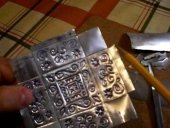
And if you aren't interested in making boxes from drink cans ...
Atomic Shrimp has videos on so many other subjects! Unbelievable. Foraging, cooking (with the cheapest ingredients f.e.), walking along English beaches, gardening, ... what doesn't he do? And of course all with the typical British sense of humor.
3 days ago

David Milano wrote:...
The interior photo of the old Ford parked inside the better-preserved end of the barn (the other end is not safe to be in) tells its own sub-story. By all appearances it was simply driven into the barn one miserable day when it could no longer justify its existence on the farm and promptly forgotten. I looked it over pretty well, and figured it could probably be started and driven with a bit of tinkering. (I once resurrected a long—30 years long—abandoned field truck that the farmer gave to a friend and myself for free, just for the effort of getting it out of his hedgerow. The rugged old flathead V8 coughed up and the leaky tires held enough air to get it out of the field and into a trailer.) But this truck revival wasn’t to be. The owner (two generations along from the truck’s use-by date) wasn’t interested, and really neither was I, being already overloaded with projects.

I guess the old Ford sits there still. The very likely outcome? Falling timbers will one day finish it off for good.

In their small way, the barn and the truck tell the story of the rise of colossal, centralized systems, and the fall of tiny local ones.
I think collectors of old-timer cars wish they had that old Ford!
3 days ago
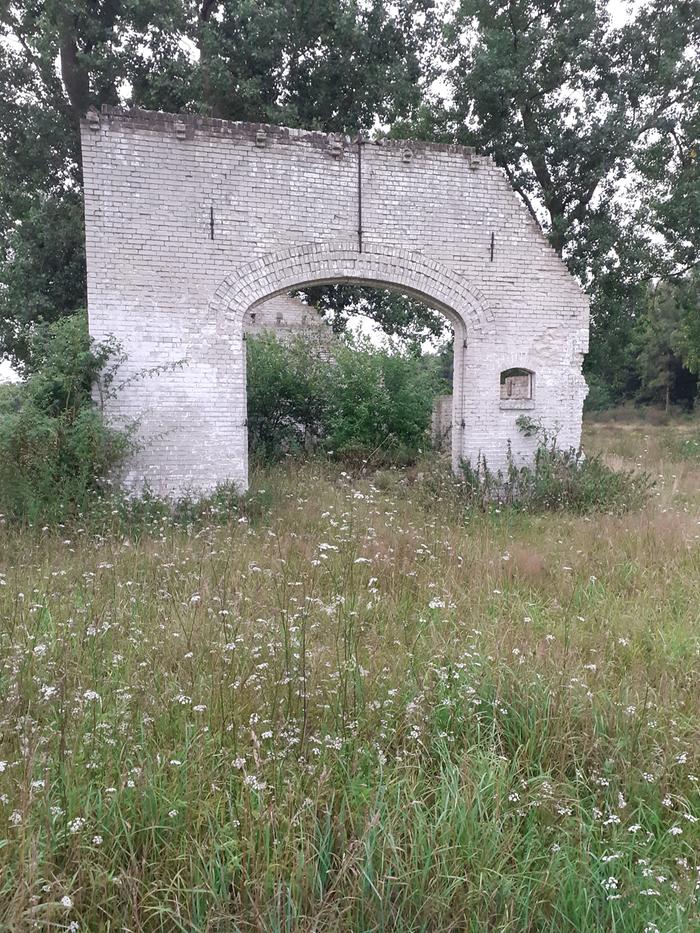
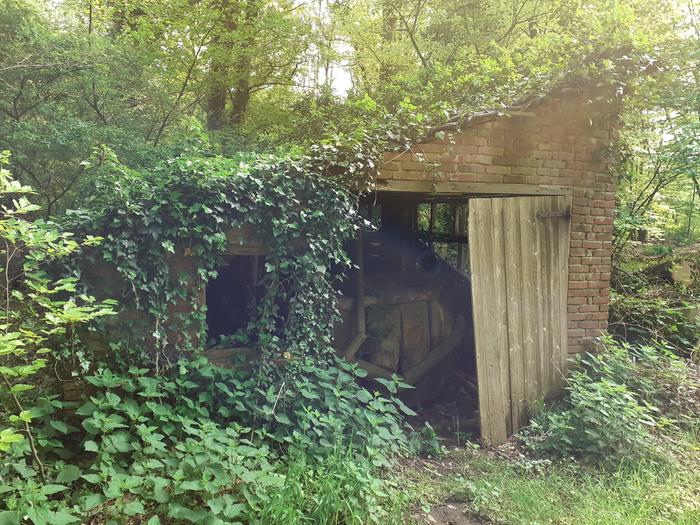
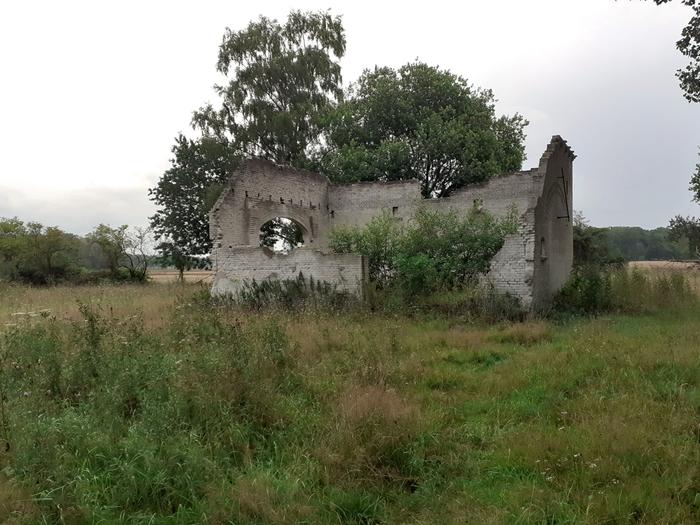
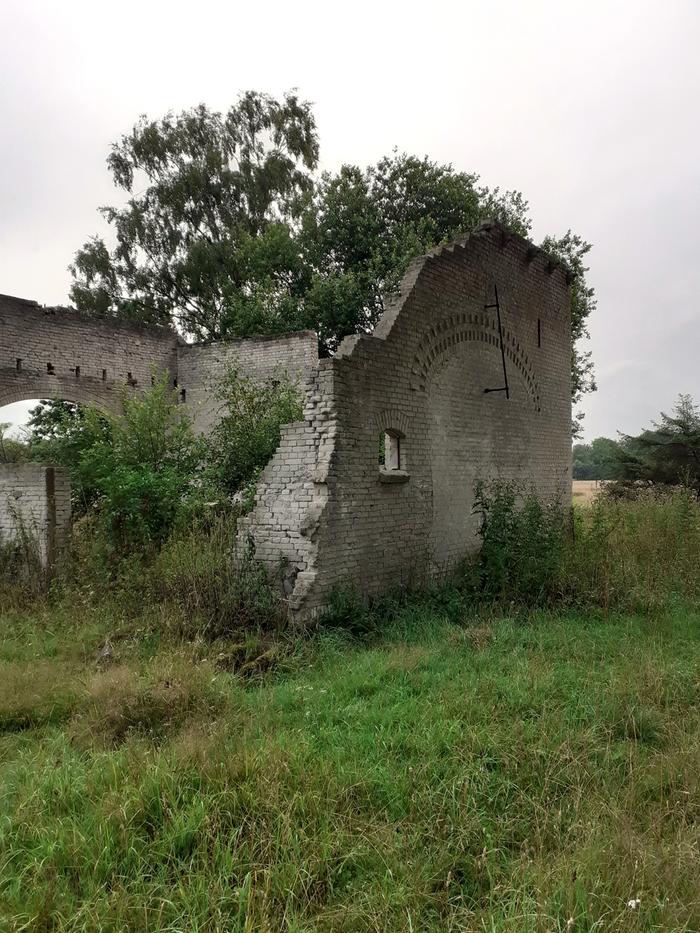
Abandoned buildings are rare where I live. Old buidlings are either demolished completely, or renovated.
So when I see an old abandoned building somewhere I do my best to make a photo of it.


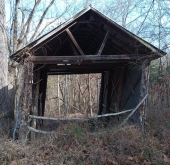
old shed in the woods in Twente (region in the very East of the Netherlands).


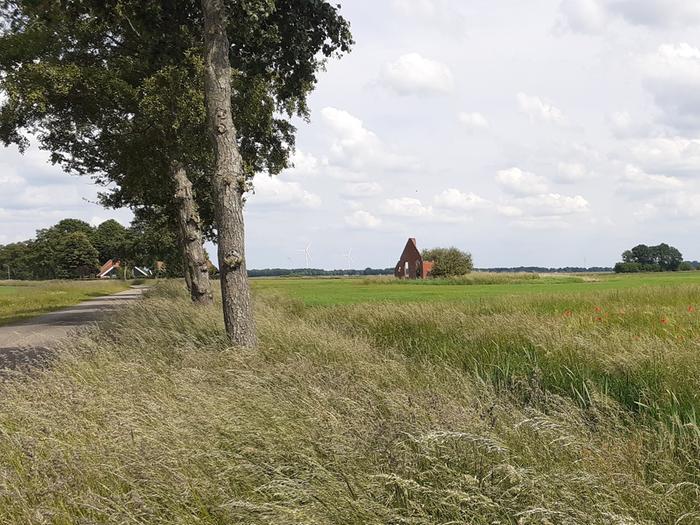
Three photos of a early-last-century farmhouse that has been 'given back to nature' on purpose, because of 'rewilding'. In Drenthe (2 hours bicycle ride from where I live).


I'm sorry I wasn't able to come closer for a better photo. Another case of 'rewilding', now somewhat more to the North of the Netherlands.


4 days ago

M Ljin wrote:Inge, I think it is possible. If you take a very tiny amount and use a lot of water for the infusion, that can be a simple homeopathic dilution, especially by only taking a small sip. I think maybe the only reason it seems so inaccessible may be the tedium of preparing it the traditional way.

Usually, I try new herbs this way, but especially powerful herbs still get made this way, like burning bush.


Hi M. In the past I read books on homoeopathic medicine. In many cases the herb (or mineral) used in the dillution is not the herb that works against some health problem, but the contrary. Something causing the health problem is dilluted (1:100, or even more), stimulating the body to act against the problem with its own force.

What is the right plant (or mineral) to use is very hard to tell if you haven't studied this very thoroughly.
Because this is what I know, my choice was to keep using the ordinary herbalism.
5 days ago

Elanor Gardner wrote:I'd start with  ... calendula because its pretty and it is good for wound healing ...


Yes, Calendula. I forgot to mention. Nice flowers in the garden, then soaking in oil (looks nice too). Then you can use the Calendula-oil as it is, or make a salve. All doable in the kitchen, not very difficult.
5 days ago

S Windlass wrote:Start your natural medicine quest with homeopathic medicines.
Homeopathy is nano-dose medicine made from highly diluted natural substances.
With homeopathy, there's no concern about the quality of the herb or potential for toxic overdose.
It's a system of medicine with 250 years of history and a truly amazing track record.
...

Homeopathic medicine works well. But the problem is: you can't make it yourself.
5 days ago
I agree with many here that the herbs you already use in the kitchen are a 'gateway' to the medicinal use of herbs. You already know them, you grow/forage them (possibly. If you don't you can start doing it), you are used to the taste of them.

So you can start to get to know more on these herbs. Read about their medicinal use. Change the way you view the specific herbs. F.e. you know basil gives a nice taste to your salad. When you know about the medicinal properties of basil you understand when to use more of it and when not to use it. And you can start to use it in different ways, like making a tea of it.

My favourite medicinal herb is Yarrow (Achillea millefolium). It can be used in many ways and it grows abundantly as a native plant in the region I live in. I keep some dried leaves of it in a handkerchief in my bag for 'first aid' in case of cuts. It stops the bleeding and works as antiseptic. But it can be used in a tea too.

6 days ago