

|

|
|
|
|
Ahmet Oguz Akyuz wrote:Hi there! I have two Layen's style beehives, which I built mostly by following the instructions at https://horizontalhive.com/. This was the second winter for one of the hives, and it was the first one for the other. At the end of October, I thought I was winterizing my hives by putting several layers of fabric on top of the frames including clean undershirts and towels. In one of the hives, I even put a small cushion. All of these materials were placed above the frames and underneath the lid. The lid has two side ventilations and the hive has a screened hole at the bottom to allow airflow. After collecting the honey and making sure to leave the bees a generous amount, I removed the empty frames and put an insulation board to tuck the bees in to one side of the hive (to the side where the entrance is). Finally, I reduced the size of the size of the entrance slit to prevent unnecessary heat loss.
When I arrived at the side today, I was faced with a catastrophe. All bees in both hives were dead. The fabrics in one of the hives were clearly wet. Perhaps rain found a way to get in it couldn't dry out. The top of the frames were all moldy. Even the left-over honey looked quite dark and unusable. The second hive appeared to be dry, but nonetheless the bees were all dead.
Now, a number of things could have gone wrong of course including some kind of infestation. But I was wondering if it was a mistake to use fabric as an insulation. I wonder if it got wet because of rain finding a way in or because of the condensation from within the hive. I would be very happy to hear your advice on this matter -- in particular whether I was doing something bad for the bees in an attempt to keep them warm.
As an extra information, I want to keep bees naturally by providing them good conditions and leaving generous amounts of honey for their consumption, which they make for themselves anyways. I don't want to feed sugar or spray any kind of chemicals. I am not in it for profit, but simply for the joy of keeping bees. My climate is a continental one, with relatively cold winters (can go below 0 degrees Celcius but daytime temperatures are usually around 0-10 degrees Celcius in winter).
As a related question, how can I clean the hive and the frames which got moldy? I hope I don't have to throw them away and start anew -- especially for the hive. My frames are also custom build as the hive dimensions are non-standard. Looking forward to your advice.
Oguz
Gordon Longfoot wrote:
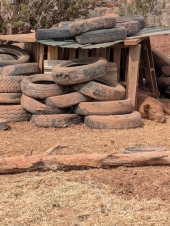
We're an hour or two from the NM border depending on which way we go. It's a little over 5,000 ft elevation, but there's pine forest within a 20 minute drive. The soil is red clay and sand, so water runs off. But there's a pond that collected some of that water. I'm somewhat concerned with water rights and grazing my livestock, so swales aren't going to be happening. I built a few half moons out in the field and have been adding manure filled bedding to the small wash that runs across the 40 acres. It's mostly experimental right now. My main goal is to get better soil that holds water instead of trying to block water from leaving the property.
Gordon Longfoot wrote:This year I'd like to grow strawberries and raspberries to sell. The problem is we get big wind storms that blow dust around. We're planning to start planting wind blocking trees but that will take a few years to be effective. What are my options for a temporary wind block around a 1/2 acre berry patch?
For the tree's I'm planning to start with 40 low thorn Honey Locusts around the 40 acre perimeter. These will be 2-3' trees and more will be propagated as time goes on. I was also thinking of using a hedge but this is a dry climate with sand and clay in the soil. The monsoon season dumps a good amount of rain on the land then it all drains off. There's been destructive sheep ranching out here since the 19th century. The land is over grazed but I have six months worth of goat, pig, chicken, and rabbit manure piled up.
There's already established Juniper trees. One cluster seems to block the brunt of wind, you still feel a breeze but it's not blowing you around. Long term I want to thin them out but as a temporary wind block I could plant berries around them, if they don't interfere with growth.
The birds and other critters can be a problem. Last year we had all our tomatoes robbed by something. I was thinking a scare crow, because bird netting over 1/2 acre would be expensive and time consuming.
I'm willing to experiment and maybe loose this years crop if it means later on down the road I can make it work.

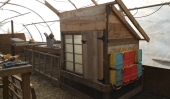
Linda Johansson wrote:Cecile—I have kept them locked in until later so that I can move the set up while they’re still inside. I don’t care to do that because I keep it basically as full of chickens as I realistically can, so they really need as much outside time as possible so they don’t get crabby and stop laying. Also historically the water has been located outside because the waterer I had, they would roost on top of it and poop in the water. I now have a different water system where that won’t be an issue.
Even in the deep cold of winter (-40 F at times), my first winter my chickens continued to lay nearly an egg a day. This winter there was slightly less but again, I was getting by for the winter with a coop that was a bit small, so when it got super cold and they wouldn’t go outside they felt a bit crowded. Next winter I will have a much more spacious coop which should help with that issue. Interestingly, I find that my chickens are consistently done laying by 2 pm every day, as during those extreme cold snaps I have to collect twice daily to keep eggs from freezing. If I collect at about 8 am and 2 pm, I get all the eggs without the first ones freezing before I can get to them.
Linda Johansson wrote:I have honestly not had any issues with hawks or owls, just the occasional raccoon, but I find that if I let them free range completely in the summer I lose too many eggs to the tree rows or haystacks. This is, after all, a business..
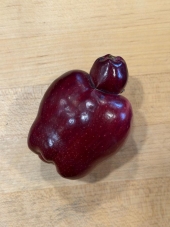
Christopher Weeks wrote:How often does this happen? I think this is my first time seeing this.

Mike Barkley wrote: