Rocket Heater Design for a Conventional Fireplace?
Pat JFree
Joined: Nov 09, 2009
Posts: 34
posted
0
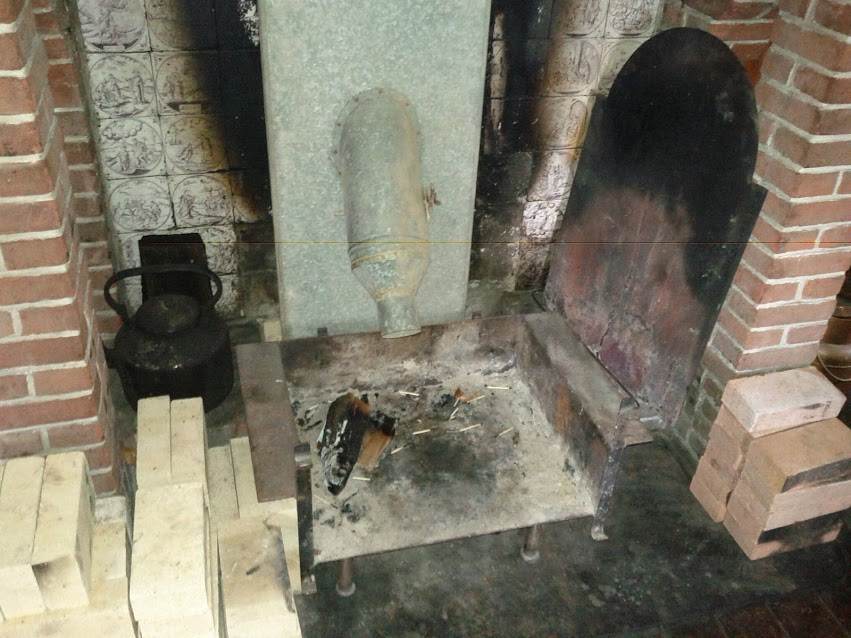
My house has a standard wood burning fireplace (3' wide, 2'6" tall, and ~2' deep) in my suburban living room. While a cob filled mass stove looks fascinating for my next house, it would not work here. I could put in a conventional wood burning stove for some efficiency gain, but I was wondering if anyone knew of a rocket heater design that would fit into my existing fireplace? Ideally it may have an electric fan to push the heat out the fireplace and the stove pipe would go a foot into the chimney and the chimney would take the exhaust out of the house. It needs to be removable. The goal is just to take the chill off the living room after work with less wood and less pollution with a fun project, not heat the entire house.
If anyone has any ideas, designs, or photos please let me know. If there are any risks or if this should not be attempted - e.g. the wood mantel or creosote buildup in the chimney could catch fire, please let me know. It's not worth burning my house down.
A Google search did not have any helpful results - other than a cute dog named 'Rocket' standing in front of a fireplace.
I've been churning some ideas around on the same topic. I have still been thinking of building something along the lines of a mass bench but yeah, exhausting back up thru the chimney. However: 1) I have only just purchased and started reading the book, and 2) Since reading your post I am busy trying to find that dog picture...
Thank you for the good information in these threads. This is a great idea that I just ran across today. Funny you study, read, apply while living off the grid, but sometimes the best ideas escape you for so long. Anyway, I have a brick fireplace and am planning on building a rocket stove to improve my ability to heat with wood. I am sure that more questions will follow. I thought about purchasing the book that you all reference. Does it have any specific projects on installing into an existing fireplace?
A pretty simple design might be something that has no mass. A "rocket heater". You build a wood feed and combustion chamber as normal, then have some ducting that goes back and forth a bit. Then a duct goes up the chimney. Something is built to block the chimney, but allow the duct to pass through. The duct has a 90 degree elbow that immediately ends with one of those dryer vent thingies that lets air pass outward only. This would make sure that exhaust does not come backward into the system.
While this would not be as good as a RMH, I suspect that it would get a lot more heat out of the wood than ..... anything other than a RMH. And it would be cleaner too.
OK, I've now read the book and reread it. Instant downloads and PayPal, gotta love it. A fireplace conversion is not specifically detailed: Ianto and Leslie walk you through a "vanilla" proven-to-work stove design and implementation, all the while discussing all the principles that make or break a particular design. I like this. When you have these concepts downloaded into your head, you start looking at your fireplace, breakfast nook, corners of rooms, etc. and mentally working out the relative benefits and challenges of arranging mass heating for each application.
Some of my initial thoughts follow, but the concepts are still mixing and combining and combusting in there...
-> Possible to do the rocket part all in brick, mortared together but just laying on the flat floor of the fire place so it can just be hauled out and broken up at moveout. Work out how you want to make the ducts happen for a) hot air from the stove/fireplace into your heated furniture and b) cooled air + H2O + CO2 etc. back into the fireplace, reheated for flow up the chimney. -> Surround the heat riser stack-o-bricks with cob to insulate and form a horseshoe shaped space for the air. Split the horseshoe at the very back to separate the new hot air emerging from the cooled air that gets pushed up the flue / chimney. -> 2 foot 4 inches sounds like Just Enough vertical space for a heat riser. If you can get it hot enough. At the top you still have to "U-turn" the hottest air, could be a plate shaped to block the top fireplace opening but with a hole for an exit/exhaust flue on one side. You don't get to use the heat at the top like you do with the basic "barrel" model though. Unless you count heating the (house's) chimney, which is a Good Thing to reduce condensation and creosote and consequences of corrosion and crud... -> Alternatively you could do a heat exchange barrel half-in, half-out of the fireplace. Sideways burn tunnel. You get the hot lid for teapot, radiant heat from the barrel. This also brings the design back toward the model used in the book. Aesthetically this could take you away from or closer to the look you want to have.
On mine (kind of an arc fireplace in a corner), I'm leaning toward all brick rocket in the fireplace, 8" flue system, and the heat storage built in two parts: hearth extension in front of existing hearth, then to the side as a 9 foot bench w/two lengths of duct to round-trip back to the fireplace for exhaust behind the stove-assembly and up the chimney.
Massless heater could have a metal (opened barrel section?) piece across the whole fireplace opening that gets hot and has just the feed tube emerging in front of it...
Erica Wisner
volunteer
Joined: Feb 10, 2009
Posts: 466
Location: Okanogan Highlands, Washington
4
posted
0
Ernie suggests a Pocket Rocket like the one on pp. 76-77 of the Rocket Mass Heaters book. (www.rocketstoves.com) Sminfiddle suggested something similar toward the end of his ideas - like he said, it's not the prettiest thing ever, but it's neat.
You can make a small one from a 5-gallon bucket and 2 pieces of scrap stovepipe, and get a lot of radiant heat. The fire is concentrated near the bottom so you get more of the warmth. Fun project, fuel-efficient, quick heat in the evenings, and gives you practice operating a J-tube rocket stove if you want to build one later.
If you like watching fire and more conventional aesthetics, another option is to modify your existing fireplace so it resembles a Rumford fireplace. You can dry-stack bricks, maybe do a little cutting if you want the fancy curved back, and make your fireplace shallower with good angles to send heat into the room. It increases the heat efficiency and clean burn quite a lot. You may not be able to duplicate the 'smoke shelf' part of Rumford's design, but reach up into your fireplace and see if it already has one.
You asked for warnings:
Modern woodstove and fireplace inserts require a complete chimney liner to make sure the exhaust does in fact get all the way out of the house.
When a chimney is too big / too cold for the exhaust going up it, it can create weird inversion plugs or draft problems that send smoke leaking into your home. We would consider exhausting a full-size Rocket Mass Heater up an existing chimney only if the flue size was compatible, and we could get a good seal. Even then, a chimney heater option would be reassuring.
This wouldn't stop me from trying it, but I'd be ready to ventilate if smoke did leak. I don't know if there's an easy option like a skirt at the bottom, to seal the exhaust in and cheat the problem.
If your chimney has creosote you want to get that cleaned out, regardless of what kind of fire/stove you're considering. Creosote usually results from incomplete burn / wet wood, so with practice (and an efficient stove or Rumford fireplace) you can avoid it.
Play with nature, make nifty stuff:
http://www.ErnieAndErica.info
jpwood McCoy
Joined: Nov 13, 2009
Posts: 4
posted
0
Wow, some great suggestions! I will get the book, study it and take your kind and helpful posts into consideration. Starting to get colder outside and I would sure like to make the house warmer. Of course I have some other areas that I could start with. My shop is in my cold garage and I really need heat in there and I love to have an outside fire for entertaining and such but hate the smoke around a traditional campfire and the stand-up propane heaters are expensive to buy and operate. In my unfinished basement I have some room and eventually would like to make a cobb bench heater. I will probably start with modifying the fireplace into a Rumford style or the pocket rocket. I've thought about the russian style and building that actually in front of the fireplace. so that the exhaust climbed through a series of stepped brick.
jpwood McCoy
Joined: Nov 13, 2009
Posts: 4
posted
0
Erica, Thank you for sharing your photo album. Great pictures of your class. I would love to come and take that class. JP
Uh .... yeah .... all of the downsides of the pocket rocket, plus all of the downsides of the mass heater. Or .... maybe there are bits I don't understand .....
I would think that if you are gonna have mass, you would wanna run your heat through it.
The upside of the pocket rocket is that it is quick to build and portable. But that is not portable.
And it looks like the extra heat is piped right outside. I would think you would wanna have it go left and right a bit to give up some more heat before going outside.
Erica Wisner
volunteer
Joined: Feb 10, 2009
Posts: 466
Location: Okanogan Highlands, Washington
4
posted
0
woodman wrote: Interisting pocket rocket.
That's the most dolled-up pocket rocket I've seen yet. I like the river-pebbles on top; and the black paint job. The lid seems sturdier than the stove.
Paul, this does look like a workable compromise for the situation (a yurt). Pumping the exhaust outside is the normal option for any woodstove.
Any amount of thermal mass will soak up some heat, as well as helping to protect the walls. This funky 'hearth' might make the difference of a few sticks a day in efficiency, but it adds up.
My one concern with pocket rocket is its stovepipe: that abrupt L-bend so close to the heater. I saw another yurt recently with an L-bent stovepipe to take the exhaust out through a built-on bathroom outside. It didn't draft right; all that exposed stovepipe got cold, there wasn't enough of a hot vertical path to draft properly. It often smoked back into the room. They had to keep it fully loaded much of the time to keep the chimney warm enough, which meant it consumed even more wood.
Paul, you sound excited about this idea of an exposed-pipe radiant heater. (New thread?)
Do you know that this was tried historically? They used to sell stove pipe in giant S-curves and other fancy shapes. History responded with a lot of deadly chimney fires. Steel tends to go "sproing" when heated, especially when heated unevenly by burning creosote. Current building code limits stovepipe lengths to about 6' (? maybe 8'?) so there are de facto expansion joints in any long run; and manufacturers' instructions usually emphasize vertical or near-vertical installation, with straps and clearances from combustibles.
There's not a lot of structure in a yurt to secure pipe switchbacks, and the lattice-and-ring wall structure seems pretty vulnerable to fire. As I recall the Mongolian traditional yurt-dwellers often transported fancy brasiers/stoves with them; testimony to the importance of fire containment in an otherwise light-weight lifestyle.
Theoretically creosote shouldn't be a problem with clean-burning stove designs. But theoretically we never burn wet wood either, nor "damp down" our fires and smolder them through the night.
An exposed stovepipe radiator could work. There's definite historic precedent for exposing stovepipe in an upstairs bedroom, say, or for piping hot flue gas through a heat-exchanger. With smart, safety-conscious builders and operators, it can be done. (And maybe a special railing to keep the kids away when its hot.
If designing a stovepipe "radiator," consider the importance of - preventing creosote buildup, - ensuring proper draft is maintained (Rocket Stoves have an internal "heat riser" that creates 'internal' draft; Pocket Rockets don't, and rely on an external chimney like most stoves & fireplaces for their draft.) - securing the pipe so heating & cooling can't work it loose or change its shape catastrophically; - shielding [whatever it is secured to] from the heat - constant monitoring for smoke leaks, cracked seals, etc. (difficult to get good seals on used stovepipe, so there's also the cost of new stovepipe and goops to consider for such an installation). - regular inspection & cleaning (meaning cleanout access for every pipe section, and re-sealing all joints regularly).
The improvement in efficiency is not as marked as with a heat-exchange mass. It might not outweigh the hassle in many situations. The fire risk is too great in most temporary structures. And most permanent, inhabited structures would benefit from the increased efficiency and safety of a masonry-enclosed thermal mass heater.
But I can imagine a few places where a stovepipe radiator could still find favor. Maybe in a big hunting cabin, or as a sculptural addition to a large, occasional-use space.
You'd need a reliable maintenance man, though. If it's the kind of place where nobody remembers to clean the gutters every year, then the necessary stovepipe safety maintenance just isn't going to happen.
This is the thread (I think) for the exhaust radiator idea.
I'm thinking that this should be for a design with a combustion chamber ONLY (so the pocket rocket designs are out).
My thinking is to have a moderately light wood feed and combustion chamber and that there would be no thermal mass bench. Instead, there would be exposed exhaust pipe that would go back and forth and then out the chimney. Granted, it will not go UP the chimney unless the fire is currently pushing it up. But at the exit point, the air should be slightly warmer than room temp. 100 degrees F? It might still rise, but I would like the safety of a dryer vent one-way-thing-a-ma-jig just to be sure.
So! there should be zero creosote problems.
The system would be far more like dealing with a dryer vent than like dealing with a wood stove. After all, how warm is the air exiting the dryer?
This would have to be a six inch system. How hot is the air hitting the top of the barrel? How hot is the air leaving the barrel? Pehaps things should be done with the barrel to focus the most heat exiting from the barrel before going into the first bit of duct?
But - the important thing is that we now have push. And we push our exhaust through, say, five feet of pipe before it does a 180. And then another five feet and another 180. Maybe do this three times before heading to the chimney.
Pictures!
So one pic shows what is in my head. An RMH combustion chamber, no mass bench, the exhaust goes back and forth a bit and then up the chimney.
The next pic shows the duct going up the chimney and then the chimney is plugged around the duct. There is then a left turn and one of those one way dryer thing-a-ma-jigs.
My thinking is that the bottom pipe will, indeed, get really, really hot. So some insulation under it would be wise. But the important thing for this idea is that hardly any heat goes out the chimney. A smaller fire using much less wood would throw off far more heat. And what goes out the chimney will be far cleaner.
Pulling numbers out of my ass: I would guess that this would be 100 times cleaner and 20 times more heat efficient than a fireplace without this contraption.
Of course, adding mass to it would make it far better still by keeping the room warm between burns. In fact, I suspect that a small fire will make the room too hot. And once the fire is out, the room will get really cold, really fast.
Does your silence on this mean that my idea is awesome, and brilliant, and so perfect that you are speechless?
Erica Wisner
volunteer
Joined: Feb 10, 2009
Posts: 466
Location: Okanogan Highlands, Washington
4
posted
0
Awesome ... brilliant ... perfect ... speechless... nah, just looking for paying work. But you caught me on a quiet night. So here it comes...
paul wheaton wrote: Erica,
This is the thread (I think) for the exhaust radiator idea.
As this thread started out with Rocket Heater designs for a conventional chimney, I think we should move the exhaust-radiator ideas to a new thread.
Reason: If you're using a conventional, masonry fireplace chimney for exhaust, you need hot exhaust to go up it. A stovepipe radiator would be intended to cool the exhaust and warm the room. As such, it is likely to be incompatible with a masonry chimney or fireplace exhaust. It would probably need to exit at its own height, not be routed back down to a fireplace opening.
paul wheaton wrote:
I'm thinking that this should be for a design with a combustion chamber ONLY (so the pocket rocket designs are out).
Meaning, a self-drafting combustion chamber? I agree. The insulated combustion chamber and barrel system, or an exhaust fan, are the only types of systems I know that can 'push' cool exhaust through convoluted pipes.
paul wheaton wrote: My thinking is to have a moderately light wood feed and combustion chamber and that there would be no thermal mass bench. Instead, there would be exposed exhaust pipe that would go back and forth and then out the chimney. Granted, it will not go UP the chimney unless the fire is currently pushing it up. But at the exit point, the air should be slightly warmer than room temp. 100 degrees F? It might still rise, but I would like the safety of a dryer vent one-way-thing-a-ma-jig just to be sure.
I wish there was a thingy that would make my exhaust go out smoothly without backing up, no matter how many convolutions I was trying to push it through. A dryer vent thingy isn't it.
A vent flap will prevent outside air coming into your stovepipe. But it will not prevent smokeback. In fact, it will increase the resistance to outward flow, and probably increase the incidence of smokeback. Smokeback occurs not just due to wind or reverse flow, but also - whenever exhaust is obstructed (as it would by a heavy flap that relies on fast air / exhaust movement to push it open further), - whenever the heated combustion gases expand faster than the exhaust drafts.
A one-way flap can prevent wind or cold air from pushing down the exhaust when the fire is out, but it will impede draft when the fire is going strong, and probably encourage oscillating or 'chugging' smokeback problems when the draft is weak.
I don't know any passive device for ensuring good draft, besides a hot chimney. A mechanical fan could work, and you could hook it to a thermostat or operate it manually as needed.
paul wheaton wrote: So! there should be zero creosote problems.
Indeed, you must have zero creosote, because in this design creosote will kill you. Literally.
Is zero creosote achievable? Yes. Is it likely, under the conditions this device would be operating in?
Our cleanest-burning stoves, including rocket stoves, will still creosote the pipes if you burn wet or green wood, or if you smolder your wood 'to make it last longer.' It will be tempting to mis-use the fire by smoldering it, just as with a woodstove, because of the instant heat / instant cold problem. Smoldering a fire produces creosote and wastes fuel.
Our back-up for thermal mass stoves is knowing that a creosote fire in the heat-exchanger couldn't do much damage anyway. For an exposed pipe, I'd want very sturdy attachment points to resist thermal warping or twisting, and fireproof shielding to protect its supporting wall in case it did catch fire at some point with mis-use. Our heater has double-walled stovepipe where it is exposed; this is now standard for code-approved installations of woodstoves.
paul wheaton wrote:
The system would be far more like dealing with a dryer vent than like dealing with a wood stove. After all, how warm is the air exiting the dryer?
The air exiting the dryer, or stovepipe, is all well and good - but that's only at the exit point, and only once you've somehow released the rest of the heat.
You'd have to actually build one to figure out how many runs, with what level of airflow across them, would release the right amount of heat to give you warm exhaust. Or find an HVAC engineer.
paul wheaton wrote: This would have to be a six inch system. How hot is the air hitting the top of the barrel? How hot is the air leaving the barrel? Pehaps things should be done with the barrel to focus the most heat exiting from the barrel before going into the first bit of duct?
Hitting the top of the barrel? Based on test systems with melted/warped steel burrs at the top of the heat riser, temperatures at this point can get above 2000 F. Leaving the barrel, it's still very hot - our best guess is about 400-500 degrees. The cleanout is certainly too hot to comfortably touch.
It's not air - it's a mixture of air, combustion gases, CO2, and water, with some traces of unburned fuel. I mention this because the exhaust is denser than air at any given temperature, and substantially denser at temperatures where water vapor starts condensing into fog. Dense, foggy gasses do not draft upward as easily as air would, at the same temperatures.
The whole thing is a dynamic system, and the speed of draft will affect temperatures at any point; these are our experience with our existing 6" rocket stove, which drafts as it was designed to, at about the right speed for the size of its firebox.
How to do things to the barrel to release more heat is a complicated topic, but it's worth a try. Size of barrel and gap spacing (between barrel and heat riser) are the most common ways to adjust radiant heat from the barrel. Some people have also welded vanes into the barrel's interior, but I don't know how it worked out.
paul wheaton wrote: But - the important thing is that we now have push. And we push our exhaust through, say, five feet of pipe before it does a 180. And then another five feet and another 180. Maybe do this three times before heading to the chimney.
Pictures!...(omitted)
My thinking is that the bottom pipe will, indeed, get really, really hot. So some insulation under it would be wise. But the important thing for this idea is that hardly any heat goes out the chimney. A smaller fire using much less wood would throw off far more heat. And what goes out the chimney will be far cleaner.
Pulling numbers out of my ass: I would guess that this would be 100 times cleaner and 20 times more heat efficient than a fireplace without this contraption.
Of course, adding mass to it would make it far better still by keeping the room warm between burns. In fact, I suspect that a small fire will make the room too hot. And once the fire is out, the room will get really cold, really fast.
I suppose those things too. Except the numbers.
Not sure why you'd want to spend that much on high-grade stovepipe, and fireproof attachments, yet skip the thermal mass.
The fireplace has thermal mass, and in fact can be warmed up to serve as an inefficient masonry heater. The stovepipe radiator doesn't have much thermal mass.
Without the heat-exchanger you're looking at the same basic problem. How to burn a small enough fire, slow enough, to produce warmth instead of hot/cold flashes, and how to do it without being a 24/7 fire-keeper. There's also a problem with size: if it's big enough to heat the space on your coldest local days, it's too big for normal chilly days. Result: operators are likely to solve both problems by smoldering the fire, resulting in smoke and inefficient use of fuel, and creosote hazards. Even unintentionally. A person simply can't tend a fire efficiently at all hours of the day and night, so a fire that has to burn all day and night will be a dirty fire at least some of the time. If you're willing to give up the option of keeping your space warm all day and night, you're looking at a space where you can only be comfortable briefly, under a limited set of conditions.
Thermal mass could be included in the heat shielding behind the pipes, but it won't be as effective as a purpose-built heat exchanger, and it wouldn't give as much protection from a creosote fire.
Dust will also build up on the exposed pipes. My great-great-uncle Clarence died from a fall while trying to clean my great-great-great grandmother's kitchen stovepipe, so I should know better.
My ass responds: I suppose it would be maybe 1-2 times cleaner, and 3 times more efficient, than a tidy little EPA-certified woodstove. Between 1/2 and 2 times as expensive.
And about 14 times more dangerous.
I do not think it would be suitable for replacing, or retrofitting, a masonry fireplace.
If you want to build one, and for some reason this seems like the right choice for your space, go for it. Share pictures.
But I wouldn't recommend it to anyone before I'd built one myself. It's just not worth the risk, in my opinion.
There were a lot of little homesteads burned down from the handy 2-barrel stoves in 'Mother Earth News', because they rusted out or melted and collapsed while in use. And before that, a lot of little homesteads burned down from the patented S-curve stovepipe for heating across the room on the way out.
We are still looking for ways to make heaters safer, more reliable, cleaner, and less costly to ourselves and the environment. Every invention is a compromise, and usually the obvious variables to measure and optimize aren't the ones that cause the most common problems.
The thing that sinks more inventions, in my opinion, is failing to understand the user, and human needs in general.
It doesn't matter if your device can meet an arbitrary standard for cleanliness, efficiency, or some other variable, if normal users will never be satisfied to operate it according to the design plan.
Cell phones that go everywhere, but can't get wet: whose idea was that? What's the point in having an outdoor telephone if it can't get wet? This was clearly invented in California, by people who never go to the bathroom with their pockets unzipped.
Woodstoves that can burn cleanly as long as the fire is hot and bright? We've had those since the dawn of time; a skilled woodsman can make a clean-burning, bright, smokeless fire with sticks and dirt. The problem is, there's a natural incentive to make the fire slow and red, to make it last longer, and that means smoky, choky heat.
In a lot of ways the rocket mass heater will never be an 'everyman's' stove. People who are willing to make a multi-generational commitment to a house with foundations strong enough for three tons of masonry, are probably not people who really need to save money by using a crappy recycled barrel which will need replacing in... nobody knows how long, maybe every 30 years? On a stove that otherwise could last 300? Some people will always love them, and some people will always prefer a more elegant, durable, or convenient option.
I don't understand the situation, or person, for whom an 'exhaust radiator' stove would be a good option.
I understand some situations in which people have wanted one, briefly; but it sounds like they ended badly.
Until someone actually builds a safe one, and shares their satisfaction with me, I'm going to continue to believe that this is a relatively bad idea. For most situations.
If you're not stranded in a frozen warehouse with a boatload of ancient Sears catalogs, stovepipe, and baling wire...
Can you suggest modifications to this design that would - reduce the creosote danger, or - the danger of too-cold exhaust backing up in the exit pipes?
Can you describe - a user who would want such a system, - why they could be trusted to operate it safely, and - why they would consider the instant heat / instant cold problem to be a benefit rather than a drawback?
charles johnson 'carbonout'
Joined: Dec 02, 2009
Posts: 369
posted
0
crappy recycled barrel which will need replacing in... nobody knows how long, maybe every 30 years?
this make me think . could I set the barrel in wet cob to imprint its shape and then remove it add shape cob like a ditch around the imprint allow it to dry and fill the trench with silica sand for the barrel to seal too
Not sure why you'd want to spend that much on high-grade stovepipe, and fireproof attachments, yet skip the thermal mass.
1) Because we may be nervous about how much weight the floor can hold.
2) We may be wanting to demonstrate all this and not do a permanent installation.
3) We may be renting and want to have a light impact. We also wanna take this with us when we go.
4) We want to demonstrate the value of it and then evolve to including mass.
5) In another thread I talked about the idea of a wooden bench filled with sand (as the mass) - the idea is that it would be some mass, but it would be lighter on the floor and easier to take out later.
Without the heat-exchanger you're looking at the same basic problem. How to burn a small enough fire, slow enough, to produce warmth instead of hot/cold flashes, and how to do it without being a 24/7 fire-keeper.
When you say "heat exchanger" you mean thermal mass, right?
I once lived in a house with 11 people. We kept the thermostat set at 50. And then we built a fire in the little wood stove insert every other night and got that one room up to 70 or 80 for an hour or two. We would gather around the fire and warm up. Sometimes some folks would play music.
As I visit conventional homes and people ask me how they can be more efficient, I have to admit that it is a challenge. The floor is not very strong and they don't have a lot of time. In the meantime, they are burning huge amounts of wood and putting a lot of heat and smoke out their chimney. It seems like a stepping stone would be a great help.
The first step would be a rocket radiator. You eliminate the pollution and you keep the heat inside.
The second step would be a small wood/sand bench. It isn't a lot of thermal mass, but a person can get a taste for how the thermal mass helps.
The final step would be to build a proper rocket mass heater: either shore up the floor, or figure out what it takes to have a full mass inside.
Erica Wisner
volunteer
Joined: Feb 10, 2009
Posts: 466
Location: Okanogan Highlands, Washington
4
posted
0
paul wheaton wrote: 1) Because we may be nervous about how much weight the floor can hold.
2) We may be wanting to demonstrate all this and not do a permanent installation.
3) We may be renting and want to have a light impact. We also wanna take this with us when we go.
4) We want to demonstrate the value of it and then evolve to including mass. ...
I once lived in a house with 11 people. We kept the thermostat set at 50. And then we built a fire in the little wood stove insert every other night and got that one room up to 70 or 80 for an hour or two. We would gather around the fire and warm up. Sometimes some folks would play music.
As I visit conventional homes and people ask me how they can be more efficient, I have to admit that it is a challenge. The floor is not very strong and they don't have a lot of time. In the meantime, they are burning huge amounts of wood and putting a lot of heat and smoke out their chimney. It seems like a stepping stone would be a great help.
I think 11 people around a small fire, playing music, sounds like an awesome stepping stone. People used to bring sheep, cattle, etc. inside in the winter, or have a special barn below their house to share warmth but skip the poop.
1) Being nervous about the floor does no good. Be informed. Find out what dead load it's rated for. If you don't have access to the house plans, check local code. Last I checked, ours was something like 50-100 lbs/sf for living space, and 125-150 for storage. You can build a 1-foot slab of cob at about 95 lbs/sf; and a full-on bench shouldn't be more than 135 lbs/sf with the ducting voids. Or replace / reinforce the floor. If you don't have the construction skills to strengthen a floor, you probably shouldn't be trying to build your own woodstove either: floors are less likely to kill you. Find handy help, or buy something reliable that you can afford.
2) Great idea: Demonstration - OUTDOORS - is a great way to test a concept before designing a 'permanent' version. We've built a rocket mockup without thermal mass for a quickie workshop, just so people could get the general idea. But it wasn't to be 'efficient;' it was to prove you could make the smoke go down or sideways, in a 1-day demo. They had never seen a rocket mass heater and would not be able to visit one before building theirs (east coast/ Ontario); so they will play with the mockup before designing an indoor one.
I'd suggest setting up an outdoor test space or well-ventilated barn. Put together a good-sized pocket rocket, side by side with your rocket/radiator rocket hybrid. Both would be a good learning experience and 'first step' toward building a rocket masonry heater. And you could compare the value and drawbacks, before installing in a home.
3) Renting: whole different story. For renters, there's gonna be landlord issues with installing anything, code-approved or not. If it's approved, the landlord usually gets to keep it when you leave. In some cases, they will happily support you installing a better stove, or even help pay for up-to-code stovepipe or foundations.
If you're trying to build a wacky, un-code-approved device, most are not gonna like it. Fire hazard, and city inspectors condemning an unsafe rental are bad news to landlords. Some landlords are friendly to eco-experiments, and might play along. Or are you thinking of doing this whole thing behind the landlord's back, and hoping they never find out?
Better options for renters: - The 11-person sing-along, - Sleep with a cat, dog, or friend - Close off unused rooms, or sub-let them. - Take a hot bath, or a hot water bottle to bed: great thermal mass, saves on hot air. - Work with what's there: If you have an inefficient fireplace or woodstove that the landlord won't replace, can you make it work better with some extra brick for thermal mass? Will the landlord pay for improvements like insulation, if you do the work? If a rocket stove is your preferred option, is there a cement slab already, maybe in the attached garage? Can you reinforce the wood floor from underneath, without damaging the house? If it's rated for 100 lbs.sf, can you build a smaller rocket bench or a slim heated pad on the floor?
3b) Taking it with you when you go: Harder than you might think. Stovepipe is not that durable for how much it costs. It gets marked up 50 times when they add the UL sticker. It gets bent out of shape, or rusts, very easily in certain situations. And if it's been installed, your rental agreement may specify that it now belongs to the landlord. It's gonna be hard to support those radiator bends without anchors and/or holes in the wall; these often define "installed" vs. just sitting there.
4) Demonstrating the value: Yes, a mock-up can help people understand a rocket stove. But a better demonstration would be a working rocket mass heater; or even the sand-bench you mentioned. I think most people are better off seeing a real 'dream stove' and saving up for it, than purchasing materials for a sequence of half-baked approximations. The rule of thumb is a product wil not catch on unless it's an 80% improvement over the existing popular option. So stoves that are slightly better, expecially if they also carry increased risks and hassles, are not likely to be attractive. The idea is attractive; the experience, less so.
You can also demonstrate the value of thermal mass without destroying the existing stove / fireplace. Even that yurt did some thermal mass for their pocket rocket. You can put a brick half-wall around back of your woodstove, and capture some of the heat that way. You can install a Rumford-esque brick insert in your fireplace, even just dry-stacked, and get twice the heat from a smaller fire.
For owners, I think these would be better stepping stones: - choose a small, efficient house; use a barn, shed, or unheated garage for storage. - Do passive-solar ladnscaping: awnings, plantings, or a reflecting pond; - remodel one or two rooms of your existing house. Include passive-solar, thermal mass heat, and good insulation. Have at least one room where you can live in winter, and at least one room that's inherently comfortable in summer. - Rent out rooms, or house livestock in a basement / duplex barn with an attached wall. - Get the most efficient heating device you can afford when you need a new one; - Get a free energy audit if available, and following it - Plan ahead. Have a master plan for improving your house, and keep it updated.
There's a fundamental efficiency problem with building big beautiful houses out of wood and skin, like tents, in climates where nobody in their right mind would try to live in an actual tent all year. Wood is going to get scarcer with all of us living on this planet; I do think it's time to look at masonry and passive-solar wherever practical.
If your local mammals live in dens, wear fur coats, or try to move into your attic every winter, then a den-like masonry home, sweaters, and insulation, are permaculturally recommended.
I feel in a lot of cases the problem is people have a certain vision of what they want from a house before they buy it. We fall in love with something that looks like a magazine centerfold, or like our favorite vacations, or like the best memories of Grandma's kitchen.
Then it turns out to be too expensive to run, insulation just makes the mold problem worse, or our summer retreat is an iceball in winter. Or we never quite understood Grandma's motto: use it up, wear it out, make do, or do without.
My Grandma moved 27 times while raising her family; though she lived in many nice places, she gave me her word that there's no such thing as a perfect house. It's a matter of knowing what you really want or need, and learning to live with / without everything else.
1) Being nervous about the floor does no good. Be informed.
So I buzz about and see all sorts of stuff and people like some ideas and then I say something that is so far out there, so wacky, that they then assume that all of the ideas are loony and flush them all down the toilet.
Saying "a contraption that will heat your home with five times less wood" is one of those crazy things. After all, if it were true, the commercial sector would offer a commercial product that does this already. Since they do not, therefore, such a concept does not currently exist and giant, bearded guy in overalls, must, therefore be a nut case.
So, let's just say there is general skepticism to any of this.
And, there is only so much a small, ignorant mind can hold at one time.
And when trying to describe an RMH, they let 90% of it go by and then they inevitably say "so ... like ... ya know ... okay ... so ... fer twenty bucks what kin I do with this fireplace?"
I want to describe something that will safely work and then describe that this would be a "rocket radiator" - a massive improvement, but the RMH would be better. But an RMH would require shoring up their floor because it would be so heavy.
2) Great idea: Demonstration - OUTDOORS
I wanna demo it indoors. I wanna have a solution for indoors that is better than the fireplace alone. I think that the rocket radiator solution would be about 100 times cleaner and about 20 times more efficient than a typical fireplace. And would be a stepping stone to a RMH.
I have found a lot of folks that are interested in trying it, but the weight of the mass is the turnoff. Nearly all of these folks have a fireplace sitting there unused 99% of the winter. They have access to a fair amount of wood, but they worry about smoke and it just doesn't seem like they get much heat out of the wood. An insert is too expensive.
I think "the rocket radiator" is worth trying. Yes, I agree, that the first one would be better for a garage or shop or something. But after that, I think that it could be ready for inside of a home. And if it is a bad idea for inside of a home, I would like to understand why.
My first thoughts are:
A) the exhaust does not go up the chimney well enough. If this concern is still standing, I would really like to talk about this more. As is, i would think that if it is 50 degrees or colder outside and the exhaust is 70 to 100 degrees, then the exhaust would still go up the chimney and cold air would come down the chimney to replace the warmer exhaust.
B) The part that first exits the barrel is too hot for the floor. I do think that this area needs some work. Maybe part of this part is that there needs to be a wooden trough layered in foil and filled with an inch of perlite and then several inches of sand. Not enough weight to stress any floor. And then there is also a wee bit of mass!
C) Not up to code. Well, yes, that code stuff keeps getting in the way of lots of innovation. And this would be something that can be tried only by the most secret folks until it can get worked into code. And it is just as much not up to code as a RMH.
D) what did I leave out?
I think the important thing with this idea is that it is ten times more in the realm of "doable" for most people. And once they get their heads wrapped around it, then they can understand why the RMH is better and worth the effort.
jpwood McCoy
Joined: Nov 13, 2009
Posts: 4
posted
0
Paul, I appreciatte your willingness to keep working on this because you are right, there are ALOT of us with regular fireplaces that really need a better way to generate heat from wood and want to do it in a cleaner more efficient way. I am watching the thread and learning and I will build something this winter not sure yet what. I am working on my solar heater design and have collected most of the materials for it. I will let you know how that works out. We get lots of sun and I am going to build one for the house and one for the garage.
Erica,
I appreciatte your knowledge and experience as well as your cautions.
John
And, there is only so much a small, ignorant mind can hold at one time.
And when trying to describe an RMH, they let 90% of it go by and then they inevitably say "so ... like ... ya know ... okay ... so ... fer twenty bucks what kin I do with this fireplace?"
I want to describe something that will safely work and then describe that this would be a "rocket radiator" - a massive improvement, but the RMH would be better. But an RMH would require shoring up their floor because it would be so heavy.
I wanna demo it indoors. I wanna have a solution for indoors that is better than the fireplace alone. I think that the rocket radiator solution would be about 100 times cleaner and about 20 times more efficient than a typical fireplace. And would be a stepping stone to a RMH.
I have found a lot of folks that are interested in trying it, but the weight of the mass is the turnoff. Nearly all of these folks have a fireplace sitting there unused 99% of the winter. They have access to a fair amount of wood, but they worry about smoke and it just doesn't seem like they get much heat out of the wood. An insert is too expensive.
I think "the rocket radiator" is worth trying. Yes, I agree, that the first one would be better for a garage or shop or something. But after that, I think that it could be ready for inside of a home. And if it is a bad idea for inside of a home, I would like to understand why.
My first thoughts are:
A) the exhaust does not go up the chimney well enough. If this concern is still standing, I would really like to talk about this more. As is, i would think that if it is 50 degrees or colder outside and the exhaust is 70 to 100 degrees, then the exhaust would still go up the chimney and cold air would come down the chimney to replace the warmer exhaust.
B) The part that first exits the barrel is too hot for the floor. I do think that this area needs some work. Maybe part of this part is that there needs to be a wooden trough layered in foil and filled with an inch of perlite and then several inches of sand. Not enough weight to stress any floor. And then there is also a wee bit of mass!
C) Not up to code. Well, yes, that code stuff keeps getting in the way of lots of innovation. And this would be something that can be tried only by the most secret folks until it can get worked into code. And it is just as much not up to code as a RMH.
D) what did I leave out?
I think the important thing with this idea is that it is ten times more in the realm of "doable" for most people. And once they get their heads wrapped around it, then they can understand why the RMH is better and worth the effort.
Erica Wisner
volunteer
Joined: Feb 10, 2009
Posts: 466
Location: Okanogan Highlands, Washington
4
posted
0
jpwood wrote:
And when trying to describe an RMH, they let 90% of it go by and then they inevitably say "so ... like ... ya know ... okay ... so ... fer twenty bucks what kin I do with this fireplace?"
I want to describe something that will safely work and then describe that this would be a "rocket radiator" - a massive improvement, but the RMH would be better. But an RMH would require shoring up their floor because it would be so heavy.
I wanna demo it indoors. I wanna have a solution for indoors that is better than the fireplace alone. I think that the rocket radiator solution would be about 100 times cleaner and about 20 times more efficient than a typical fireplace. And would be a stepping stone to a RMH.
I have found a lot of folks that are interested in trying it, but the weight of the mass is the turnoff. Nearly all of these folks have a fireplace sitting there unused 99% of the winter. They have access to a fair amount of wood, but they worry about smoke and it just doesn't seem like they get much heat out of the wood. An insert is too expensive.
I think "the rocket radiator" is worth trying. Yes, I agree, that the first one would be better for a garage or shop or something. But after that, I think that it could be ready for inside of a home. And if it is a bad idea for inside of a home, I would like to understand why.
My first thoughts are:
A) the exhaust does not go up the chimney well enough. If this concern is still standing, I would really like to talk about this more. As is, i would think that if it is 50 degrees or colder outside and the exhaust is 70 to 100 degrees, then the exhaust would still go up the chimney and cold air would come down the chimney to replace the warmer exhaust.
B) The part that first exits the barrel is too hot for the floor. I do think that this area needs some work. Maybe part of this part is that there needs to be a wooden trough layered in foil and filled with an inch of perlite and then several inches of sand. Not enough weight to stress any floor. And then there is also a wee bit of mass!
C) Not up to code. Well, yes, that code stuff keeps getting in the way of lots of innovation. And this would be something that can be tried only by the most secret folks until it can get worked into code. And it is just as much not up to code as a RMH.
D) what did I leave out?
I think the important thing with this idea is that it is ten times more in the realm of "doable" for most people. And once they get their heads wrapped around it, then they can understand why the RMH is better and worth the effort.
Problem is, for $20 you can get about one stovepipe elbow. Or a can of stove cement. Not both.
You can't do this safely with any old rusty stovepipe or ducting; you really do need some kind of steel, heatproof, sealed stovepipe.
Oooh, I like point-and-shoot bullet headings!
a) Not a reliable draft option. Because the smoke / water vapor / flue gas is actually denser than air, the temperature difference needs to be bigger than you think. And if cold air is coming down the same chimney, any degree of mixing can bring CO and nastiness back in with it. And to prevent this, you'd need a properly sized or lined chimney, which again is a more-than-$20 option.
b) Your solution should work OK; I'd do 2-4 inches of perlite. Better to be safe; and it's still light and cheaper than triple-insulated stovepipe which is another option.
c) and always will be (not up to code). I recognize that the code process is a pain in the tukuss. It makes you pay extra for a rubber stamp, requires things that hurt the environment and cost the user extra because some lobbyist convinced them it was safer than the way locals already were doing things over centuries of quality-control experience. But I'm kinda with the code folks on this one: I don't like the idea of somebody messing around with a proven-to-be-dangerous technology when there are better options available. Especially if there are cheaper and safer options.
We're working on getting rocket mass heaters into code, and masonry heaters got there about 20 years ago in the USA. Code approval may be part of the difference between Ianto's $50 rocket stove, and the $6,000 starter price for a masonry stove kit. But you can build a masonry heater fireplace from raw rock, if you are clever enough, without a kit. My father in law did that, a hand-built thing of beauty that held heat for days, and then his ex-wife sold the house to someone who tore it out because they didn't like the color.
That's life in America for you!
Both of these are technologies with some safety margins built in, that the stovepipe radiator just doesn't have. It has all the learning-curve hassles and smokeback potential of an untested rocket stove or poorly-fitted DIY fireplace insert, plus the creosote and fire hazard of exposed stovepipe, plus the expense of new stovepipe (or the risk of re-used stovepipe leaking fumes). And for purely aesthetic reasons, your audience may object to the streams of dirty water and creosote that run from the joints as the water condenses inside the pipes.
I think the American public would benefit greatly from more freedom to do their own thing, including the freedom to take the consequences. You can build not-to-code things in your own home, and I might even help. But just because I believe in your right to burn down your house, doesn't mean I think it's a good idea.
A nifty demonstration of basic physics principles is one thing; lighting it off in the living room of an ignorant person, is another. And I say 'ignorant' because the person we're describing can't be bothered to pay more than $20 to save, oh, maybe $400/year in fuel bills. Math geek sez, they value their life at $-380. Or they really, really don't want to change what they're doing.
The lottery has been described as a tax on people who can't do math.
A woodstove built by someone who ignores the physics of draft, or the cost/benefit of safe installation and maintenance, is worse. It's like the Darwinian version of a tax, waiting to kill you as you sleep.
So if the 'user' is happy to ignore the laws of man, economics, and physics, then they can just keep ignoring the cold and the fuel bills too.
I'd rather start over with a little mud hut right on the ground where I can put all the thermal mass I want.
d) Does that cover it?
The alternative I'd propose for your hypothetical $20 fireplace owner: (Assuming that they have one of those crappy ox-cooker fireplaces, or even an ill-maintained Rumford style one.) 1) Reach up inside the throat (when it's cold) and brush any ashes off the 'smoke shelf' - it will stop leaking cold air, and draft better. If there's no smoke shelf, bummer, dude. 2) Do a dry-stacked brick 'Rumford Remodel' inside the existing fireplace to get more radiant heat into the room.
This is assuming that their chimney is in good condition.
We did this in a rental with some ordinary bricks we got free (with free delivery) from a neighbor who was doing a demolition.
It does no damage, costs nothing, and gets more heat from less wood. It's roughly 100 times more do-able than either a RMH or your stovepipe Spaghetti-monster.
It does not make their existing fireplace significantly more dangerous or harder to operate. And it does make it cleaner, more efficient, and more user-friendly.
By following this plan, you gain some basic masonry skills, and keep your $20 to buy the book, Rocket Mass Heaters. (If you were really thinking of building the stovepipe radiator, I saved you more like $1000 worth of new pipe).
Spend your money on a technology that will serve you better in the long run. Maybe a nice cow to keep in your basement, a reliable commercial woodstove or insert, or a not-to-code but even more efficient home-built masonry heater.
By the way, the fireplace itself out-masses any masonry heater they could possibly need. Too bad code requires that it's built with cement mortar, and therefore it's almost impossible to take it apart and rebuild it to more efficient specs. You're gonna have to hire a demolition crew to take out the old one, a crane to hold up the roof while you regroup, and a professional heater mason to build a new one up to code.
Dang, you'd think these codes were written by building professionals who wanna make money.
The brick insert is my best option for people who really can't install anything permanent at present (usually a rental, sometimes a family home with more conservative owners).
So the main reason for building this Stovepipe Spaghetticon would not be "I have a fireplace I'm not using" or "I have $20 to burn."
The main reasons to build a stovepipe radiator would be, "I like engineering things one variable at a time, - history isn't real until I can touch and smell it, - I want to mess around with a bunch of stovepipe and burn stuff."
And "My entire property is cantilevered over a poisonous lake, and if I try to shore it up the fumes will overwhelm me and send me plunging to a horrible death."
Perfectly valid reasons, perfectly valid hobby.
I think I saw a movie like that once.
But I'm not paying for the stovepipe.
Summary:
If you are dealing with someone who actually thinks $20 is a reasonable price for a safe, efficient woodstove; or who thinks you can invent a safe, super-efficient woodstove easier than you can shore up a floor - then you are dealing with someone who can't tell chalk from cheese. Sell them a bridge and move on.
Having said all that, Ernie would like to try it. Outdoors. Just for fun.
But I'm not buying the stovepipe, and I have the checkbook.
We have something that is point and shoot? And bullets?
A) And now my head wraps around it. To make sure my head is sufficiently wrapped around it, I will describe it a different way and you tell me if I now get this:
If I were to try and do it this way, then the warm exhaust would fill the chimney like a puddle and as soon as the heater stopped pushing exhaust out, the stuff in the chimney would pour back into the heater and reverse the flow.
For a chimney to work, it has to get pretty damn hot.
Having said all that, Ernie would like to try it. Outdoors. Just for fun.
But I'm not buying the stovepipe, and I have the checkbook.
Well, I now understand why to not push the exhaust up the chimney.
I am starting to gather parts for a super portable mini-RMH. But that's another thread.
John F
Joined: Dec 15, 2009
Posts: 12
posted
0
I have thought about this too. If you don't want/can't build in the massive thermal battery (mobile home?), then how about a simple rocket stove burner, and heat exchanger?
Co-axial barrels, or zig-zags of pipe seem to be the answer. Maybe remember to always err on the side of ease of flow up & out? Make it as simple an up & out run as possible, while still getting some instant heat from it. First, as always, is the burn chamber. Make it clean and simple and safe. Once you've got the burn, then tinker and see how much heat you can take out of it. Code is a big problem, and making sure that you don't kill yourself with creosote. Erica's extensive cautions are well-taken.
Check the aprovecho site archives. We're looking for something as simple as the Picasso stove, with a rocket burner instead.
After consideration, I took these ideas and pushed them into the thread about the portable rocket mass heater. The idea is that the mass will be a pretty light mass - good for use inside of a house with a wood floor or a trailer ...
Pat JFree
Joined: Nov 09, 2009
Posts: 34
posted
0
Thank you Paul and Erica. Erica has sufficiently scared me into just buying a used wood burning stove insert few a few hundred dollars and letting me focus my efforts on other projects for now. I did have a small pocket rocket in the fireplace, but the novelty wore off about the 10th time in an hour I had to get my butt off the couch to refuel it.
BTW - My current fireplace may actually have negative heat value. When you factor in that I have to keep the flue open all night as the embers are dying, I would probably be better off not lighting it.
There is probably a way to put 400-500 lbs of gravel or cob onto that fireplace foundation and get a few hours of thermal mass out of it so without risking my house or child's life so I will continue to brainstorm about this and my future dream house which can get designed right the first time.
If anyone ever decides to do it, please post some photos.
Thanks again, Patrick
Dr Temp
Joined: Jan 13, 2010
Posts: 238
Location: swampland virginia
posted
0
Erica Wisner wrote: I think the American public would benefit greatly from more freedom to do their own thing, including the freedom to take the consequences. You can build not-to-code things in your own home, and I might even help. But just because I believe in your right to burn down your house, doesn't mean I think it's a good idea.
I thought building codes were to dumb people down and/or take more of their money. Example. You build a deck and put a railing up so people will not 'fall off'. People have a party, people lean on railing, railing reaches it's limit, many people fall off.
here are some random thoughts. no expertise. could be worked out, through math and proof of concept. it also appears to me that everything has a limit. • chimney siphon the exhaust air back down - ugly but works - like a toilet flush • put air intake around exhaust to create negative pressure on exhaust • install a blower on the intake side to assist in full combustion and push out the exhaust.
agree with the battery idea. heat sync the stove with barrels filled with mass or water. they can be in the house or under the house... a wood fired boiler chained to many barrels should work.
but then why not just do a rocket stove mass heater in the basement, if you have one, or outside and pipe the ducts under and through the craw space. potentially tight working conditions, but no need to reinforce anything and lots of easy ways to work out the feeding and exhaust issues. you could make several of them and feed them under the house like ribs. light them all off at the same time and heat all the earth up under the house for days. might be able to attach the pipes to solar heat too. guess it would work as long as there is no foundation issues.
subject: Rocket Heater Design for a Conventional Fireplace?