|

|

|

|

|

|
|
|
|
|
|
|
|

|

|

|

|

|
 5
5


![[Thumbnail for sepp_root_cellar_small.jpg]](/t/1443/a/191/sepp_root_cellar_small.jpg "Filename: sepp_root_cellar_small.jpg
Description:") 1
1

[img]http://i109.photobucket.com/albums/n52/havlik1/permie%20pics2/permiepotrait3pdd.jpg[/img]
"One cannot help an involuntary process. The point is not to disturb it. - Dr. Michel Odent
![[Thumbnail for sepp_root_cellar_1_small.jpg]](/t/1443/a/192/sepp_root_cellar_1_small.jpg "Filename: sepp_root_cellar_1_small.jpg
Description:")
![[Thumbnail for sepp_root_cellar_2_small.jpg]](/t/1443/a/193/sepp_root_cellar_2_small.jpg "Filename: sepp_root_cellar_2_small.jpg
Description:") 1
1
![[Thumbnail for sepp_root_cellar_3_small.jpg]](/t/1443/a/194/sepp_root_cellar_3_small.jpg "Filename: sepp_root_cellar_3_small.jpg
Description:")
![[Thumbnail for sepp_root_cellar_4_small.jpg]](/t/1443/a/195/sepp_root_cellar_4_small.jpg "Filename: sepp_root_cellar_4_small.jpg
Description:")
![[Thumbnail for sepp_root_cellar_5_small.jpg]](/t/1443/a/196/sepp_root_cellar_5_small.jpg "Filename: sepp_root_cellar_5_small.jpg
Description:") 1
1
![[Thumbnail for sepp_root_cellar_6_small.jpg]](/t/1443/a/197/sepp_root_cellar_6_small.jpg "Filename: sepp_root_cellar_6_small.jpg
Description:")
![[Thumbnail for sepp_root_cellar_7_small.jpg]](/t/1443/a/198/sepp_root_cellar_7_small.jpg "Filename: sepp_root_cellar_7_small.jpg
Description:") 1
1
![[Thumbnail for sepp_root_cellar_8_small.jpg]](/t/1443/a/199/sepp_root_cellar_8_small.jpg "Filename: sepp_root_cellar_8_small.jpg
Description:") 3
3
 1
1
2
1
1
2
 2
2
skepchar wrote:
Sepp has an amazing mind for design. I wonder, does anyone know of a material that could be used in placed of the tarp (or lake sealer or what ever it is) between the logs and the dirt, that isn't made from oil? or is the water protecting layer even necessary? i'm not sure but it seems to me people must have been building root cellars with nothing but dirt walls for ages, also, wow those are huge rocks! i guess rocks like that are easier to find where hes from, here that many rocks that size and moving them in would be quite the expensive job
Life is too important to take seriously.
1
Peace of Earth Farm, Albany, VT http://www.peaceofearthfarmalbany.wordpress.com
5


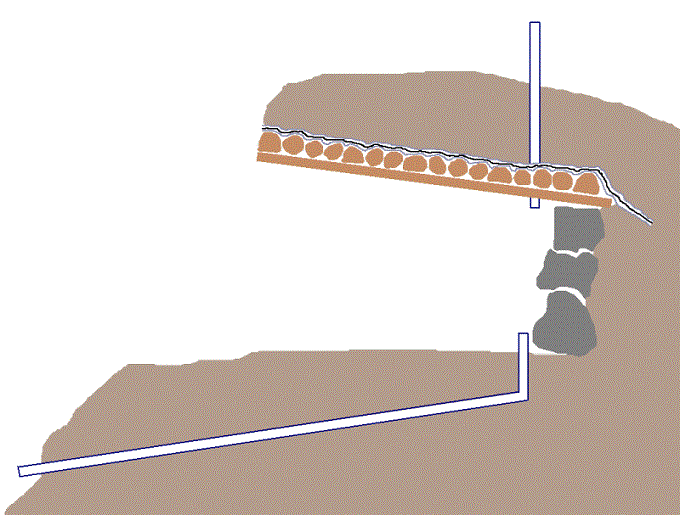
Zach,Zach Weiss wrote: Below is a picture of the new kind of root cellars Josef has been building at the Krameterhof. The one that I will build for a client this spring will be this style. So I have not built one myself yet but I have seen several different types and through multiple workshops with Sepp understand the process well. I will also be teaching a workshop on Holzer style earth stables later this year in Wisconsin.
These are made with timbers stacked similarly to a log house and then lined with EPDM pond liner and a dimple shield membrane. This style is used predominantly as a root cellar.
1
Peace of Earth Farm, Albany, VT http://www.peaceofearthfarmalbany.wordpress.com
3

 2
2


Zach Weiss wrote:... I will also be teaching a workshop on Holzer style earth stables later this year in Wisconsin.
Hi Zach, just curious...where and when might this workshop be?
Thanks,
Becky


 2
2
Josephine, Forest Witch
1
3
Zach Weiss wrote:
It is very important to note that Sepp is only using very rot resistant species such as Black Locust and Larch, this is the primary reason that these earth stables last so long. I would expect a structure like this to last around 50 years, potentially much longer in drier climates.
2
![[Thumbnail for 20161030_150149.jpg]](/t/1443/a/44762/20161030_150149.jpg "Filename: 20161030_150149.jpg
Description:")
![[Thumbnail for 20161030_160606.jpg]](/t/1443/a/44763/20161030_160606.jpg "Filename: 20161030_160606.jpg
Description:")
![[Thumbnail for 20161007_122451.jpg]](/t/1443/a/44764/20161007_122451.jpg "Filename: 20161007_122451.jpg
Description:") 2
2
![[Thumbnail for 20161007_172518.jpg]](/t/1443/a/44765/20161007_172518.jpg "Filename: 20161007_172518.jpg
Description:")
![[Thumbnail for 20161007_090915.jpg]](/t/1443/a/44766/20161007_090915.jpg "Filename: 20161007_090915.jpg
Description:")
![[Thumbnail for 20161002_152115.jpg]](/t/1443/a/44767/20161002_152115.jpg "Filename: 20161002_152115.jpg
Description:") 1
1
![[Thumbnail for 20161016_140133.jpg]](/t/1443/a/44768/20161016_140133.jpg "Filename: 20161016_140133.jpg
Description:")
![[Thumbnail for 20161016_140855.jpg]](/t/1443/a/44769/20161016_140855.jpg "Filename: 20161016_140855.jpg
Description:")
![[Thumbnail for 20161016_140133.jpg]](/t/1443/a/44770/20161016_140133.jpg "Filename: 20161016_140133.jpg
Description:")

|
We begin by testing your absorbancy by exposing you to this tiny ad:
Come Visit Wheaton Labs!
https://permies.com/wiki/367505/Visit-Wheaton-Labs
|