
|
Pages: [1]
|
 |
|
|
Author
|
hugelkultur | (Read 5025 times) |
|
paul wheaton
Administrator
Posts: 2551
western WA
|
 |
April 03, 2005, 09:59:19 AM |
|
This thread is for discussion of this web page
|
|
|
|
|
Logged
|
|
|
|
Marilyn de Queiroz
Posts: 6
|
 |
April 03, 2005, 06:18:55 PM |
|
Do I have to retype the subject whenever I reply? Anyway, I thought when I clicked on the link "Sepp Holzer terraces and raised beds video" that I would see a video. I was wrong.
|
|
|
|
|
Logged
|
|
|
|
paul wheaton
Administrator
Posts: 2551
western WA
|
 |
April 07, 2005, 03:16:26 PM |
|
Got the following in my e-mail and he said I could post it here:
Paul, Hugelkultur works great. I've been doing it for about 15 years. On your page you say:
"Hugelkultur is nothing more than making raised beds filled with rotten wood."
I might say 'rotting' rather than 'rotten' since even fresh green wood can be used. Also it is not absolutely essential that the material be covered with dirt. I have created wood "terraces" with any carbonaceous material I could get my hands on...logs, brush, etc.....and raked the annual deposition of leaves over the material. Here in NC, where we have high precip and humidity, the material breaks down much quicker than it would in, say, California. I grew fabulous pumpkins, for example, in Ca in the 8 month dry period (no rain at all) without irrigating. I used everything organic I could accumulate, from logs to leaves, and laid it out about 2 feet deep and planted into soil pockets.
Its amazing how the rotting wood becomes like a sponge. I can pull out pieces that I buried two years ago and squeeze them to yield copious amounts of water. Now when I look at wood, green or even dry, I think "Water".
I tell my students that every unit of carbon incorporated into soils can hold 4 units of water.
Penny Livingston, of Pc Inst of N Ca, had a few brush piles littering her site but she didn't feel like moving or burning them, so she piled on straw and a light scattering of soil, planted potatoes into it, and harvested a couple bushels of spuds in addition to dissolving the "problem".
Here at Earthaven we have prohibited the burning of brush so the slower biological 'burn' is our preferred way of managing it.
You will be greatly rewarded by using this approach. Thanks for the pix. Keith
|
|
|
|
|
Logged
|
|
|
|
carriesews
Guest
|
 |
April 08, 2005, 05:57:23 AM |
|
Hi Paul,
Thanks for sharing what you're doing with us so we can continue learning. You've reminded me that instead of a burn pile, I must gather and create more soil/planting areas. We have a lot of small twigs and branches each year at this time from the winter of not gathering them. I actually did a small area of 'hugelkultur' last year, but I had already forgotten about it! In my front yard I have a lot of clay and so I layered on the branches, leaves and a little bit of compost just in a 3' X 4' area that I want to establish as a perrenial bed. I need to go dig around in it and see what it's done over winter.
I need to see these ideas a number of times and then implement them a few times before they just become part of my life.
Blessings, Carrie
|
|
|
|
|
Logged
|
|
|
|
PathFinder
Posts: 4
|
 |
May 08, 2006, 11:22:38 AM |
|
Now you have me excited, Paul. I have loads of wood around my yard that I was going to haul to the dump. I even have the first load on my utility trailer to be hauled away next weekend ... going to have to take it back off now Some of this wood was going to be used for a raised bed garden that never got built so is rotting away, and some of it was a sundeck on my home that rotted and was removed to make room for a carport. Now I finally know a good way to get the raised bed gardens I want, and to save a bunch of money at the same time. No dump fees and no gas to haul it out there... BONUS!
Thanks so much!!
|
|
|
|
|
Logged
|
|
|
|
entrailer
Posts: 5
|
 |
March 24, 2009, 02:13:27 AM |
|
Hi,
Do you have any more recent pics for your Hugel beds? Be great to see and hear how they've performed since you put them in. How long ago did you build them? Also, where's the topsoil from?
Cheers, Niels
|
|
|
|
|
Logged
|
|
|
|
|
|
Valorie
Posts: 14
|
 |
March 25, 2009, 01:57:38 PM |
|
Your Hugelkultur photos inspired me to experiment, too. Two winters ago we inherited literally a ton of brances and pine needles--60 lawn and leaf bags worth (Grandpa needed us to clear his mountain property because it was a fire hazard). I happened to have a strip of yard consisting of the nastiest clay soil you've ever seen, about 15' X 50'. So I threw the branches and pine needles down to see what would happen.
First, crabgrass grew across it like wildfire. Last summer I was running after a toddler and did not have the time to fight it. When I finally did take a shovel to it, I learned that crabgrass plus the branches had created a nearly impenetrable layer, six inches to a foot thick. It was a nightmare. Rototilling didn't work because the crabgrass just tangled up in the blades. The propane flame thrower didn't work either, as the roots were too deep.
But when I did manage to get a look at the layer underneath, I was so excited: the blackest and most gorgeous humus I could have hoped for.
My only problem was how to get the crabgrass out without using Roundup or throwing out my back. I'm trying to be Zen about it, and gently work it section by section, by hand. Six months later I'm about 2/3 of the way done. My body hurts all over. But I'm going to get good tomatoes this year if it kills me...and it might!
|
|
|
|
|
Logged
|
|
|
|
paul wheaton
Administrator
Posts: 2551
western WA
|
 |
March 25, 2009, 04:13:03 PM |
|
Please let me save your back.
For nearly all weeds, it is a matter of competition. Think of what will outcompete the crab grass and shade it out.
For me, I would throw some hay on it. Or simply wait and let the tomatoes take over. Or plant other thngs with the tomatoes that will outcompete the crabgrass and feed the tomatoes.
|
|
|
|
|
Logged
|
|
|
|
Valorie
Posts: 14
|
 |
March 29, 2009, 02:34:37 PM |
|
You are so right, Paul, in that I should be working with the natural order of things instead of against them. Ugh. I forgot that in my efforts to have a cutesy little veggie patch that I could show off to the neighbors here in the 'burbs. My mission is to get everyone on this street to dig up their lawns and plant veggies--I just thought they might be turned off by a jungle of crabgrass.
Actually, I am thinking of employing a few chickens to clear the remaining area for next year. But I have some logistical things to ask y'all about--I guess I'll send it out under Critter Care.
|
|
|
|
|
Logged
|
|
|
|
paul wheaton
Administrator
Posts: 2551
western WA
|
 |
March 30, 2009, 08:21:53 AM |
|
If you run chickens (or any animal) on the area until the grass is all gone, I think that would be mistreatment of the animal. And it will just grow back.
Nature abhors a vacuum.
And, yes, I know, there are lots of books out there advocating this use for chickens. I just think it is wrong - and that thinking puts me in a small minority.
|
|
|
|
|
Logged
|
|
|
|
Leah Sattler
Administrator
Posts: 1586
oklahoma
|
 |
March 30, 2009, 12:13:09 PM |
|
yes and no about using the chickens. anyone who has had many animals knows that they will find particular hangout spots (usually by the shelter) that they will tend to demolish no matter how big an area you have I don't see why you couldn't use that to your advantage. I have successfully used pigs to clear out bermuda and I don't think that they were abused, they certainly had it alot better than factory farm pigs. and I had a nice bermuda grass free garden after wards without the aching back and pulled muscles, and they did a far better and more thorough job then I ever could have done. they got feed, whatever they could dig up and marshmallows regularly . they were also quite tasty.
|
|
|
|
|
Logged
|
|
|
|
paul wheaton
Administrator
Posts: 2551
western WA
|
 |
March 31, 2009, 08:32:14 AM |
|
Excellent point. Then they are utterly destroying an area by choice.
|
|
|
|
|
Logged
|
|
|
|
swamp donk
Posts: 22
|
 |
April 04, 2009, 04:42:05 AM |
|
sounds kinda like a gardening method they were using in mexico years ago. had a teacher 40 years ago tell us about it in class. log rafts with soil and vegetation layers floated in a shallow lake that they stacked many layers upon there by filling in the lake! i will be trying a Hugelkultur bed on some rocky skree this year, have some semi rotted tamarack that will look good as a garden!
|
|
|
|
|
Logged
|
|
|
|
paul wheaton
Administrator
Posts: 2551
western WA
|
 |
April 05, 2009, 08:31:46 AM |
|
That sounds more like a "chinampa". They are doing a bunch of chinampas at the bullock brothers farm.
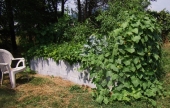
Here is a picture I took just before I fell in the swamp and ruined my camera. I was able to get the pictures off of the tiny memory chip thingy ...
|
|
|
|
|
swamp donk
Posts: 22
|
 |
April 06, 2009, 04:07:37 AM |
|
i believe that is what it is called paul, teacher 40 years ago called it the fore runner of hydroponics, other than one in a water base and the other on land and a different name dont see much difference! had never heard it called hugelkultur before but have swiss and german neighbors that used the same technique on swampy ground to grow their garden, will have to ask them if they call it hugelkultur or what!
|
|
|
|
|
Logged
|
|
|
|
paul wheaton
Administrator
Posts: 2551
western WA
|
 |
April 09, 2009, 07:14:21 AM |
|
Hmmmmm ..... maybe it's time for me to make another trip to the bullock brothers farm to see what they might have added to this since I was last there!
|
|
|
|
|
Logged
|
|
|
|
swamp donk
Posts: 22
|
 |
April 14, 2009, 03:48:50 AM |
|
well today i am going too start layiering up the bed. starting with some light brush then half rotted tamerack then coop gold and soil. nother part of the house garden will get sand added to the clay and yet another is going lasagna! main market field will be bed rowed and planted mid may, now have to find a sure proof method of keeping the sheep outa the garden! what did best in your beds paul, normaly we do not get as much precip as seattle, last year we got twice as much ! this year i hope we get "enough"!
|
|
|
|
|
Logged
|
|
|
|
paul wheaton
Administrator
Posts: 2551
western WA
|
 |
April 14, 2009, 09:52:35 AM |
|
Remember to chant "hoogle culture, hugal kulture, hoogal culcher ..." in your deepest voice.
As for the sheep - have you looked into laying a hedge for keeping the sheep out? Something loaded with edibles?
|
|
|
|
|
Logged
|
|
|
|
Needle Picker
Posts: 1
|
 |
April 14, 2009, 01:05:26 PM |
|
Hi Everyone,
It's wonderful to see the interest in using the opportunities that mother nature gives us to enhance the environment around us. This subject is near and dear to my heart since for the last two years I and some friends have been working on a solution to what to do with slash (leaves and branches) instead of hauling them off to the dump. What we have found out is the depending on your available land space and your climate situation you can either do what has been described here with the hugelkultur protocol (which is great) or step up the process with some artificial treatments. Since we live in a dry climate and moisture, or lack there of, is an issue affecting the decomposition process, we take our slash and run it through a chipper, to reduce the size of the chips as much as possible. Actually we are able to reduce the chip down to 2mm or less with a secondary process, but that's not completely necessary if your are patient. Then we put that back out onto the land with a 50/50 mix of cow manure also dropped through a chipper. It is imperative that you get clean manure without any gravel. The manure give the microbes the extra nitrogen they need to power themselves so they can break down the material. This way the microbes are not robbing the nitrogen from the soil. Then we apply some moisture and cover. The end product will turn into the nicest humus that you'll have ever seen in about 3 months. Out here in Colorado we have an over abundance of pine slash, which usually they just want to burn. It turns out that the nutrient value of this slash is terrific, having a much better balance of elements than any fertilizer that you can buy at any price. Spread the word on any kind of composting process and just maybe we will collectively be able to get this old planet back into shape.
Needle Picker.
P S As the name implies I've pick a few pine needles in my time to make pine needle tea. As crazy as it sound it tastes pretty good and is good for you. Do some research though before you just go out and gather some needles so you get the right ones.
Peace
|
|
|
|
|
Logged
|
|
|
|
paul wheaton
Administrator
Posts: 2551
western WA
|
 |
April 14, 2009, 02:14:56 PM |
|
Being a bit cheaper and lazier ... and having lived in Colorado a while back ... I wouldn't bother with the chipper. I'm just that patient! And once the chipper is gone, then a few rocks in the manure is okay.
|
|
|
|
|
Logged
|
|
|
|
swamp donk
Posts: 22
|
 |
April 15, 2009, 04:18:47 AM |
|
will do paul!! got some of the branches on site but when i went to move the logs they were still a solid mass! oh well, don't plant till mid may here any ways!
|
|
|
|
|
Logged
|
|
|
|
wyldthang
Posts: 36
Coast Range, Oregon
|
 |
May 04, 2009, 02:42:15 PM |
|
Here's some photos from yesterday. I dug up and prepared two beds. Dirt is heavy!
 A few days ago I sodbusted the top of the bed and put the grass clumps in a pile at the top of the pic to dry out. This is "virgin soil" previously just grass. I came across two 4" fir tree roots that were still fairly "fresh". There was a stump we ground up that was on the other side of the fence, and I think that tree was cut about 15 years ago--so just goes to show pitchy underground fir trees roots take a LONG time to rot! I got some logs from the woods(fir), layed it in the trench and split it down the middle with an ax then mashed it up more with the ax. Then I added the (now dead) grass clumps on top, jumped on it a bit to compact for no giant air bubbles, then added the dirt back on top.
 I added about a gallon milk jug's worth of wood ash and clawed it in. Usually you should wait 3-4 weeks before planting stuff after adding ash to prevent burning, but we are getting rain all this week, and I mixed it up with the dirt, so I figured I'll go ahead and plant since it's good to translpant when it will be wet...
 Here's the finished(for now) bed. I transplanted a couple artichokes, added a few strawberries(everbearing quinalt), some deadnettle(I know, kinda invasive, but it's so pretty and if it gets out of hand it's easy to pull). I plan to add an oregano, a transplanted Oregon Myrtle, a transplanted Saskatoon/Serviceberry and throw in a cabbage. I topped it with about 6" of fresh grass mulch. I forgot to scratch in some powdered eggshell, I'll get to that.
I have one more bed I will prepare, I'm thinking of doing potatoes in it.
I chose logs that bust up about the same consistancy as a block of styrofoam--I give it a whack with the ax to see, I wanted stuff that was very well rotted. Putting the dirt on the plastic makes it MUCH easier and cleaner to get the dirt back into the bed(a no-brainer, but just do it).
|
|
|
|
« Last Edit: May 04, 2009, 02:45:23 PM by wyldthang »
|
Logged
|
My Blog, Natural History and Forest Gardening www.dzonoquaswhistle.blogspot.com"Listen everybody, to what I gotta say, there's hope for tomorrow, if we wake up today!" Ted Nugent "Suck Marrow" Henry D Thoreau
|
|
|
|
|
|
|
buckwheatpie
Posts: 1
|
 |
May 05, 2009, 04:24:56 AM |
|
Re Nitrogen robbery - as i understand it, the risk of nitrogen robbery in hugelkultur beds is mitigated by 3 things:
1. mixing the browns (logs) with greens (grass cuttings etc); 2. surface area. in hugelkultur we're generally talking about using logs, the larger the better; logs have a considerably smaller surface area to volume ration than woodchips, therefore any nitrogen robbery will be at a much much slower rate and will thus have less impact on the veg; 3. depth. Sepp Holzer recommends burying the logs as deep as possible - initially well below the level of the roots of most plants.
This is all theoretical, not sure what evidence there is that these factors are of such sufficiency that the hugelkulturist shouldn't be concerned with N robbery. Here in the UK (Leeds, Yorkshire) we've just completed construction of 8 rows of hugelbeds, each with as much logs, brash, leaves, grass and bokashi kitchen waste as we can cram in there, in trenches about 80cm deep. we're convinced that it will work in theory - don't see why it shouldn't - just have been a bit frustrated by lack of empirical evidence, but hopefully in 15 years' time we'll have the proof!
|
|
|
|
|
Logged
|
|
|
|
|
|
TCLynx
Posts: 75
Inland Central Florida, USA
|
 |
May 05, 2009, 06:03:35 PM |
|
This is an interesting method. I've heard something about it before but didn't look into it much.
Now I have this brush pile hidden off past the corner of my property that is watching me suspiciously. The front yard may not be safe much longer
|
|
|
|
|
Logged
|
|
|
|
|
|
paul wheaton
Administrator
Posts: 2551
western WA
|
 |
May 09, 2009, 08:15:21 AM |
|
I would not put fresh, coniferous wood chips or sawdust on the surface. Because of the whole thing about how it sucks up a lot of N and at the surface I have other plans!
But down deep .... yes those same chips still suck up a lot of N. But if you think about it, for a lot of the growing season, either the roots haven't made it that far down yet, or the plant has been harvested and is no longer needing N. Further, imagine early summer where there is very little root mass in the bed. And the rains come: all the N in the soil gets washed down and CAPTURED by your wood! Yay! Now that wood breaks down a bit and by the time the roots get down there, perhaps that wood is more like compost and ready to give back some N. Maybe not so much the first year, but definitely in the latter years.
So as the years pass, the beds get better and better. Especially if you are using good mulches on the surface.
|
|
|
|
|
Logged
|
|
|
|
|
|
rose macaskie
Posts: 56
|
 |
June 10, 2009, 04:02:00 PM |
|
Hi I live in Spain and this is the first time i have written here, the article on hugelkultur an dcommetnt made me think of various things. Here they are. I have been reading the work of Paul Stamets on mushrooms it is not a subject i have been studying for a long, so bare with me if i don't have a complete grasp of it but it may give the answer to the wood rotting in this system and how much nitrogen the rotting process might need. He says that fungi break down wood, lignin and cellulose, and bacteria deal with the small plants with cellulose, with things like your lettuce that suddenly turns into a wet and dark coloured mass in your kitchen. If it is fungi that break down the wood in hugelkulture, then the process won’t include using lots of nitrogen. It is the bacterial break down of organic material that uses so much nitrogen. This may mean the problem of your logs absorbing nitrogen does not exist as it does with mulches, with logs buried and damp it is possible that they will be rotted by funguses that don’t not need nitrogen. Fungi or their mycelium can work at the same time as bacteria or before the bacteria get to work so there will also be bacterial breakdown and some nitrogen will be absorbed. It is saprophytic fungi that feed on dead matter, though parasitic fungi can first parasite a live plant and then continue feeding on it when it is dead. End up behaving as saprophytic fungi do, living off dead organic matter.
What worries me about using wood, is not that, the nitrogen used to rot the wood will leave little nitrogen for plants. It is having heard, years ago that the fungi that parasites on dead wood might spread to live wood. If different fungi parasite dead wood than live wood this does not matter, if you have a parasitic fungus on your wood in your hugelkulture maybe it does. Fungi or their mycelium are, as we are, full of water so they would hold a lot of water. They also, in some cases, carry water from one place to another to keep the organic matter they are feeding on humid. They also hold oxygen, they usually make the ground a healthier place, more spongy wet and oxygenated. Paul Stamets recipes for growing mushrooms outdoors sound a bit like German hugelkulture, you put down the sort of stuff they devour, wood for example and add some fungal mats, which is to say some material inoculated with the funguses you have grown for the purpose and on top more organic material, corn husks, for example, or more wood and then cover the lot with cardboard. Cardboard will nourish fungi and stops other fungus or microbes from alighting on the whole and allows the fungal mats that you have inserted to get a head start over other organisms looking for food that might come from the air the earth in hugelkkultur must fulfill the role of carboars. If the whole is open to the sky the bacteria and fungal spores in the air would compete with the fungi you have implanted and reduce its chances of getting a hold. As to providing nitrogen when needed. I read a gardening book but I can’t remember which, that talks about using urine, if you have it, to provide the nitrogen, bacteria digesting organic material need. It says that a straw bale will turn to sweet earth in three months if you pee on it. Another book says that you can keep a family in cabbages with the same resource if there are two men or two unprudish females in the family.
On the subject of storing carbon not nitrogen. As wood stores carbon till it rots and releases it when it rots, the worries of one of the contributors about how long it took tree roots to rot, do not seem very ecological. Roots should be carefully stored so they don’t release their carbon till we are through the, global warming woods. Though rotting wood releases carbon, having fertile ground may be a more important bonus, than releasing the carbon locked in the wood is an ill. Fertile ground means more plants to absorb carbon and release the oxygen of a C02 molecule. Here in Spain there is a lot of barren ground due to a fear of fires that drives overgrazing, fear that does for the vegetable cover that is the source of organic matter and so for the fertility of soils. No organic matter, no nitrogen. Less organic mater less to absorb and retain water and, no plants, nothing to hold soils so they are liable be carried off by the wind and downhill by the rain. Countries with dry seasons need more organic matter in their soils and fear of fires, as the fire risk is greater in them, as there is a lot of dry material about in summer, means that in hot countries they reduce plants and so organic matter. I have known the demand to reduce plants here and seen its effects and it has made me think fear of fires is a principal reason for desertification. Rotting organic matter rereleases most of the carbon locked up in the organic matter. Look up sugar fat or starch molecules, they are all long mixtures of mostly carbon and hydrogen. Break up organic matter and you release a lot of carbon. N one of the aspect of plants sucuestring carbon is that- The residues of organic matter when it has fully broken down, humus, retains carbon for generations. Humus can remain stable for hundreds and even thousands of years, so it stores carbon but not all the organic matter in your soil turns into humus turns into humus. I don’t know what sort of break down process creates most humus and releases less carbon back into the atmosphere. Wood used to build with will hold its carbon while its in th ehouse unles it gets attacked by molds. For a long time. Humus properly named, is a black fine dust that is both very adaptable and very permanent, stable and chemically functional, good for the soil and acts like a gelatin so absorbing and storing lots of water and the nutrients in the water. It also bonds with oxygen. Humic acid can be brought. Look it up in google. I have seen empty tins of it beside banana plantations in the Canary Islands but i have not found sellers in Madrid in Spain where i live. the problem with ritting for a first time on something is that i have tomuch to say that i haven't siad before and ias i haven' read all the permies articles no idea if you have already written about it. Rose Macaskie.
|
|
|
|
|
Logged
|
|
|
|
|
|
paul wheaton
Administrator
Posts: 2551
western WA
|
 |
June 14, 2009, 01:15:29 PM |
|
If it is fungi that break down the wood in hugelkulture, then the process won’t include using lots of nitrogen. It is the bacterial break down of organic material that uses so much nitrogen. This may mean the problem of your logs absorbing nitrogen does not exist as it does with mulches, with logs buried and damp it is possible that they will be rotted by funguses that don’t not need nitrogen. That sounds reasonable.
Of course, rotting wood also acts like a sponge, holding onto water and all sorts of nutrients. Including N.
Plus, as the wood breaks down, it leaves air pockets. And air pockets have air - which is bacteria chow.
Plus, it is my understanding that several species of fungi hoard N to do the "I'll trade N for sugar" thing with the plants.
What worries me about using wood, is not that, the nitrogen used to rot the wood will leave little nitrogen for plants. It is having heard, years ago that the fungi that parasites on dead wood might spread to live wood. If different fungi parasite dead wood than live wood this does not matter, if you have a parasitic fungus on your wood in your hugelkulture maybe it does. Might? Do you have more info on that one? If true, it would be scary. But my gut says it would be really rare - if at all. Maybe it would do that for weak trees?
I read a gardening book but I can’t remember which, that talks about using urine, if you have it, to provide the nitrogen, bacteria digesting organic material need. It says that a straw bale will turn to sweet earth in three months if you pee on it. Another book says that you can keep a family in cabbages with the same resource if there are two men or two unprudish females in the family. The urine factor is something we've talked about many times in these forums.
|
|
|
|
|
Logged
|
|
|
|
|
Pages: [1]
|
|
|
|
|