|
Pages: [1]
|
 |
|
|
Author
|
best egg laying breed of chicken | (Read 1579 times) |
|
paul wheaton
Administrator
Posts: 4459
missoula montana
|
 |
January 29, 2009, 05:15:00 PM |
|
Continuing discussion from another thread:
What do I think is the best egg laying breed?
Well, I have this idea to get a bunch of "best" layer breeds, have them mix it up for a couple of years, and then try to come up with my own optimal breed for feed-to-egg ratio given a forage situation.
So I would start with:
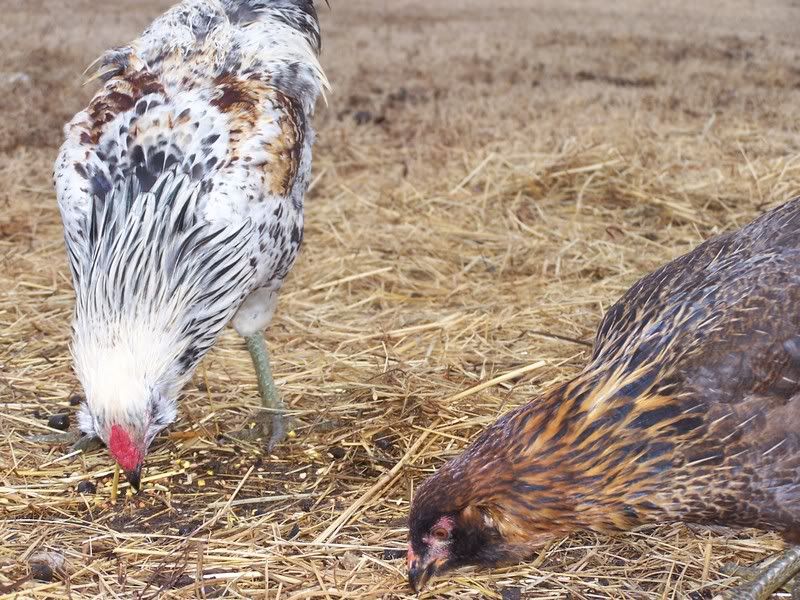
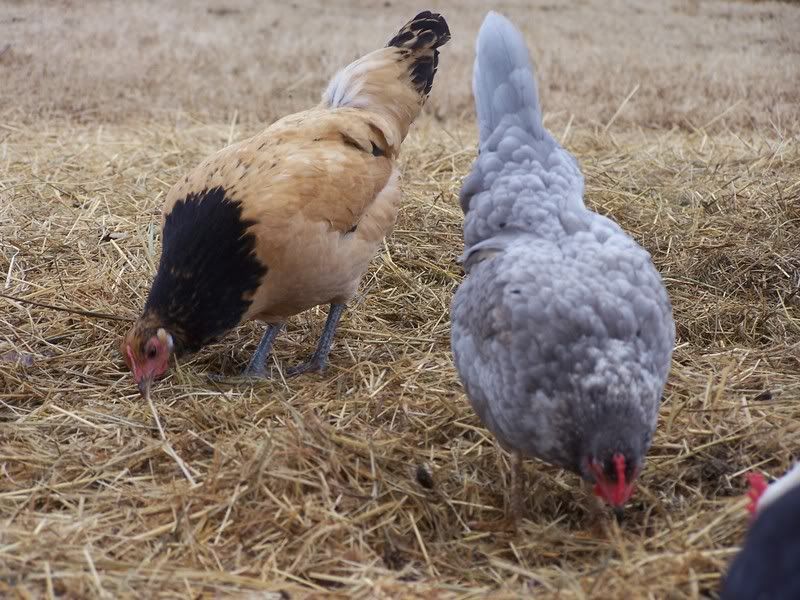
pearl leghorns: they lay white eggs, but they are just egg laying machines!
red star and black star: the standard layer for brown eggs
australorp: the record holder for most eggs in one year
Braggs mountain buff: this guy raised his own breed where he did a simple and amazing thing. As he collected eggs, he would put the largest eggs in the incubator. He did this for years and years. And now he has a breed that lays lots of freaky big eggs!
Rhode island red: a heavier breed well known to be moderately productive.
|
|
|
|
|
Logged
|
|
|
|
Susan Monroe
Posts: 1093
Western WA
|
 |
January 29, 2009, 10:26:36 PM |
|
The Leghorns are basically a factory breed now, no matter how they started. I understand they're quite flighty (the emotionally unstable kind of flighty), and since they are a fairly light breed, they will fly over fences and into trees, and won't necessarily return. And they're said to be noisy.
I'm sure you will want to find a reputable source that may have some foraging ability.
Jumbo eggs... ah the trials of the hens who have to lay them. I wonder if the condition of a hen becoming eggbound has anything to do with producing large eggs?
Sue
|
|
|
|
|
Logged
|
|
|
|
|
|
Susan Monroe
Posts: 1093
Western WA
|
 |
January 30, 2009, 12:50:37 PM |
|
Non-grouping of breeds is really just a crapshoot, like raising apple trees from seeds. Mind you, there's nothing wrong if you just want some eggs and some meat chickens, but unless you keep your layers and meat birds separate, you're probably going to lose any 'best' quality of either.
Mixed breeding can be beneficial if you pay attention to what you're doing, but indiscriminate crossing can just produce 'junk' chickens, that aren't that good for eggs, and not that good for meat. Like mutts at the dog pound, they may make fine pets, but they're probably lacking in much herding ability, bird flushing ability, or other breed-specific proficiencies. You can't expect a poodleXdalmationXpit bull mix to herd sheep.
Keep in mind that most existing breeds didn't exist 500 years ago. THEY were bred for certain characteristics, which is what they have now. Non-selective crossing of them turns them back into 'just chickens'.
Sue
|
|
|
|
|
Logged
|
|
|
|
Leah Sattler
Administrator
Posts: 2603
oklahoma
|
 |
January 31, 2009, 05:45:18 AM |
|
I think having some that to an extent are 'just chickens' can be good. with positive extreme characteristics, such as incredible egg laying ability, come negative characteristics, such as 'stupid' or short lived. characteristics that in my admitedly very small experience leghorns have. If I order another batch of chickens I am going with the americanas (easter eggers) because of the rather loose parameters surrounding their selection for breeding I think they are the closest to a good homestead bird that I have run across. I have had red and black stars, white leghorns, a cinnamon buff (a cross for brown egg production, I think it is called different things by different hatcheries) and now the worst......barred rocks. I also have some birds that I am 90% positive are dark cornish, of course I don't expect them to be super dooper layers, but I like them, you pick them up and they are like picking up lead weights....anyway.....My best hen right now looks like a delaware but was hatched out of my best americana (rip) her father was a 1/2 legghorn 1/2 banty mutt. I swear those banty mutts add an extreme measure of predator intelligence and forage ability. Egg laying abilitiy is great but if you are trying to truly raise them in a free range situation it is worthless if they can't survive the conditions. better to get half the egg production out of birds that are alive than a big fat 0 when they are dead. it takes a balance. most breeds/breeders aren't into balance they are into cool characteristics.
|
|
|
|
|
Logged
|
 "One cannot help an involuntary process. The point is not to disturb it. - Dr. Michel Odent
|
|
|
Susan Monroe
Posts: 1093
Western WA
|
 |
January 31, 2009, 07:02:27 PM |
|
Banties, the pitbulls of the chicken species! I don't think they know what fear is, if my friend's birds are any indication.
Sue
|
|
|
|
|
Logged
|
|
|
|
|
|
Susan Monroe
Posts: 1093
Western WA
|
 |
February 01, 2009, 11:45:17 AM |
|
The source of your chickens is also important. If you find someone who has raised multiple generations of Leghorns with great foraging ability, I'm sure they would be a better source than the big hatcheries that sell chicks in batches of ten thousand, with the outlook that they will be factory chickens with a lifespan of 18 months.
I was reading in AcresUSA magazine that you can't just buy any calf and put it on pasture. Many lines have been on corn for so long that their guts apparently can't deal with much else. There are lines of cattle that have actually NEVER eaten grain, just pasture and brush forage.
As they say about other things, consider the source.
Sue
|
|
|
|
|
Logged
|
|
|
|
|
|
Susan Monroe
Posts: 1093
Western WA
|
 |
February 02, 2009, 08:26:29 PM |
|
Like many other things where there are people on opposite sides of the line between love and profit, there are probably Leghorns and Leghorns. Maybe the people who show them would know more.
AcresUSA is quite political, but everything is, these days, like it or not. But it does make sense. I was reading elsewhere that corn is poor feed for cows because they have trouble digesting the starch in it. But if the corn is used for making ethanol, and the 'waste' is fed to the cows, the 'bad' stuff has been removed, and all the nutrients that were in the corn to begin with are still there, as only the sugars and starches are removed. They only started feeding corn to cows and getting into that factory/feedlot garbage because the U.S. was inundated with feed corn, and they had to find something to do with it. That's also the reason behind the production of high-fructose corn syrup.
Sue
|
|
|
|
|
Logged
|
|
|
|
|
|
Susan Monroe
Posts: 1093
Western WA
|
 |
February 03, 2009, 12:36:47 PM |
|
Leah, you're just not a feedlot/factory farmer, that's all there is to it! 
Waste for feed doesn't appeal to me, either, but if a feedlot owner does feed corn waste instead of 'new' corn, it sounds like it would be a lot better for the cows.
Most waste, as we know it, tends to have at least some of the nutrients removed, but in the case of ethanol production, it isn't.
'Modern' agriculture isn't about what is good for the animals, or what makes ideal food for humans, and it hasn't been for a long time. It's about profit and cutting corners.
Your animals are lucky.
Sue
|
|
|
|
|
Logged
|
|
|
|
|
|
paul wheaton
Administrator
Posts: 4459
missoula montana
|
 |
February 06, 2009, 10:11:46 AM |
|
I was thinking of having something like ten small pens. Each pen would have roughly the same wild food. I would then pick ten hens, one for each pen. I would give them each a week in the pen. I would carefully measure their feed and their eggs. One winner would get moved to the breeder flock.
Then the 10 pens would rest for three weeks.
Leah, are you saying that you think the easter eggers are the best foragers? So if I included them in this competition, they might be the big winners?
As for getting crazy breeds, I have to important points:
1) these ain't apples, and
2) I'm gonna start off with breeds that have the qualities that I want
It's true that once you cross two breeds, you're gonna get all sorts of wackiness. I'm okay with that. In fact, I like that a lot. Some will have the worst attributes and some will have the best. I figure that after about seven years my new breed will start to stabilize. This is simply how it is done in the chicken breeding world.
I'm not going to mix in any meat breeds. I'm going to shoot for feed to egg ratio when given forage.
|
|
|
|
|
Logged
|
|
|
|
Susan Monroe
Posts: 1093
Western WA
|
 |
February 06, 2009, 09:50:36 PM |
|
To tell the truth, if what you're aiming for is decent egg-laying and adequate foraging instincts, I would just buy a collection of breeds with those qualities and turn them all loose together.
I thought you meant your were going to mix all kinds of chickens, egg and meat birds, good and bad foragers, natural birds and egg-laying machines. To me, that isn't such a great idea. But putting like-type birds together sounds fine.
I have to tell you, I don't like that one-chicken-to-a-pen idea. Chickens are flocking creatures. Even on my acre, my four girls tend to move around the property together. Inducing the stress of being single chickens, you may be adding stress, and stress is the enemy of happy chickens and good laying. (Mind you, I am kind of slow at learning this, myself.)
But if you're attempting to create the Wheaton chicken, it would probably take many years to reach a standard, and then to stabilize it so it bred true.
Sue
|
|
|
|
|
Logged
|
|
|
|
|
|
|
|
Susan Monroe
Posts: 1093
Western WA
|
 |
February 07, 2009, 07:55:30 PM |
|
Speaking of good egg-laying breeds, I am thinking of getting a few more birds next spring. I have Buff Orps now, and would like another breed of the heavier type and gentle nature.
Any suggestions?
Sue
|
|
|
|
|
Logged
|
|
|
|
|
|
Susan Monroe
Posts: 1093
Western WA
|
 |
February 08, 2009, 03:04:52 PM |
|
Sure! I'll let my girls see the photo and see what they say.
Sue
|
|
|
|
|
Logged
|
|
|
|
|
|
Susan Monroe
Posts: 1093
Western WA
|
 |
February 09, 2009, 12:50:35 PM |
|
I lined my girls up in front of the monitor, and they all agreed that he's not family. They said he looks like one of those pheasant-type masher guys from the local tavern.
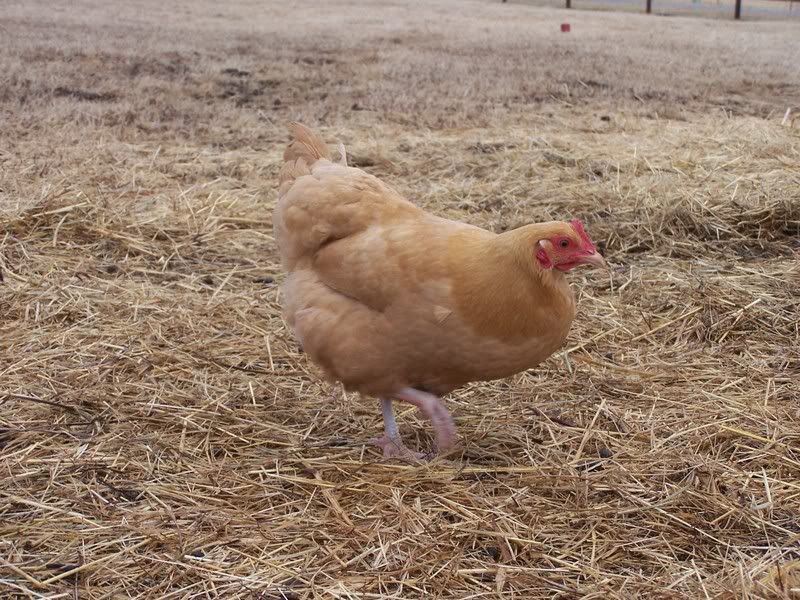
Here's a photo of a Buff Orp: http://www.backyardchickens.com/web/viewblog.php?id=2593-Buff_Orpingtons
(My Henrietta said yeah, that one is family, but she and her sisters are prettier than that bird... sigh)
Sue
|
|
|
|
|
Logged
|
|
|
|
|
|
Susan Monroe
Posts: 1093
Western WA
|
 |
February 10, 2009, 09:07:19 AM |
|
Okay, the gold one sure looks like a Buff Orp, all right. Kind of short, cobby body, short tail, big feet.
Tallulah says it looks like her Aunt Esther.
Sue
|
|
|
|
|
Logged
|
|
|
|
paul wheaton
Administrator
Posts: 4459
missoula montana
|
 |
February 10, 2009, 04:00:13 PM |
|
To tell the truth, if what you're aiming for is decent egg-laying and adequate foraging instincts, I would just buy a collection of breeds with those qualities and turn them all loose together.
I thought you meant your were going to mix all kinds of chickens, egg and meat birds, good and bad foragers, natural birds and egg-laying machines. To me, that isn't such a great idea. But putting like-type birds together sounds fine.
I'm gonna mix them all up in the blender! 
Yeah, the idea of all egg breeds and forager breeds sounds like a plan. Mix them up real good and let a few of them get broody and maybe run a few eggs through an incubator a few times a year. End up with a really thorough mix of all the breeds. After a few years, take some of hens and put them through "the test".
I have to tell you, I don't like that one-chicken-to-a-pen idea. Chickens are flocking creatures. Even on my acre, my four girls tend to move around the property together. Inducing the stress of being single chickens, you may be adding stress, and stress is the enemy of happy chickens and good laying. (Mind you, I am kind of slow at learning this, myself.)
But if you're attempting to create the Wheaton chicken, it would probably take many years to reach a standard, and then to stabilize it so it bred true.
I don't think there is any other way.
And it is just for a week.
|
|
|
|
|
Logged
|
|
|
|
|
|
Susan Monroe
Posts: 1093
Western WA
|
 |
February 10, 2009, 09:38:08 PM |
|
Ear muffs. Extra feathers around their ears that look like fluffy earmuffs.
"I'm gonna mix them all up in the blender!"
Oh, I see! Like the birds that hit the Airbus that landed in the Hudson River. Gotcha! 
Sue
|
|
|
|
|
Logged
|
|
|
|
|
|
Gwen Lynn
Posts: 736
|
 |
February 11, 2009, 11:58:38 AM |
|
Yummy...a chicken shake! Don't tell McD's about it. They'll throw in some chocolate, malt & call it a McChocoChicken malt! Hope the feet don't get stuck in the straw!
|
|
|
|
|
Logged
|
|
|
|
Susan Monroe
Posts: 1093
Western WA
|
 |
February 12, 2009, 10:47:21 AM |
|
If the feet are sticking in the straw, they're OBVIOUSLY not blenderizing them correctly. Try a jet engine, I hear they work great.
Sue
|
|
|
|
|
Logged
|
|
|
|
Gwen Lynn
Posts: 736
|
 |
February 12, 2009, 12:34:39 PM |
|
I can't help it. I keep thinking of that old Sat. nite live skit where they are "selling" the "Bassmaster" & Dan Akroyd puts the fish in the blender. Too funny! Sue, you have a great sense of humor!
|
|
|
|
|
Logged
|
|
|
|
|
|
Kathleen Sanderson
Posts: 337
|
 |
March 07, 2009, 04:11:41 PM |
|
I'd like to come to the defense of the Leghorn chickens, LOL! They are an old breed (very old, described in ancient Roman documents), and if you get the brown ones they are good foragers as well as good layers. Being flighty helps keep them safe from predators.
I have to admit that my chickens are all in chicken tractors (we only have one acre, and have close neighbors, so I can't let them run loose), so I have to feed them, but moving them around every day does help with the feed bill, and at least during the growing season we get nice orange yolks. I have several Easter Eggers, and like the different colors they come in (as well as the green eggs), but they aren't the best layers I have. Three White Leghorns fill that spot -- I have whites because, since they are in cages, camoflage isn't all that critical.
I'll be doing some crossing over the next few years -- I want birds that have pea combs (because we have cold winters, and I keep the hens in the tractors year-round), and that lay well in the winter. If a few of them are willing to go broody in the spring and summer, that would be a bonus (because I'd rather not have to keep buying chicks every year, and don't want to mess with an incubator). I've got the Leghorns and Easter Eggers, four Cuckoo Marans hens, two Buff Orpingtons, two Barred Rocks, a Silver-laced Wyandotte, and a Black Australorp. Coming next week are some RIR chicks, and the following week I've got Golden-laced and Buff Wyandottes coming. I'd like to get a couple of Brown Leghorn roosters to use on all my hens; right now I have four Silkie roosters, one in each tractor. The Silkie hens got taken out the other day when a dog tore into their pen (don't use chicken wire on your pens!). The Cuckoo Marans and the Buff Orps are probably my best bet for broodies now that the Silkies are gone, so I need to repair the Silkie pen and move those hens into it.
One of my breeding criteria is that they need to do well in the chicken tractors, which isn't quite as bad as confinement cages, but still too close for some of the flightier breeds. I want the pea combs from the Easter Eggers, but they are very prone to picking and feather-eating in the tractors; thankfully pea combs are dominant, so I should hopefully be able to keep the combs and try to breed out most of their more nervous characteristics. I'd like to have a good assortment of colors, and this mix should provide it!
Kathleen
|
|
|
|
|
Logged
|
|
|
|
Susan Monroe
Posts: 1093
Western WA
|
 |
March 07, 2009, 06:12:20 PM |
|
Kathleen, what part of the country are you in?
Sue
|
|
|
|
|
Logged
|
|
|
|
|
|
Susan Monroe
Posts: 1093
Western WA
|
 |
March 08, 2009, 10:48:47 AM |
|
Compared to Alaska and New Hampshire, you probably feel like you're living in FLORIDA!
Sue

|
|
|
|
|
Logged
|
|
|
|
Kathleen Sanderson
Posts: 337
|
 |
March 08, 2009, 07:53:50 PM |
|
Compared to Alaska and New Hampshire, you probably feel like you're living in FLORIDA!
Sue
LOL! Not quite! I've lived in Florida, too, when my husband (ex) was in the Air Force. Summers here can get hot, but it's a dry heat and not nearly as uncomfortable as the humidity in New Hampshire. Of course, the trade-off is that we have to water nearly every day, or stuff dies. No rain at all from mid-June to late September, except maybe a thunderstorm or two. I'd love to live farther south, someplace with almost no winter, if there wasn't the trade-off of even hotter summers.
It's been spitting snow all day -- hard to believe that spring is just around the corner. But the chickens are starting to lay again, so I'm happy.
Kathleen
|
|
|
|
|
Logged
|
|
|
|
Susan Monroe
Posts: 1093
Western WA
|
 |
March 09, 2009, 11:41:52 PM |
|
Kathleen, I live north of you, not far from Olympia, WA. It's not as warm here. It was even warmer in Eugene/Spfld than here. But we still get that same dry period that you do.
I am trying to figure out the cheapest way to harvest rainwater. And for the short term, it appears that a large above-ground swimming pool may be it. I would rather have a large concrete tank, but I will have to figure out the costs, and see if my old cement mixer still works.
Sue
|
|
|
|
|
Logged
|
|
|
|
Kathleen Sanderson
Posts: 337
|
 |
March 11, 2009, 05:33:32 PM |
|
I've been thinking about harvesting rainwater, too, but I'm not sure how much we could get, since most of our precipitation comes as snow.
We lived in Tacoma for four years when my ex was first in the Air Force, so I'm familiar with the climate in that area. We bought an old house right downtown -- I think the lot was about 30' wide by 125' deep. But there were a couple of big old fruit trees in the backyard (a pear and a plum), and we had a garden. We raised rabbits in the garage, which faced the alley, and had a few ducks in the yard (Pekins, for meat). If we'd known about permaculture back then, we would have been doing that, I'm sure!
All my chicks came today! It was fifteen degrees last night, and our garage (where the brooder pen is) isn't insulated, so I couldn't get the babies warm in their brooder even with the heat lamp. So, I ran to town and got a big Rubbermaid bin (I use them for feed storage) and they are sitting in my room on top of the sewing machine! They won't fit for very long, as there are 44 of them in the bin! But it's supposed to get a little warmer now, so hopefully they'll be able to go back out to the brooder in a couple of days. There are 14 RIR pullets, 15 Golden-laced Wyandotte pullets, at least 10 and possibly 15 Buff Wyandotte straight run (there are five extra light colored chicks, but I'm not sure that they are Buff Wyandottes). I'm hoping to cross the Golden-laced and the Buffs and try to get Buff-laced Wyandottes, just because they are pretty.
Kathleen
|
|
|
|
|
Logged
|
|
|
|
Susan Monroe
Posts: 1093
Western WA
|
 |
March 15, 2009, 10:02:52 PM |
|
When I had my chicks, I kept them in a wire dog crate in the bathroom, with a wide strip of newspaper woven around the bottom so they wouldn't get out. But I only had eight. When I had to clean the crate, I put them in the bathtub.
The cats would line up outside the door with their noses tucked under the door.
I would invite my dog in and we would just sit and watch the chicks. As they grew, she would just study them intently. One day, she was in there with me, just sitting, watching them, and then she looked up at me and grinned, and I swear she was saying, "Hey, Mom, they're looking pretty meaty now! When is dinner?"
Sue
|
|
|
|
|
Logged
|
|
|
|
|
Pages: [1]
|
|
|
|
|