
|
Pages: [1]
|
 |
|
|
Author
|
meal worms | (Read 90 times) |
|
|
|
paul wheaton
Administrator
Posts: 1471
western WA
|
 |
November 19, 2008, 09:35:03 AM |
|
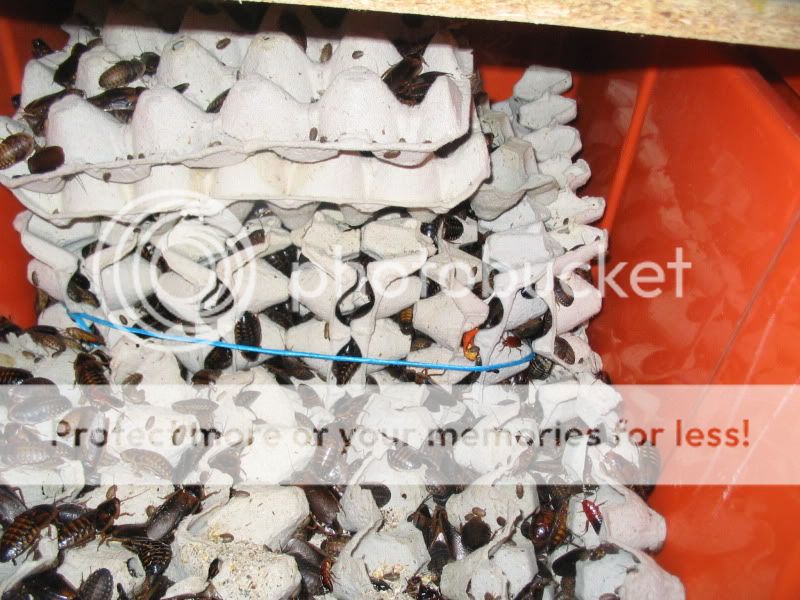
I took a bunch of plastic trays and stacked them in the house behind a chair. Each had about half an inch of feed at the bottom of the tray. I checked on them about once a week.
They convert low protein feed into protein. Then you can feed the chickens the mealworms and the feed that the mealworms were living in.
|
|
|
|
|
Logged
|
|
|
|
Susan Monroe
Posts: 521
Western WA
|
 |
November 19, 2008, 10:25:28 AM |
|
The mealworms don't crawl out of the boxes?
Don't you have to buy the meal worms? And do you have to put a screen over them to contain them as they go through their life cycle? I know my cats would have a good time chasing the beetles around the house, but...
Maggots are free. All I would have to do is add raw chicken tails, furry spaghetti, and stuff like that. Otherwise, the flies do the work, and the chickens are self-feeding.
Sue
|
|
|
|
|
Logged
|
|
|
|
paul wheaton
Administrator
Posts: 1471
western WA
|
 |
November 19, 2008, 12:13:45 PM |
|
I bought the first gob of mealworms for something like five bucks. Over the internet.
The mealworms couldn't get up past the top edge of the box.
These were shallow boxes too. I think they were supposed to be used to store stuff under a bed. I just used short sticks of 2x4's between each layer of boxes so I could stack them.
box
2x4 2x4
box
2x4 2x4
box
2x4 2x4
box
2x4 2x4
box
|
|
|
|
|
Logged
|
|
|
|
|
|
paul wheaton
Administrator
Posts: 1471
western WA
|
 |
November 20, 2008, 10:02:56 AM |
|
My mission in raising chickens is multi faceted.
I'm not a big fan of feeding soy to chickens.
I have this powerful feeling that the moment you put an animal in a cage, you accept the responsibility of taking damn good care of that animal - because it isn't like the animal can wander off and take care of itself. Therefore, feeding it whatever is best has more value than what is cheap.
The protein source for chickens is insects.
In the winter, a little extra protein makes an ENORMOUS difference in laying quantity.
And, why have chickens at all unless there is economic value?
My experiments lead me in a direction to try and solve all of this.
The mealworm experiment went pretty well. Much better than my earthworm experiments. But I never got to the point of doing it on a large enough scale to see what the payback was. But .... I think just leaving some mealworms in some chicken feed for a few weeks just translates to a bucket of chicken feed with a lot more protein! It seems like a big winner.
|
|
|
|
|
Logged
|
|
|
|
Susan Monroe
Posts: 521
Western WA
|
 |
November 20, 2008, 04:39:23 PM |
|
So, do you keep buying the meal worms? Or do you let some keep going, turn into beetles, and eventually get more meal worms?
It doesn't seem very cost effective.
Okay, how about this for a protein source for the chickapoo? I've given it all of thirty seconds of consideration... 
I'm working toward a 17x17ft chicken yard with coop. The coop is finished except the ramp isn't up yet (it's raining). The chickens think it's okay and are currently hopping in by themselves at dusk. It isn't fenced yet, and they are roaming over 2/3 of an acre. They will still have access much of the 2/3 acre after the chicken yard is fenced, at certain times.
What if I dig a hole about two feet in diameter and one foot deep within the chicken yard, and turn it into a sort of worm bin. I have a tub of shredded leaves, so I could add food waste and dump it all into the hole, then cover it with a piece of plywood. Just let it sit there until the worms move in. Keep adding food wastes.
Occasionally remove plywood and fork out a bunch of debris and worms for the chickies, and add more compostables, and put the lid back on.
Granted, November isn't the best time of year to do this, but maybe it will attract more worms, as the hole contents is less likely to freeze (it rarely freezes 6" deep here), and they can party and breed through the winter, assuming that worms do that in winter. I've never heard that they're seasonal breeders, but who knows?
So, what do you think? It's still cheaper than meal worms.
Sue
|
|
|
|
|
Logged
|
|
|
|
paul wheaton
Administrator
Posts: 1471
western WA
|
 |
November 20, 2008, 05:07:50 PM |
|
I let one batch out of seven turn into beetles, and then that one batch gets divided into seven batches. I bought meal worms just one time.
It seemed pretty cost effective to me: low protein chicken feed converted itself into high protein chicken feed with very little effort. And the quality of the feed was first rate.
your worm bin hole idea: I think you would probably be ahead of the game if you just fed those scraps to the chickens. I think earthworms are gonna cruise the area just because of the chicken poop and other organic matter. But it just isn't gonna be a lot - either with or without the hole. Think about how many worms you might have when it is going full speed ahead: they just aren't gonna reproduce that fast.
Sue - cruise around on the internet a little and see what it costs to get mealworms.
Hell, you can probably get a small container of mealworms from a local pet shop for about two dollars.
|
|
|
|
|
Logged
|
|
|
|
Leah Sattler
Administrator
Posts: 784
oklahoma
|
 |
November 21, 2008, 06:55:17 AM |
|
Therefore, feeding it whatever is best has more value than what is cheap.
to a point, yes. but in order for healthier food to be available then it has to be be economically viable first and healthiest, within that context, second. healthy food is worthless if you can't afford it. it should be the healthiest choice within the economic criteria. and a crucial part of my outlook on life is efficiency including money matters. use it up, wear it out, make do, or do without. the oft repeated homesteaders motto.
|
|
|
|
|
Logged
|
Put a bit of sunshine in each day; Others need its cheer and so do you- Need it most when outer sky's dull gray Leaves the sunshine-making yours to do. -"scatter sunshine" Jaunita Stafford
|
|
|
paul wheaton
Administrator
Posts: 1471
western WA
|
 |
November 21, 2008, 07:20:18 PM |
|
I think that is true for a lot of stuff, but ... with an animal in a cage, I think that you take on the responsibility of giving that animal a better life than it would have in the wild.
|
|
|
|
|
Logged
|
|
|
|
|
|
Susan Monroe
Posts: 521
Western WA
|
 |
November 26, 2008, 06:49:35 PM |
|
So how time- and labor-intensive is raising mealworms?
What do you use for bedding? How often do you change it? Can you raise them outdoors? What about freezing temps? What do they eat? How often do you feed them? Is there a way to make them self-serve, buffet style? 
Could you give me an overview on raising them, or a website?
Sue
|
|
|
|
|
Logged
|
|
|
|
|
|
paul wheaton
Administrator
Posts: 1471
western WA
|
 |
December 19, 2008, 03:35:54 PM |
|
labor: I seem to recall putting a wet paper towel in once in a while. But other than that, it seem like I looked in on them about once a week. Pretty easy since they were in the house.
I never really "changed" the bedding. More like when a bin became empty, I would refill it with chicken feed and then toss a scoop in from another bin.
Outdoors: can't remember. I just raised my indoors for some reason. I think they might require a certain amount of warmth.
|
|
|
|
|
Logged
|
|
|
|
Susan Monroe
Posts: 521
Western WA
|
 |
December 19, 2008, 05:11:39 PM |
|
If they need warmth, I guess they're not an option. I'm basically living in the three rooms closest to the wood stove right now, and will do so for most of the winter. I don't think the cats will give up their heating pad to worms. In fact, I can guarantee it.
I still think I'll dig a hole in the ground and fill it with shredded leaves, and dump my kitchen waste into it, then cover it with a piece of plywood.
I just shifted the plastic composter and its contents, and there must have been a million worms in there. I saved out a couple of gallons of them and am storing them in compost about ten feet from the wood stove so they don't freeze.
Now, all I need is to get rid of this exceptionally cold weather so I don't have to dig the hole with a pick.
Sue
|
|
|
|
|
Logged
|
|
|
|
|
Pages: [1]
|
|
|
|
|