Leora Laforge

pollinator
+ Follow
since Nov 26, 2015
Merit badge: bb list bbv list
For More
Saskatchewan
Apples and Likes
Apples
Total received
In last 30 days
6
Forums and Threads

Recent posts by Leora Laforge

Leigh Tate wrote:Leora, does your cross produce any fiber? (Thinking as a handspinner now)


Yes the cross produces a good fibre, it will just be shorter and less of it overall. The cashmere is the soft undercoat that most goats grow, so the goats selected for cashmere just grow a lot more. They are a slower growing meat goat than the Boers are, which is why I am doing the cross. Pregnant does have a hormone shift that happens 4-6 weeks before they kid, that makes all the undercoat shed out very quickly, within few days, and the top coat sheds later, so you can comb them and get a pretty clean fleece. The combing is extremely tedious, but for a handspinner, that's probably not an issue.

1 week ago
I have been crossing Cashmere goats with Boer goats for the last last couple years. They make for the hardiest meat goats around. Excellent mothers, they raise twins and triplets on pasture. I live in Saskatchewan Canada so any dairy breeds need to stay inside a barn most of the winter, some of them even need a heated barn. These meat goats like a barn or some kind of shelter to sleep in, but they will be out in -30 if its not windy.
1 week ago
My dog is a yard guard, she spends most of the night running around barking to keep the coyotes away. She likes walks and sometimes I go for walks and take her, but she spends enough energy patrolling the farm.
1 month ago

Tom Connolly wrote: The harshest winter weather comes from the north, so was thinking about building a 10 ft tall landscaping wall about 50 feet long to the north and then putting my house and other living quarters just south of it, and close to it.?


What you want is a windbreak, the best windbreak is several rows of trees,  of several different species, some quick growing, some that get really tall. That will take several years to grow big enough to do the job. For immediate wind protection you want wind break panels like they make for cattle. They have a metal frame holding vertical wooden planks. There is 20-30% air gap between the planks. This reduces the wind speed to 20-30% for a very long distance. Solid walls funnel wind in unpredictable directions and can make wind issues worse.
1 month ago
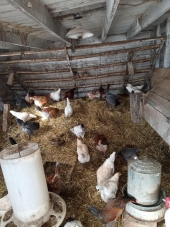
Cool video. I do a much lazier version of that to heat my chicken coop in the winter. I do 40-50 hens in a coop. On weekends I will dump a few wagon loads of goat bedding in there. It's mostly straw. The chickens scratch it up thoroughly, The also get get a regular supply of scraps from a local restaurant, or the Loop program (grocery store left overs). I don't turn it, I just pile keep piling it up under the roosts. By spring it's pretty good compost, that I dump in the garden. It creates a lot of heat while composting. When it's -20 and windy outside inside the coop can be hovering right around or just above freezing. In summer the hens get to free range and the manure doesn't pile up.
3 months ago
Speaking from experience, I would say the trick to asparagus is manure. I harvest and sell asparagus from a patch that was planted by my great grand parents, probably over 100 years ago. Every generation since the patch was started has made a habit of cleaning out the barn onto the patch. That patch is a hill that is formed from broken down straw, cow, and chicken manure.

It gets picked for 6-8 weeks in the spring and then the fronds are left to grow the rest of the season. The tall green fronds are what feeds the root for the growth next spring. It's important that the fronds re left to photosynthesise for as long as possible. The can be removed early the next spring before growth starts.
11 months ago
8x14 gives you 112sq ft. I would be comfortable with 50-60 layers in there, I don't want any stress from crowding on laying hens. Even though you are planning on them only being in there to sleep, I would leave enough space so they can stay in all day if needed. When I move chickens into any new space they stay in full time for a couple days. Or if I suddenly have predator pressure, again they may stay in for a few days until I can sort out my predator problems. I don't like to let layers free range until noon, after they have laid most of their eggs for the day, otherwise they may go find a nice tuft of grass or log to lay under. Ventilation is your friend. if most of the bottom of the mobile coop can be mesh that poop falls through, that saves you a lot of cleaning and it will help a lot to evenly distribute manure. If you have layers in a mobile coop you want nest boxes to be accessible from outside the coop.

My layers now get a permanent coop to free range from. I found moving them to a new coop stresses them out and they may stop laying on me. I have 2 chicken tractors and 3 chickshaws that I now only use for growing stock. I hatch my own chicks, butcher my extra roosters, sell some pullets and sell my year old layers every year. my tractors and chickshaws are all 6x6x2 ft, 36sq ft. I can fit a lot of small chicks in them but have to divide them more as they grow. I can fit about 20-25 pullets in a tractor or chickshaw until a couple weeks before they start laying.  Roosters, no more than 12-15 by the time I am ready to butcher them, 3-4 months and they dress out 3-3.5 lbs. So pretty small birds.
1 year ago
It basically is a deep bedding system, except that every weekend I have been going in with a pitch fork, throwing most of the bedding under the roosts, and then adding another wagon load of straw/wood chips. Of course every time I add more bedding the chickens go crazy scratching it up so there is a very even mixture of manure and bedding.

The ammonia has been mostly ok, it froze for a couple weeks in January, after it thawed it smelled for a bit so I added a few scoops of wood pellets. (Compressed saw dust used in pellet wood stoves, they are great at absorbing ammonia). Since then, it smells like healthy compost, not offensive to those used to being in a barn.
1 year ago
I have about 3 cubic meters of hot compost sitting right under the roosts in my chicken coop, it's about equal parts chicken poop, straw and wood chips. It's managed to keep my chicken coop above freezing for much of this winter, which has been amazing because I have had very few frozen eggs. Despite being limited to only collecting eggs between 2pm and 3:30pm for the last 6 weeks. This is in Saskatchewan and we did have a 2 week period in here with storming and regularly hitting -20C recently.
1 year ago
Wild oats, they are an annual weed, they grow quick and produce a good amount of biomass that quickly dries into straw. It grows densely enough to compete with weeds like canada thistle and dandelions, but then has shallow roots, so it's easy to pull out of the garden, unlike the deeper rooted weeds. I like to let it grow and mature in between rows in the garden, then stomp it down to cover the soil.
2 years ago