r ransom wrote: Arbutus
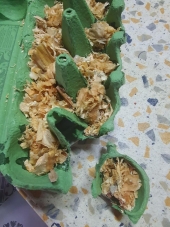
Preparation wise, arbutus wins hands down as it has no bark. Minus a few points for being hard to cut and bent so it doesn't fit snugly in the tin. It also had a lot flame whereas the grape done at the same time had none.
Arbutus is naturally high in creosote, so that may account for both the flames and the greasy feel.
I'm not surprised you found it hard to cut. The bent part might be useful if it fits your hand well, and if you're only producing it for yourself +/-special friends, if you like using it, having to run extra cans through the process takes a bit of time, but in your woodstove, not a lot of extra resources.
Grape
Most crumbling of the charcoal so far. Lightest black. But most neutral black, with a slight purple lean. Smudges easily, almost to the point of erased.
This doesn't surprise me. One year growth on my grape vines is very wimpy material. It almost seems to be a bit hollow in the center. The drawing charcoal I recall my mother using was very short - I thought that was normal, but maybe it was a specific technique she was using? Or maybe what I'm remembering was a different medium?
I can imagine the crumbling aspect would make it a very messy art form!
Willow
My personal favourite so far for ease of prep, renewability, and ease of use for a novice.
I'm assuming you've read up on this subject? You have only mentioned deciduous trees and we have had a lot of Doug Fir branches down in recent storms, and it's the time of year that Cedar drop a lot of their short curved branches as well.
I also have a Portuguese Laurel that's on my hit list for a serious pruning to give my baby Monkey Puzzle tree a bit more space. Not sure how broad leaf evergreen trees would work. They're a fruiting tree like a grape vine.
It does sound as if a variety of woods would make for interesting undertones and textures - but more work to keep them organized as well!