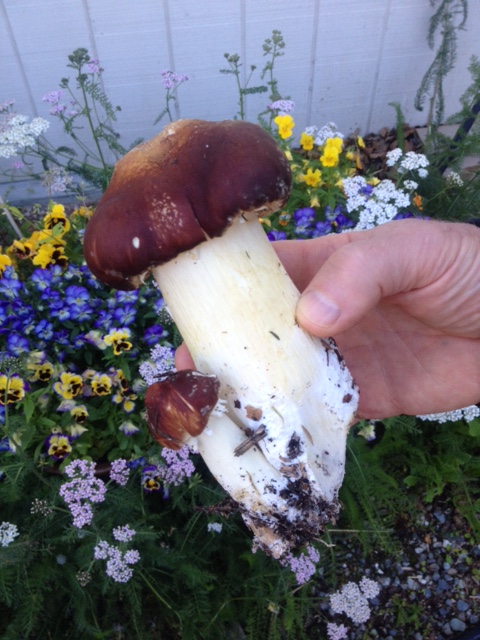
I have a small patch of shaggy manes growing on the lawn, and wondered if anyone knows how to increase the size of the patch and/or transfer them to other parts of the yard. I have been putting stem buts of ones I've eaten back in other places of the lawn.
I've read that shaggy mane also often grows in compacted soil. Does compacting the soil actually encourage them?
Joined: May 17, 2007
Posts: 2690
Location: woodland, washington
40
posted
0
collect a few and let them dissolve into black liquid. happens pretty quick. then spread that black liquid wherever you think they would be happy. no guarantee, but it should help your odds.
This species is one that seems to really prefer growing near concrete, limestone gravel, or on heavily-limed yards. (They love calcium.) For natural cultivation, in "Mycelium Running", Paul Stamets suggests: "innoculation of spawn directly into manure-enriched soils or 4- to 6-inch-deep beds of hardwood sawdust. Newly laid or fertilized lawns are perfect habitats for shaggy mane. Cow or horse manure, mixed with straw or sawdust, is also ideal." I always dump blackened shaggys into my compost pile or make spore emulsion and pore it onto limestone gravel piles. Liming your yard would probably encourage them, as well as watering your lawn with non-chlorinated water during dry spells in the late summer. Good luck!
Sue Jones
Joined: Nov 02, 2011
Posts: 13
posted
0
Thank you all! I appreciate the ideas.
I will try some experiments from the suggestions and post what I find.
make sure they are shaggy maine, there exists a close look-a-like that will give you serious gastrointestinal problems
Sue Jones
Joined: Nov 02, 2011
Posts: 13
posted
0
What is the name of the look-alike?
Tony Elswick
Joined: Aug 10, 2011
Posts: 73
posted
0
Chlorophyllum molybdites, which has the common names of false parasol or green-spored parasol is a widespread mushroom. Highly poisonous and producing severe gastrointestinal symptoms of vomiting and diarrhea, it is commonly confused with the shaggy parasol, and is the most commonly consumed poisonous mushroom in North America.[1] Its large imposing appearance and similarity to the edible Parasol mushroom, as well as its habit of growing in areas near human habitation, are reasons cited for this. The nature of the poisoning is predominantly gastrointestinal.
it looks like the shaggy mane especially at first... grows in poo in lawns all over the US