Permaculture Forums Home

permaculture forums

organic homesteading - natural living


Welcome, Guest. Please login or register.
Did you miss your activation email?
November 20, 2008, 07:37:23 AM
Home Help Search Calendar Login Register
Permaculture Forums  |  washington/cascadia groups, events, gatherings, etc.  |  seattle wild edibles  |  Topic: Braken Fern « previous next »
Pages: [1] Print
Author

Braken Fern  

(Read 353 times)
Jody B
Posts: 15


View Profile
May 07, 2008, 07:24:16 PM

I have seen a couple of asian decent looking for something in the woods along the ground in a local park.  They were working this one site for a couple of days. I was so curious as to what they were collecting that I checked out their "secret" site to find braken ferns cut along with the blackberries that were in the way.

Is this safe to eat? Has anyone tried these?
Logged
kelda
Posts: 263


View Profile
May 11, 2008, 06:19:04 PM

Fiddleheads!

I bet they're boiling the fiddleheads and eating them as a green. I haven't yet had a good experience with that, but I tried sword fern, which doesn't work. But I hear that bracken fern and lady fern are delicious.

Along the same note, I was working with Vietnamese women a few years back, and at the end of the day they'd always go harvest a little plant I wish I could remember they're name for it....
Anyway, in english it's 'pigweed'. It's an amaranth relative that when harvested like they did when small is really excellent boiled or sauteed as a green.  Avoid the big ones though, they get prickly. The women would harvest them when under 3 inches.
Logged
Arthur Lee Jacobson
author
Posts: 19


View Profile WWW
May 12, 2008, 11:07:51 AM

About Bracken Fern, my book Wild Plants of Greater Seattle says a lot, which I here quote for you (page 372):
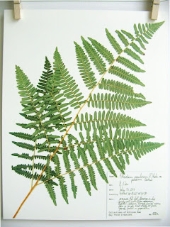
Bracken (Pteridium aquilinum var. pubescens) N. Earth’s most common fern is native to many places. Most ferns grow in compact clumps, radiating a whorl of fronds from a common center. bracken, however, uses an extensive underground rootstock, periodically shooting up a frond.

The tender young stage of a fern frond is called a fiddlehead, shepherd’s crook, or crosier. Bracken fiddleheads generally unwind in spring. In Seattle, they can be found eight months out of the year: February into September. But the prime time is from late March through May. The fiddleheads are pliable and rubbery-feeling, especially after a scruffy reddish fuzz is rubbed off. If you squish or nibble them, a slimy juice of pronounced flavor is experienced. Many people eat and enjoy fiddleheads cooked as an asparagus substitute. In fact, bracken appears in nearly all food guides on wild edibles. For all that, beware. Raw bracken contains an enzyme that diminishes the body’s vitamin B1 reserves. Even cooked, a carcinogenic substance is present. Though the plant is common, well-known, and widely eaten, excessive consumption (not yet established) may lead to stomach cancer. Arguments rage over what constitutes excessive consumption. Some would say eat none; others claim the good outweighs the bad.

In Seattle, fronds can be found over 9 feet high, but in the Andes they reach up to 14 feet. In starved, poor sites, only 3feet or less may be achieved. By late summer, the frond is firm, even crinkly, when it releases dusty spores—the equivalent of seeds in flowering plants. We have weedy seedlings of lady fern and sword fern in gardens, but none of bracken. Instead, it seems to rely on rampant roots to propagate. An Old World tale claims that if a person goes out at midnight on St. John’s Eve and captures the spores of bracken (so-called “fern seed”) on a white napkin, he or she becomes invisible. If this is true, it would be very useful.

In winter, bracken turns a cardboard color. The black, creeping rootstock is now the subject of attention. Many Indians harvested the roots to eat. This author tried the recipe and was not impressed. After boiling the roots for about an hour and inhaling a delicious aroma like that of potatoes cooking, the time for tasting was at hand. Peeling left a thin core of fiber and flavor. So then the peelings were eaten, proving chewy and starchy—survival food only.

There is a dearth of information on the bracken’s medicinal value; the con­sensus is that is has little use. Ornamental use of bracken is impossible: Though pretty, there is no way to confine it. Bracken disdains being “nice and neat” and outruns any bounds we set. With such vigor, however, it soon makes clear-cuts green and pioneers in any sunny sites it can. After forest fires, bracken also covers acreage quickly. It dislikes shade but tolerates some. If you have a bracken infestation to get rid of, three years of pulling every frond should do the job. Do not merely cut or snap the fiddleheads or fronds. Pretend each stem is a carrot, and firmly tug it out. With persistence, you can banish this coarse pest or at least keep it at bay (i.e., in your neighbor’s yard). When you are done, you will see a big difference in the landscape, but you’ll need to continue the attack the next spring, and the spring thereafter, and the spring thereafter. Other names are: brake, adder spit, and eagle fern.

Arthur Lee Jacobson
Logged

author of "Wild Plants of Greater Seattle",  "Trees of Seattle" and several other books.  More info at http://www.arthurleej.com/
paul wheaton
Administrator
Posts: 1331


View Profile
May 12, 2008, 03:14:51 PM

Arthur,

I once owned a farm. 

And on that farm was a meadow.   A beautiful meadow of bracken fern.   With my farmer's hat on, I thought "This stuff isn't much good to me - what I really need is grazing ground.  I should come back here and mow this once every two weeks or so until it is gone."

So I guess I was thinking that mowing would beat bracken fern.  Was that silly?
Logged
Arthur Lee Jacobson
author
Posts: 19


View Profile WWW
May 13, 2008, 08:51:48 AM

Mowing often will certainly weaken the bracken patch. The same applies to quackgrass. But, if the patch is extremely robust to begin with, and it has fronds in adjacent places such as cannot be mowed, your mowing would never kill it, merely keep it in a state of simmering, patient hiding, just waiting until you miss a mowing for it to send forth fresh greenery to reinvigorate itself.

Too bad that the fiddleheads are of questionable safety, or else a person could pluck those consistently to eat, until the whole meadow full lost energy and gave up trying . . .

Arthur Lee Jacobson
Logged

author of "Wild Plants of Greater Seattle",  "Trees of Seattle" and several other books.  More info at http://www.arthurleej.com/
permaculture.dave
Posts: 113


View Profile WWW
May 13, 2008, 11:37:32 AM

Does anyone have experience with eating fiddleheads from different fern species? I'm from the Midwest and I think I recall hearing that ostrich fern (Matteuccia spp.) provided the finest fiddleheads. Are there differences in taste & toxicity between species?

Dave
Logged

Education Director
Bullock's Permaculture Homestead
------------
Keep an eye on our courses at:
http://www.permacultureportal.com
kelda
Posts: 263


View Profile
August 12, 2008, 12:25:12 AM

ostrich fern? isn't there an article about all this in the latest Permaculture Activist?
Logged
SueinWA
Posts: 303


View Profile
October 20, 2008, 06:22:41 PM

Bracken fern can also be allelopathic to some plants, but also 'mines' phosphorus and brings it to the surface. 

Herb and tree seedling growth may be inhibited even after bracken fern is removed, apparently because active plant toxins remain in the soil.

Question:  are the allelopathic properties destroyed by composting?  I've always pulled the few on my property and added them to an active compost pile.  Does anyone have any thoughts on whether this is a good or bad idea?

Wikipedia offers some non-toxic solutions to eradication:

Various techniques are recommended by Natural England to control bracken either individually or in combination:

    * Cutting - once or twice a year, for at least 3 years
    * Crushing - using heavy rollers, again for at least 3 years
    * Livestock treading - during winter, encouraging livestock to bracken areas with food. They trample the developing plants and allow frost to penetrate the rhizomes. Livestock should be removed in the spring to prevent them being poisoned.
    * Burning - useful for removing the litter, but may be counter-productive as bracken is considered to be a fire adapted species
    * Ploughing - late in the season followed by sowing seed
    * Allowing plants to grow in its place, e.g., the establishment of woodland, causes shade that inhibits bracken growth

Sue
Logged
paul wheaton
Administrator
Posts: 1331


View Profile
October 22, 2008, 02:05:50 PM

I wonder if there is something that would simply out compete it?
Logged
SueinWA
Posts: 303


View Profile
October 22, 2008, 04:03:28 PM

A very good article from the BC Canada gov't http://www.for.gov.bc.ca/hfp/publications/00046/fern.pdf:

"Once a bracken fern complex develops, few other species can establish or survive in this association."

I just looked up 'organic control bracken fern', and one site said "To control bracken infestations repeated removal of the young fronds will gradually weaken the plants by deleting the food stored in their rhizomes. Spreading concentrated poultry manure will soon cause the decline of a patch of bracken fern. Once the ferns has stopped growing use the ground to grow a healthy crop of organic potatoes."

My underlined part may be true.  The site at the very top of this post said: ""And Bracken-dominated fern complexes usually develop on heavily disturbed, dry to moist nutrient-poor to -medium sites."   A former neighbor said that adding manure to pasture will kill Scotch broom.  He had his five acres sprayed with chicken and pig manure (one time each, succeeding years), and he never had more scotch broom (heavy in the immediate area), but there's no bracken fern there, either.  Hmmmmm.....

Another site: "Control/eradication is likely to be more effective if the fronds are harvested, as this removes nutrients and litter that protect the underground bracken rhizomes from frost ... The removal of litter by burning bracken litter increases bracken growth and the density of emerging fronds."

And the permie favorite, of course:  "Pigs and wild boars will root up and even eat rhizomes unaffected. Even if the rhizomes are not eaten, they die if exposed to light or are desiccated. Again, alternative feeds should be provided to stop pigs eating too many rhizomes/fronds."

Sue


Logged


Pages: [1] Print 
Permaculture Forums  |  washington/cascadia groups, events, gatherings, etc.  |  seattle wild edibles  |  Topic: Braken Fern « previous next »
Jump to:  


Login with username, password and session length

[richsoil.com home] [lawn care] Permaculture Forums | Powered by SMF 1.0.8.
© 2001-2005, Lewis Media. All Rights Reserved.
[flea control] [cast iron]