Henevere McCoy

+ Follow
since Aug 13, 2010
Merit badge: bb list bbv list
For More
Apples and Likes
Apples
Total received
In last 30 days
0
Forums and Threads

Recent posts by Henevere McCoy

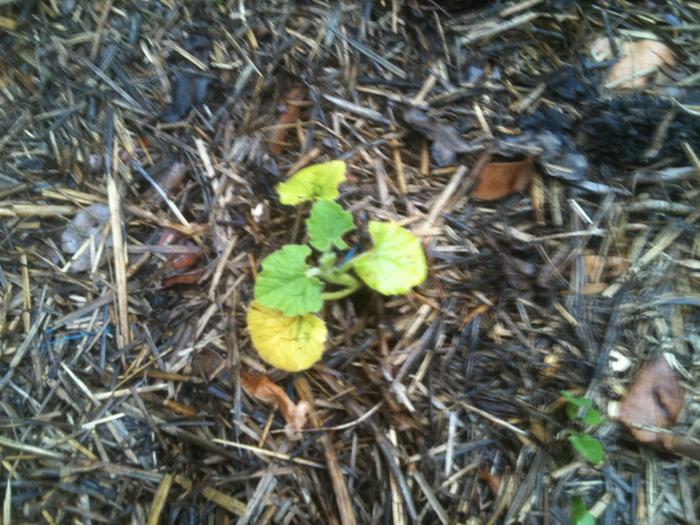
Sure!  Here you go.  These are the formerly yellowish squash plant and formerly purplish tomato plant.  (The squash now has leafminers, as they always do in my garden.)

14 years ago
Following up....  After using diluted urine as liquid fertilizer a couple of times a week, the squash leaves are no longer yellow, though the plants are still small.  The tomatoes look amazingly healthy and happy -- far better than I ever expected.  Thanks, everyone!
14 years ago
Project tinkle and sprinkle is underway.  The plants are still small, but they started looking greener very quickly after I started adding "liquid gold."
14 years ago

Burra Maluca wrote:
It hasn't gone wrong - it just hasn't worked yet. [snip] In a few years it won't be necessary as the mulch will have broken down and released it's nitrogen...


Nitrogen fixing takes several years?  I didn't realize that.  That explains a lot!  I'll do more clover over the winter.

chanetc wrote:
Bermuda grass hay is the last grass that I would use in my garden. It is hard enough to get rid of it, but if you add even the dried Bermuda grass hay, you are, in fact planting it.


It's currently in the chicken run as bedding.  I figured if any part of it starts to grow, the chickens will eat it.  I was planning to let it sit until late next spring and then use it, broken down, as mulch (along with the oat hay and straw that are also in the chicken run).  Bad idea?  Will I be infecting my beds with bermuda grass?

As for the pee fertilizer, I've suggested to the family that they help me out.  I got the mom's-gone-off-her-rocker look......

14 years ago
Thanks for all the responses.  I did a soil test, and here are the results:

ph: 7.5 (alkaline)
P: sufficient/surplus
K: sufficient
N: depleted.  That sucker didn't change color at all.

I was thinking the nitrogen fixers and the hay that spent the fall and winter as chicken run bedding would be great sources of nitrogen for that bed.  Now I'm totally lost as to what's going on, since it appears the soil is completely lacking in nitrogen. 

The sources of nitrogen I have at my disposal (keeping something of a "closed system") are rabbit droppings, chicken droppings, grass clippings, and human urine (my family may think that one goes beyond the pale a bit, but I'm willing to try it).  I also have some bermuda grass hay bought from off-site.  I can work on adding those amendments to try to get some veggies out of that patch this year.

But in the meantime, what went wrong?  I waited a few weeks between chopping and planting, and I don't see decomposing greenery under the hay.  Is the nitrogen is still being taken up by the decomposition process?  Should I have waited a whole season?  What else could I have done differently?  Thanks.
14 years ago
Mornin', permies.  I have a question for you all.  I have a bed where I cover cropped with vetch and clover, chopped and dropped it, covered it with old straw, and a few weeks later planted some annuals in there (tomatoes, basil, squash).  The perennials in that area (small apple trees, nasturtiums, mulberry, artichoke) seem to be fine.  The annuals, on the other hand, are not doing well (see blurry pics below).  They are not thriving and they are turning yellowish.  The soil moisture seems about right, so I'm not sure what's going on.  I haven't tested the soil yet (I can pick up a kit today), but I also wanted to see what The Wise Ones had to say.  Any ideas?  Thanks very much.
14 years ago
"In theory there is no difference between theory and practice.  In practice, there is."

That's the quote that popped into my head as I stood at the feed store counter figuring how much hay and straw I wanted for my chicken run/mulch project and discovered there is a pretty massive difference between the price of hay and the price of straw.  In theory, I want lots of different hays in the chicken run.  In practice, I want a little more of my hard-earned cash in my pocket.

I have a lot more straw than hay now, which was not really the plan, but there you have it.

No matter what, the garden bed that got mulched with the old hay from the chicken coop seems to be thriving -- lots of worms and rotting leaves and stuff.  Anything alive in my soil is an improvement, so hooray for old straw!

15 years ago
Ah, yes, diversity is important.  Your response gave me an idea -- perhaps I will put straw and different types of hay in the chicken run.  In theory, it will sit out over the hot summer, get watered in fall and winter when it starts to rain, any seeds in the straw that want to sprout will sprout, the chickens will eat the sprouts, and then when the weather dries out again I can use the decomposed hay/straw mulch on the garden.  We'll see what happens....

Thanks for the response!
15 years ago
I've mulched part of my land with old straw that sat over the winter in the chicken run.  (There's some additional stuff in there--kitchen trimmings and yard waste that have broken down--so it's kind of a straw/compost mixture.) There's more straw/compost in the run, and I was thinking of raking it all up and using it as mulch, and putting a bunch of new bales in the chicken run so I can do it all over again next year.  The benefits will be using the straw to keep the soil moist over our long hot summer (I'm in a Mediterranean climate--90-100 degrees for months with no rain; irrigation is under the straw), and adding the broken down stuff to my soil, which is quite poor in organic matter. 

But I'm concerned about a couple of things with this approach.  First, is there anything in straw that's bad for the soil as it breaks down?  Is it high in any particular nutrient and lacking in others, for example, such that my soil might end up unbalanced if I continue to mulch with straw?  Second, I usually "compost in place" by spreading yard waste and kitchen trimmings around, but the straw would prevent that stuff from being incorporated into the soil.  Is it best to rake the straw back to put yard waste/kitchen scraps on the soil and then replace the hay?  Or maybe it's be better to simply throw that all in the chicken run, let it break down in there together with the straw bales, and then rake out the straw/compost mixture again next year?  Is there a benefit to having things break down in place rather than adding the compost from off-site later?  (In-place is certainly nature's way of doing it, and nature's way is usually the best way.  But nature doesn't rake back and replace mulch that came from off-site, and throwing it all in the chicken run might be easier....)

If anyone has thoughts on this (or other factors I have failed to consider), I would appreciate hearing them.  Thanks very much!
15 years ago
It was too whiny for my taste.  Some of it was interesting and gave good examples of how laws heavily benefit big business and are hard for small landowners.  The rest was a lot of political ranting about peripheral issues.

My favorite part of reading that book was whipping it out while I was waiting on a jury panel.  I didn't get picked.
15 years ago